


SLICE: Used Tennis Balls Turned into Sneakers
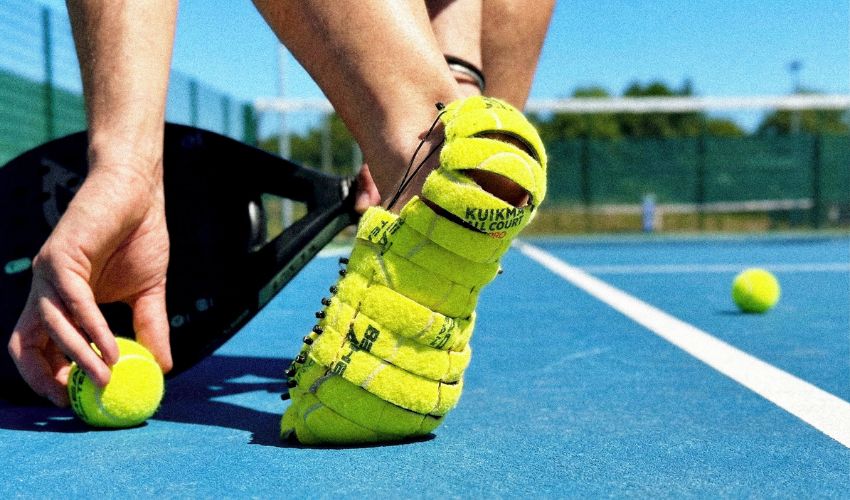
Soroosh Riazi Isfahani, a design student at the Royal College of Art and Imperial College London, submitted his SLICE project to the James Dyson Award 2026 this summer. The system turns discarded tennis balls into footwear. Manufacturers produce between 300 and 400 million tennis and padel balls worldwide each year, and almost none are reused.
A ball loses pressure after only a few matches. Then, it usually goes to a landfill, where it can take more than 400 years to decompose. Only around 1% are recycled. The rubber, adhesive and felt are bonded in layers that recycling facilities cannot separate cost-effectively. A Grand Slam tournament uses close to 100,000 balls in two weeks. The small amount recovered becomes low-value products such as flooring material or dog toys.
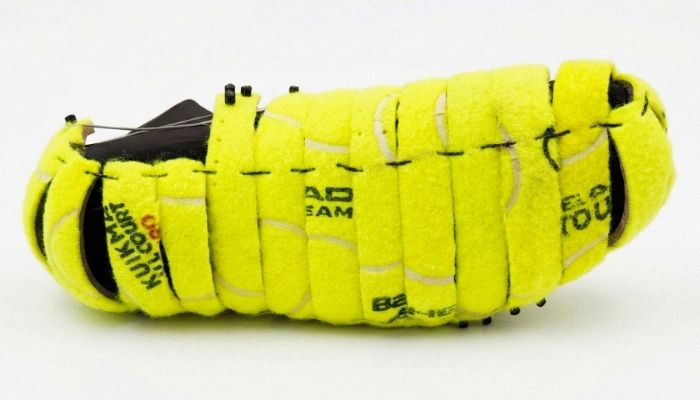
In an effort to find more ways to reuse tennis balls, Isfahani initially shredded the balls, mixed the granulate with natural rubber and produced soles. The process worked, but it consumed significant energy and destroyed the properties that made the material interesting: its curvature, bounce and rubber-to-felt bond. He changed his approach. Instead of shredding the ball, he cut it.
A 3D-Printed Guide for Every Cut
Achieving accuracy when cutting a tennis ball by hand is more difficult than it appears. The pressurised sphere has no flat surface, rolls during handling and deforms under the blade. To make each cut consistent, Isfahani 3D printed his own cutting guides. These parts secure the ball and divide its surface into precise sections. Because each guide begins as a digital file, adapting it to another shoe size only requires modifying the model and printing it again. The same principle could support different designs or other applications that Isfahani is considering, including bags and sports accessories.
Each ball produces curved strips and caps. Isfahani shapes them over a shoe last, the foot-shaped form used to construct a shoe, and stitches them together with end-of-life racket strings. The process requires no heat or chemical adhesives. Fluorescent yellow felt, white stitching and signs of wear remain visible. This aesthetic choice draws inspiration from Freitag bags, which are made from truck tarpaulins.
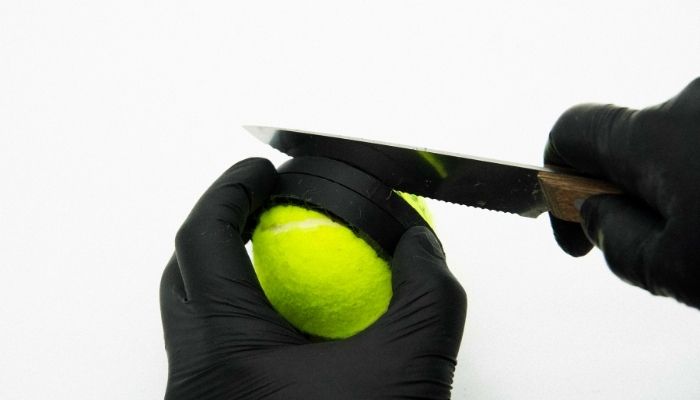
The 3D-printed guides hold the ball securely and define the blade path.
Isfahani plans to develop more complex models that combine the ball sections with leather offcuts. He is also considering bags, sports accessories and a custom service using balls from a specific club or match.
What do you think of SLICE? Let us know in a comment below or on our LinkedIn and Facebook pages! Don’t forget to sign up for our free weekly Newsletter here, the latest 3D printing news straight to your inbox! You can also find all our videos on our YouTube channel.
*All photo credits: Soroosh Riazi/The James Dyson Award