



Throughout the year, 3Dnatives hosts webinars on key topics in additive manufacturing with industry experts. Watch the latest 3Dnatives webinar replays below.
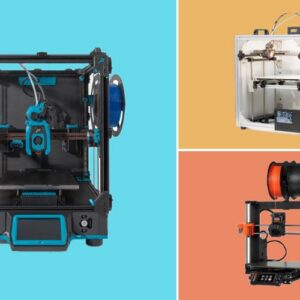
The Best DIY 3D Printer Kits
May 26, 2026

Throughout the year, 3Dnatives hosts webinars on key topics in additive manufacturing with industry experts. Watch the latest 3Dnatives webinar replays below.
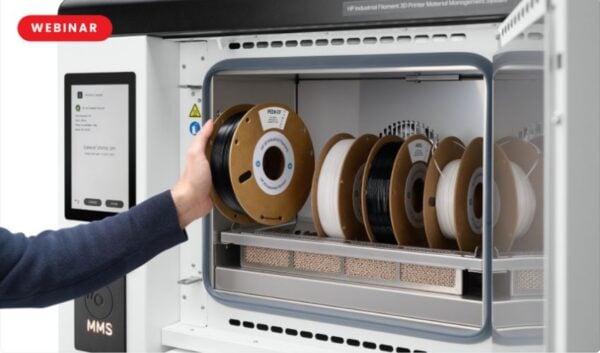
Industrial filament printing has long forced a choice: the affordability of desktop systems or the performance of locked-down industrial platforms. On Tuesday, September 15th, 3Dnatives and HP Additive Manufacturing Solutions showed how the HP IF 600 HT eliminates that trade-off,…

We’ve all shaken a jar to mix something. Now imagine doing it 60 times per second, at forces of up to 100G, applied to some of the most advanced materials used in additive manufacturing. This is Vertical Resonant Oscillatory Mixing…

Technical ceramics offer unparalleled properties, from extreme heat resistance to exceptional corrosion protection. When combined with the design flexibility and precision of additive technologies, this material is becoming a indispensable for industries ranging from medical and aerospace to semiconductors. Ceramic…

Metal additive manufacturing is advancing fast, but for researchers, the most important questions are still open. How do printing parameters influence microstructure and final mechanical performance? What does process control actually look like in a metal extrusion system? And how…

When does resin printing move from a prototype to a production asset? Can SLA patterns actually survive the burnout process in a high-stakes foundry? How does the cost-per-part on an SLA system compare to traditional tooling at scale? If you…

When the University of Applied Sciences and Arts of Southern Switzerland (SUPSI) integrates a technology into its research workflow, the focus is rarely on high-volume production. Instead, the interest lies in the precision, repeatability, and material flexibility required for rigorous…

For manufacturers considering an investment in industrial 3D printing, the transition from laboratory testing to high-stakes manufacturing can be a significant hurdle. While prototypes may perform well in controlled environments, scaling production often brings new challenges, such as repeatability, machine…

Aluminum is one of the most widely used metals in the world, yet it remains one of the most challenging materials for additive manufacturing. High thermal demands, alloy sensitivities, and complex workflows often push companies toward easier metals, even when…

Tires play a crucial role in automobile performance, and much of that comes down to their treads. These intricate patterns on the tire’s surface influence not only driving comfort but also safety on the road. Yet creating tire molds that…

A successful additive manufacturing operation relies on more than just advanced machines or powerful software—it depends on how seamlessly the two work together. Even with the best hardware and most cutting-edge software, productivity can stall if they aren’t properly integrated.…

Additive manufacturing is advancing at an incredible pace, with new innovations emerging all the time. Yet, one of the biggest challenges can simply be knowing what’s possible. That’s why we partnered with Stratasys to bring you a webinar series you…

Are you an engineer or manufacturer looking to get more out of additive manufacturing (AM)? Whether you’re designing prototypes, optimizing tooling or scaling production, this workshop series is for you. From June 23rd to 27th, 3Dnatives and Stratasys hosted five…

Want to explore the rapidly evolving field of large format 3D printing (LAM) with thermoplastics? Interested in seeing how the transformative potential of this technology for the manufacturing industry. Watch our webinar, “From Challenges to Tangible Benefits – Optimise Time,…

Designing custom 3D-printable parts – like jigs, fixtures, or product-specific tooling – often requires manual modeling by experienced CAD users. This is a time-consuming process and is difficult to scale, so it often becomes a bottleneck in additive manufacturing workflows.…

On March 6th, 3Dnatives was joined by experts from Bosch Advanced Ceramics and 3DCeram in this insightful webinar, where we explored the capabilities of laser-based ceramic additive manufacturing for producing large-scale, high-performance ceramics in series production. Attendees were able to…

Composite 3D printing is one of the fastest growing AM sectors, offering parts with the strength and characteristics of metal at the weight of plastic. But not all composite AM processes are created equal. That is why in this 3Dnative…

One of the sectors where we have seen the most significant growth in use of additive manufacturing is undoubtedly medical. Indeed, it has gotten so popular that we have even seen a rise in the use of 3D printing in…

In today’s competitive manufacturer environment, sintering comes with many challenges. There are long wait times to acquire systems, with extensive facility requirements. Most systems also come with high operating and maintenance costs — not to mention complex setups for some…

Injection molding is one of the largest manufacturing methods used today, worth an estimated $187B in 2022. But did you know that additive manufacturing can rival or even replace this production method? Attendees were able to learn how in our…

It is consistently found that cost savings is one of the most popular reasons for adoption of 3D printing technologies. Indeed, in the Hubs Report 2023, 83% of respondents noted that 3D printing helped save substantial costs in their manufacturing…

Are you interested in learning about the certification process for additive-manufactured metallic parts used in energy, oil & gas, and maritime applications? In 3Dnatives’ latest webinar we explored the DNV-ST-B203 standard and the prestigious AM manufacturer certificate received by Aidro…

Today, high-volumes coupled with delocalized production can lead to a number of business challenges, as demonstrated by the many logistic disruptions in recent years. Indeed, since COVID-19, we have seen multiple supply chain crises which have brought entire industries almost…

As the world of digital dentistry continues to evolve and accelerate, it is essential to keep up with the latest trends and advancements and take advantage of them. And considering how fast the sector is growing, with the market already…

The market for the various manufacturing methods is large and constantly changing. What is clear, however, is that additive manufacturing is becoming increasingly popular due to the numerous advantages it offers. The technology can also complement traditional manufacturing methods such…

Investment casting is one of the oldest metal-forming techniques that is still around today. Indeed, in 2021 it was estimated to be worth $15.83 billion by Grand View Research and is only expected to grow. Moreover, like all techniques, it…

When it comes to automobiles and especially motorsports, speed is key. As such, teams and manufacturers are constantly looking for ways to optimize weight on their vehicles. Enter 3D printing. Additive manufacturing is quickly being adopted in the automotive sector,…

The past few years have shown us that there are a number of weaknesses in our global supply chains. And unfortunately, when those supply chains start to fail, a domino effect occur which can fully disrupt entire industries, as was…

We do not know how long the current mix of supply chain and labor issues will last, especially considering the number challenges countries have been facing worldwide. And for many the question is how can companies continue to outperform during…

Since the start of civilization, jewelry has been an important part of the lives of humans worldwide. From the prehistoric era to ancient civilizations to our modern era, it has always been one of the key items created in societies…

Ceramic 3D printing has application in many fields: medical or dental, aerospace or even industrial – its use is widespread, but current methods are difficult to adopt and face many barriers to entry, especially for traditional ceramic manufacturers. In order…

More and more companies are considering taking advantage of the benefits of pellet 3D printing. As some of the greatest challenges facing companies are the material limitations associated with filament production, the interest in using pellets instead has been increasing over…

It is hardly a secret that prototyping was one of the first applications for SLS 3D printing and is still one of the most popular. However, as machines, materials and post-processing are now reaching the standards expected by the manufacturing…

The benefits of additive manufacturing in a variety of sectors are well-known. Though one industry that is perhaps less discussed but has been rapidly integrating AM thanks to its unique advantages is maritime. This is especially due to the many…

Binder jetting is an additive manufacturing process that uses industrial printhead to selectively deposit a liquid binding agent onto a thin layer of powder particles — either metal, sand, ceramics or composites — to build high-value and one-of-a-kind parts and…

One industry in which 3D printing has been growing in recent years is automotive. Thanks to the benefits of AM, car manufacturers can make lighter, personalized parts, a particular benefit for Formula One who have been forerunners in the adoption…

Injection molding is a manufacturing process that allows for the design of large volumes of parts. The majority of plastic components that exist today are made using this technique. However, the production of a mold – most often metal –…

Though the use of metal in additive manufacturing (AM) is traditionally associated with lasers (such as in laser powder bed fusion), new metal printing solutions are continuously being developed. These new technologies can produce parts that are 30-50% lighter and…

When most people think of 3D printing, the process that comes to mind is FDM, or Fused Deposition Modeling. An extrusion-based method, FDM requires just a build plate, an extruder (or multiple) and a filament for users to print their…

Currently, more and more companies are considering taking advantage of the benefits offered by pellet 3D printing. As some of the greatest challenges facing companies are the material limitations associated with filament production, the interest in using pellets instead has…

Though there are a number of materials that can be used for 3D printing, it is undeniable that the most popular materials are polymers. Plastics, especially high-performance thermoplastics, are used in a variety of industries for functions as wide-ranging as…

Process control in Laser Powder bed Fusion (L-PBF) is often referred to as the holy grail for for industrial metal 3D printing. Though only offered by certain companies and machines, process control significantly reduces errors in printing which in turn…

There are many things to consider when choosing material for 3D printing projects, and the questions to be answered just become more daunting when materials need to be engineering-grade, meaning they should be able to stand up to more rigorous…

On the 10th of December, 3Dnatives hoted a webinar with Prodways, Sculpteo and BASF Forward AM to talk about Polypropylene (PP) applications in Additive Manufacturing. Widely used in the plastic injection industry, Polypropylene offers interesting characteristics for industrial applications such…

On the 29th of October, 3Dnatives hosted a webinar on how to start and scale a 3D printing service. Mike Moceri, CEO of MakerOS, led this masterclass in not just how to build a 3D printing service from the ground up,…

Material extrusion, also known as Fused Filament Fabrication (FFF) technology is still the most widely used technology in the AM market. In recent years, this segment of AM has undergone many changes: in particular, there has been an increase in…

Additive Manufacturing can represent the next stage of evolution for industries around the world. This is already the case in segments like Aerospace, Healthcare or Motorsports. But, for many companies which are aware of the specific challenges of these segments,…

Additive manufacturing applications are rapidly evolving. Manufacturers are moving from rapid prototyping to small or even large series production. Their objective is to leverage the benefits of additive manufacturing such as the ability to design custom-made, complex and durable parts…

Additive manufacturing is often seen as an environmentally friendlier production method to conventional manufacturing because of its potential for local production and because it can allow for zero-waste manufacturing. It is also seen as one of the manufacturing technologies enabling…

Over the years, materials compatible with 3D printing technologies have been expanding to enable more applications, especially in industrial sectors that require technical-grade materials. In fact, many studies report that material choice is one of the key drivers of the…

3Dnatives was joined by Formlabs and Axial3D to discuss the benefits of 3D printing for the medical sector. Additive manufacturing technologies can be used to create tailor-made medical devices such as implants and prosthetics, but also for surgical planning and…

On the 26th of February, we had our first webinar of the 2020 to guide you through the steps of adopting 3D printing for your company. If you are into technology, you will have noticed that additive manufacturing has stolen…

Though there are a number of different technologies that are available today for additive manufacturing, some of the most popular go back to the very beginning. One notable example is Fused Deposition Modeling (FDM), which could be considered the second…




Newsletter
Every Wednesday, we bring you the best articles from the past week, a must-watch video highlight, and a heads-up on upcoming events you won't want to miss.