




Conductive or Dissipative? Protopasta Filaments for 3D Printing Electronics
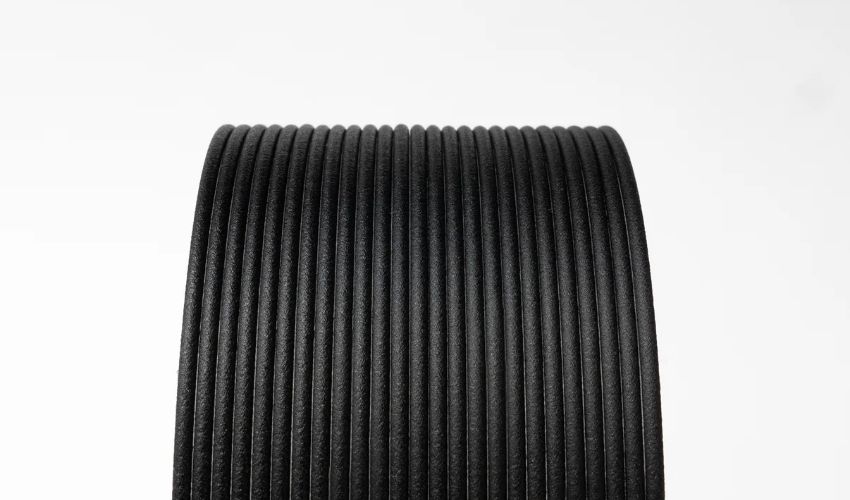
A small electrostatic discharge can damage an electronic component. This phenomenon occurs when static electricity accumulated on one object transfers to another, sometimes in the form of a small spark. Although this is usually harmless to people, it can affect sensitive electronic components.
Conventional filaments, such as PLA and PETG, are insulating materials that can accumulate static electricity. Filaments with specific electrical properties exist for other applications. Protopasta develops conductive and dissipative materials to 3D print parts for electronics projects or static control.
The Difference Between a Conductive Filament and a Dissipative One
To understand the difference, we must first discuss electrical resistance. This indicates how much a material opposes the flow of current. The lower the resistance, the more easily electric current flows through the material.
Insulating materials like conventional PLA have very high resistance and can accumulate static electricity. Conductive materials offer little resistance to the flow of current. Dissipative materials sit between the two. They release electrostatic charge in a gradual and controlled manner.
This difference offers advantages in 3D printing applications. A conductive filament can be used to manufacture parts for low-voltage circuits or touch sensors. A dissipative material, on the other hand, is intended for parts designed to help protect sensitive electronic components from electrostatic discharge, such as holders or handling tools.
A conductive material is not necessarily the best choice for an electrostatic discharge (ESD) protection application. The choice depends on the function of the part and its required electrical properties.
From Circuit to Touch Sensor: Conductive Filaments
Protopasta has been developing conductive filaments for over ten years. One of its original materials, Electrically Conductive Composite PLA (or Conductive PLA), incorporates carbon black into PLA to modify its electrical properties.
This filament acts as a resistor in low-voltage circuits. It enables projects involving LEDs or capacitive touch sensors. For example, a 3D printed part can function as a button that turns on a light when touched, provided it connects to the appropriate electronic components.
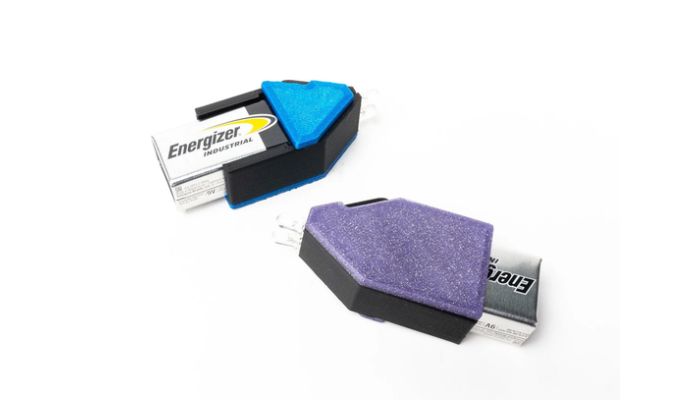
3D-printed parts using Protopasta’s Electrically Conductive Composite PLA
Dissipative Filaments for Working with Electronics
The primary goal when protecting electronic components is to control static electricity and reduce electrostatic discharge risks. Protopasta developed three dissipative filaments based on its Conductive PLA for these applications. These are Static Dissipative PLA, Static Dissipative Carbon Fiber PLA, and Static Dissipative PETG. They are intentionally less conductive than the original filament. This higher resistance makes them better suited for protection against electrostatic discharge.
All three have a specified surface resistance between 10⁴ and 10⁶ Ω. This falls within the range used for ESD applications. These materials allow parts to be 3D printed for use near electronic components. Examples include trays, PCB holders, assembly jigs, and housings.
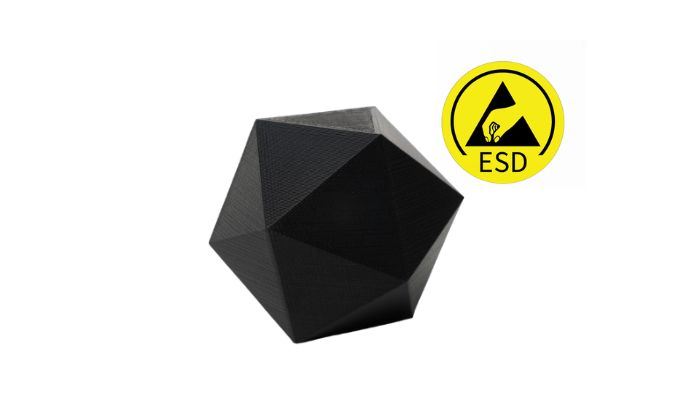
Protopasta’s static dissipative filament range includes PLA, PETG and carbon fiber-reinforced PLA
The choice between the three filaments depends primarily on the required mechanical properties and base material. Dissipative PLA is an option for those who prefer printing with PLA. The carbon fiber-reinforced version offers greater rigidity and a distinctive finish, although a wear-resistant nozzle is recommended. Dissipative PETG allows users to take advantage of this polymer’s properties.
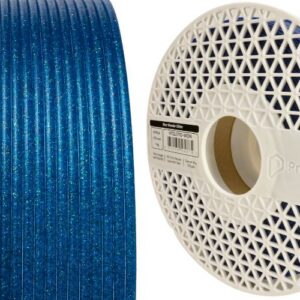
Another advantage is their ease of use. These filaments print like conventional PLA or PETG on the most popular desktop 3D printers. Since June 2026, Protopasta has supplied its filaments on spools with recyclable plastic sides. The company manufactures these in-house. They are compatible with standard automatic filament switching systems (AMS).
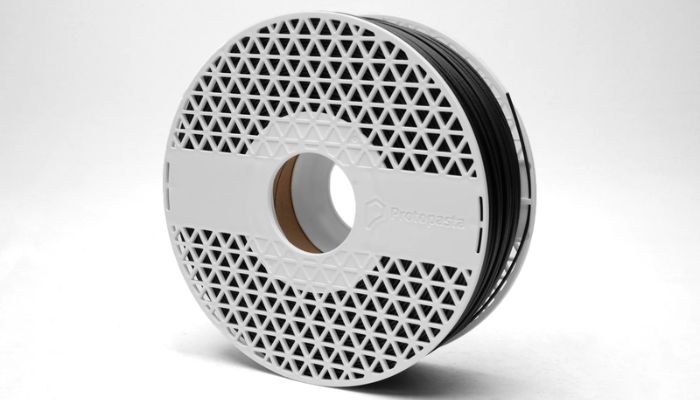
Protopasta’s new spools feature recyclable plastic sides and a cardboard core
Controlling Material Properties
The difference between conductive and dissipative filaments lies in their formulation. Protopasta uses carbon black as an additive to modify the plastic’s electrical properties. The type and quantity of this material influence the filament’s electrical resistance.
The company combines the ingredients and manufactures its own pellets to control this process. It does not buy carbon black already mixed with the plastic. “We source all ingredients separately and combine them in-house for full control over the result,” explains Alexander Dick, co-founder of Protopasta.
This control also applies to quality checks. The company monitors the electrical resistance of its materials using specific instruments to verify it falls within the expected range. Resistance in printed parts can vary depending on the 3D printer, print parameters, and part orientation. Protopasta states these differences do not affect the parts’ suitability for ESD applications.
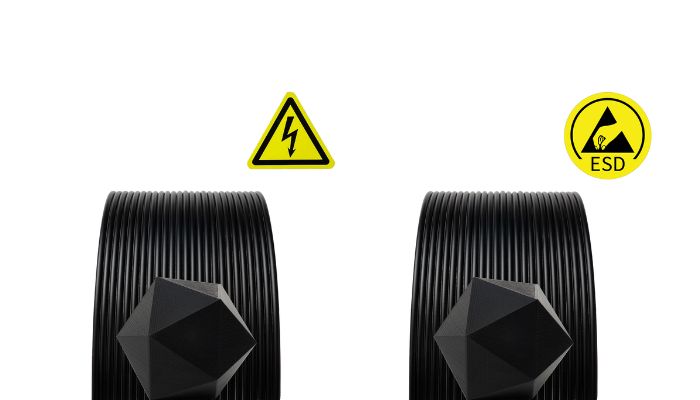
This same manufacturing capability allows Protopasta to combine plastics with other materials. This creates filaments with distinct properties. Magnetic Iron PLA incorporates iron particles to 3D print parts attracted to magnets. High Density Stainless Steel HTPLA contains 70% 400-series stainless steel. It is also ferromagnetic and features a metallic finish that users can brush or polish. Advanced users may combine magnetic filaments with conductive ones in a single project or application. What creative potential will you unlock with these filament types?
Protopasta expands the possibilities of desktop 3D printing with its material catalog. These target designers, engineers, technicians, hobbyists, and manufacturing professionals who need filaments with electrical functions. You can explore the collection of conductive and dissipative filaments to see the available options.
Have you used conductive or dissipative filaments before? Let us know what you think in a comment below or on our LinkedIn or Facebook pages! Plus, don’t forget to sign up for our free weekly Newsletter to get the latest 3D printing news straight to your inbox. You can also find all our videos on our YouTube channel.
*Photo Credits: Protopasta