




What Can You Make with PETG? 5 3D Printing Applications
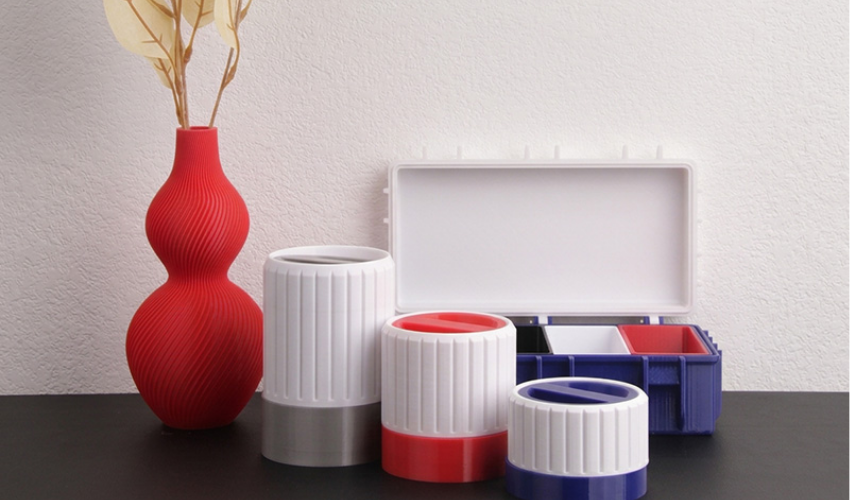
If you’ve spent any time around 3D printers, you’ve probably heard of PETG, short for polyethylene terephthalate glycol. It’s a modified version of PET, the plastic used in water bottles. PETG sits halfway between PLA and ABS: it’s almost as easy to print as PLA, but much tougher and more heat-resistant, with very little warping.
These properties make PETG one of the most versatile filaments for objects that need to bear weight, withstand heat or be used every day. To show what this material can do, we’ve selected five PETG applications. Let’s take a look!
Enclosures and functional parts for electronics
PETG 3D printing makes it possible to produce custom enclosures and internal components for electronic devices. One example is the PC chassis that electronics retailer PB Tech 3D printed with eSUN filament, which is now on display in its stores. The material can also be used to make GPU cooling ducts and mounting brackets, parts that need to keep their dimensions when placed close to heat sources. According to the manufacturer, eSUN’s PETG-Basic has a heat distortion temperature of around 73°C, compared with roughly 53°C for standard PLA. It’s also designed to reduce warping and stringing during printing, without the need for an enclosed chamber. Its resistance to water and UV light also makes it suitable for some outdoor applications. You can find more information about eSUN PETG-Basic here.
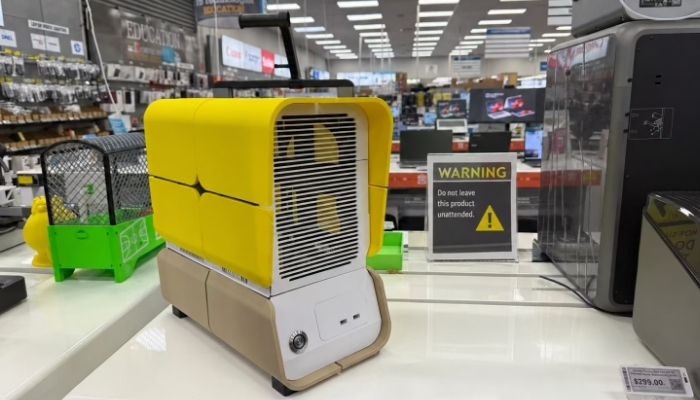
Photo credits: PB Tech
Modular Planters
Maker Paul Lagier designed a modular planter that can be expanded as a plant grows. Its structure consists of stackable rings that allow the container to increase in height without having to replace the entire planter. For the inner pot, which holds the soil and water, Lagier compared two materials: PETG and PLA. He filled both containers with water and monitored them for three hours. At the end of the test, the PETG container showed no signs of leakage, while the PLA version had left a small damp patch underneath. This led him to choose PETG for the inner component, although he notes that its long-term performance still needs to be tested.
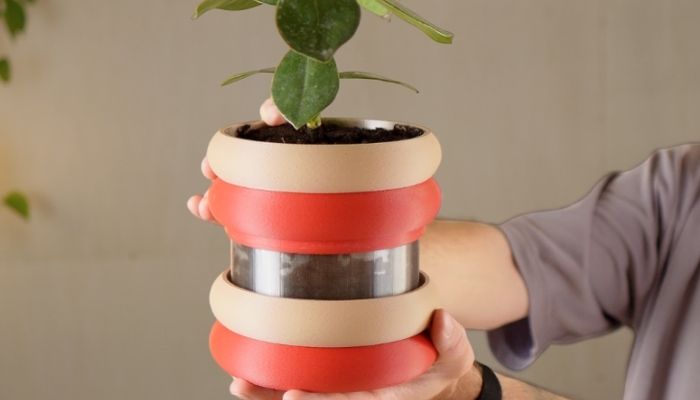
Photo credits: Paul Lagier
Mechanical Parts and Replacement Components
3D printing can also be used to produce replacement parts for machinery. One example is a blade carrier developed for the MOVA 600/1000 robotic lawn mower by additive manufacturing service provider ModulVolt3D. The part replaces the original component and was printed using glass-fiber-reinforced PETG (PETG-GF), a variant that offers greater stiffness and dimensional stability than standard PETG. Brass threaded inserts were added to reinforce the mounting points. Before installing the carrier, the team subjected a sample to a load test until it failed, in order to identify its weakest points. Following these checks, the part was installed on the mower and used in real-world conditions.
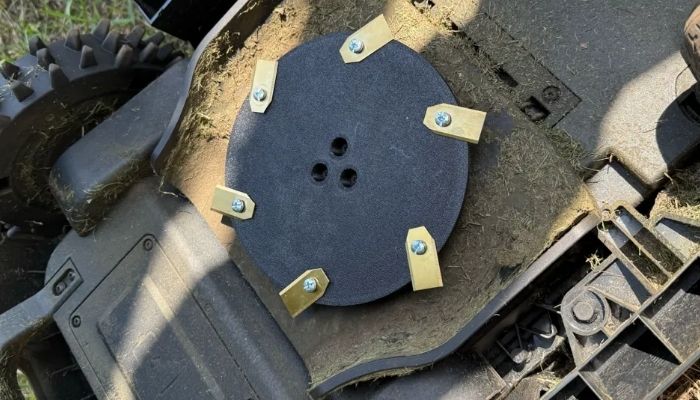
Photo credits: ModulVolt3D
Wrist-Hand Orthoses
A research team investigated the production of wrist-hand orthoses using PETG and PLA 3D printing. The parts were first printed flat using FDM technology and then thermoformed to fit the shape of the user’s hand and forearm. Mechanical tests showed that PETG offered greater flexural resistance than PLA. In fact, the PETG samples did not break during the tests, whereas the PLA samples did show fractures. The study also found that PETG retained its properties better after one year of storage and exposure to humidity. These findings highlight the material’s potential for producing orthotic devices that need to maintain their stiffness and strength during use.
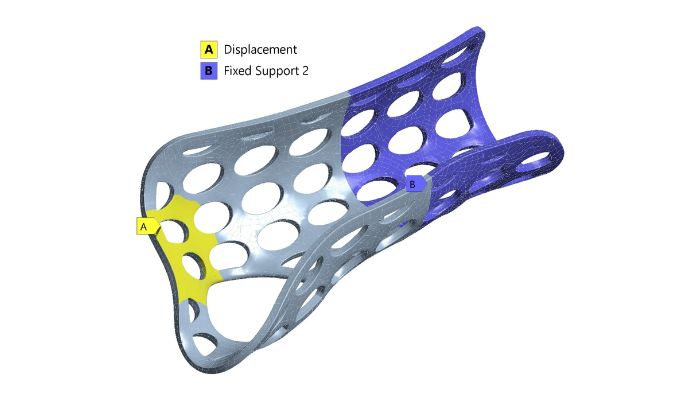
Photo credits: Vlăsceanu et al. (2024)
Designer Lighting
Design studio Goslo Studio developed ALN, a collection of three 3D-printed table lamps inspired by the shapes of marine invertebrates. The lamp bodies are made from translucent PETG, which allows their internal structure to remain visible while creating a soft, ambient glow. The collection includes two models with integrated rechargeable LED systems and a third designed for E27 light bulbs. In this application, PETG’s translucency allows light to pass through the lampshade and highlight the layers and shapes created during printing, making the printed structure an integral part of the lamp’s design.
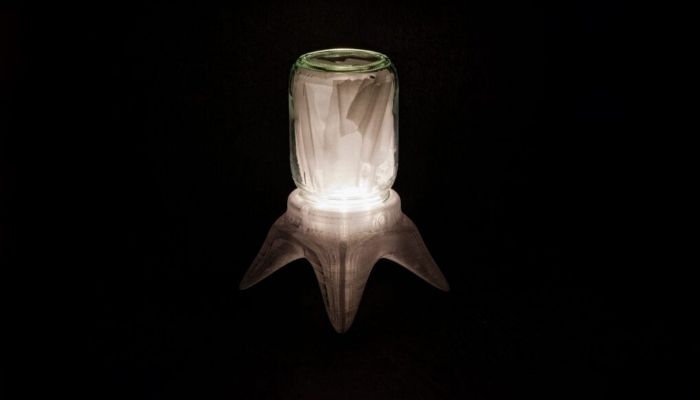
Photo credits: Goslo Studio
What do you think of these PETG applications? Let us know in a comment below or on our LinkedIn or Facebook pages! Plus, don’t forget to sign up for our free weekly Newsletter to get the latest 3D printing news straight to your inbox. You can also find all our videos on our YouTube channel.
Cover image: uSUN