


3D Printing vs CNC Machining vs Injection Molding: Expert Tips to Choose the Right Process
Every product starts as a CAD file, but turning it into a working part raises a question: which manufacturing process should you use? 3D printing, CNC machining and injection molding each have a sweet spot, and picking the wrong one costs time and money. To help engineers and product developers decide, we asked the experts at PCBWay, a manufacturing platform that offers all three, for their advice on rapid prototyping and low-volume production.
Three Questions to Get Started
“We see 3D printing, CNC machining, and injection molding as complementary manufacturing processes rather than competing ones,” PCBWay explains. According to the company, three factors decide which route fits a given part.
- How stable is your design? If you are still refining form, fit or function, 3D printing lets you iterate without paying for tooling or setup each time. Once the design is frozen, CNC machining or injection molding become more practical.
- What material and tolerances do you need? Metal properties or tight tolerances usually point to CNC machining, which needs no mold and suits functional testing and precision parts.
- How many parts do you need? Quantity is often the deciding factor. PCBWay’s rule of thumb:
| Quantity | Usually the most competitive |
| Below 50 pieces | 3D printing |
| 50 to several hundred pieces | CNC machining |
| 1,000+ pieces | Injection molding |
When to Choose 3D Printing
3D printing has the lowest barrier to entry. With no tooling involved, prices on PCBWay start at around US$4.98, and lead times start at around two days, with some processes finished in as little as one. That makes it the natural choice for rapid prototyping: print, test, modify, repeat.
PCBWay is clear that two days is a starting point, not a guarantee for every job. Actual turnaround depends on the technology, material, part geometry, quantity, post-processing and shipping method, and is confirmed once the part has been reviewed. Speed also comes second to quality: “Fast delivery is valuable only when the customer receives a product that works,” the company says. To shorten lead times without cutting corners, PCBWay has invested in automated file checks that catch issues earlier, smarter production scheduling, process monitoring and staff training.
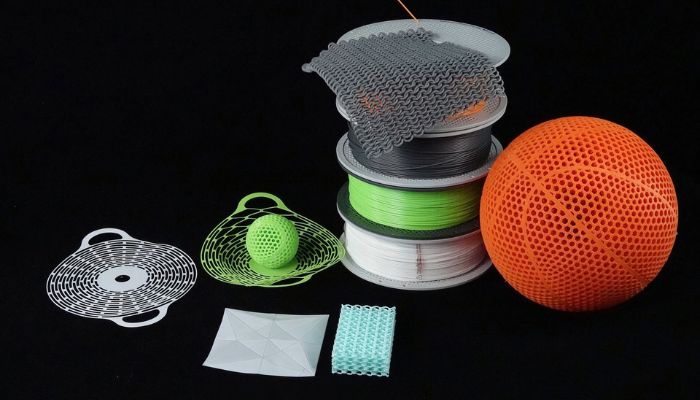
Parts can be printed in flexible material. (Photo Credit: PCBWay)
3D printing, as 3Dnatives readers know, is also a production method in its own right. For quantities below around 50 pieces, PCBWay can use 3D printing as the end solution. A PCBWay customer known by the username gohanda_kbd, wanted to create a compact, wireless, split keyboard. They called it the Soa39mini, and designed the keyboard for portability. For the keyboard case, they initially considered CNC-machined aluminum, but was concerned that a metal enclosure could interfere with Bluetooth communication because the microcontroller sits underneath the PCB.
So, gohanda_kbd selected resin 3D printing to avoid a metal enclosure and achieve a transparent appearance. Using UTR-8100, finished with Purple U dyeing, the finished case had a smooth surface, even coloring, and no noticeable warping.
“I printed about five prototypes on my home 3D printer before placing the order with PCBWay,” gohanda_kbd explained. “The whole process, from the initial case concept to a usable finished case, took roughly one month.”
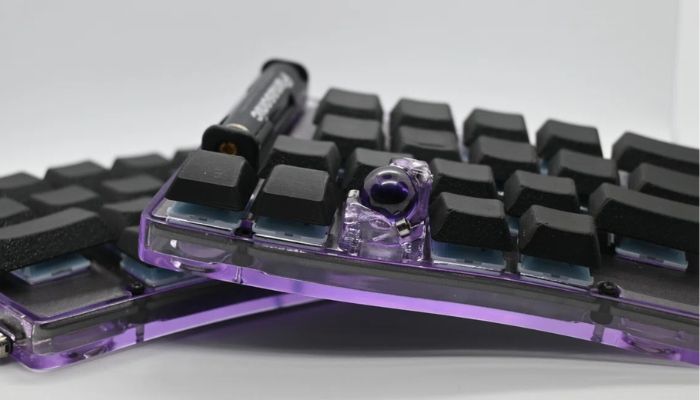
The transparent purple keyboard case was 3D printed. (Photo Credit: gohanda_kbd)
PCBWay offers six AM technologies (FDM, SLA, DLP, SLS, MJF and SLM) and more than 10 materials, including resins, nylon, PLA, aluminum and stainless steel. Expert tip: let the part’s job determine the process. Resin processes like SLA and DLP suit fine detail and smooth surfaces, powder-bed nylon (SLS, MJF) suits functional parts, and SLM is the route to metal.
When to Choose CNC Machining
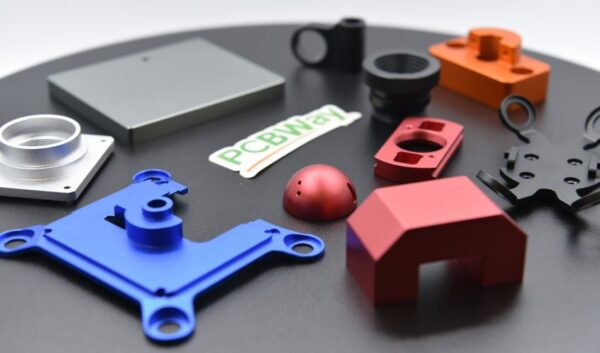
CNC machining is the go-to when a prototype or production part needs high dimensional accuracy, specific engineering materials or a machined surface finish. It typically offers the best balance of cost and flexibility from around 50 up to several hundred pieces.
Expect a higher entry price than 3D printing. At PCBWay, CNC machining starts at around US$24.89, because even a single part requires machine setup and programming.
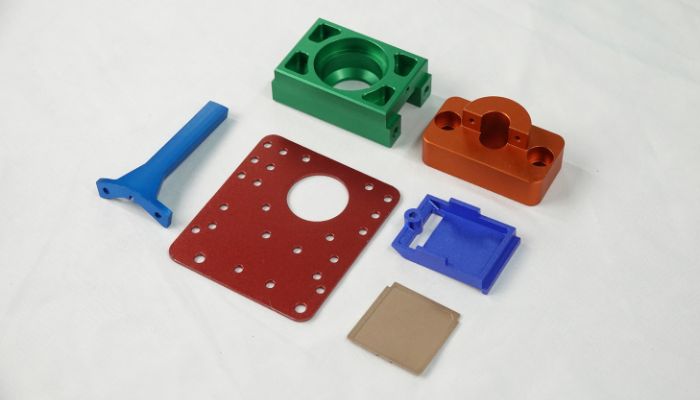
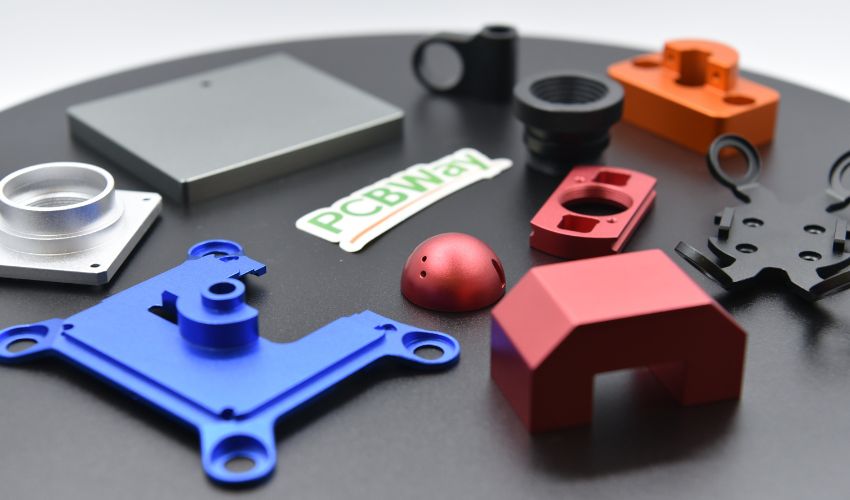
CNC machined parts (Photo Credit: PCBWay)
When to Choose Injection Molding
Injection molding shines for repeatable, large-scale production of plastic parts. The mold is a significant upfront investment, so there is no simple starting price. It generally becomes cost-effective at around 1,000 pieces or more, once the tooling cost is spread across enough parts to deliver the lowest price per unit.
Expert tip: validate your design with 3D printed or machined prototypes first. Changing a mold is far more expensive than reprinting a part.
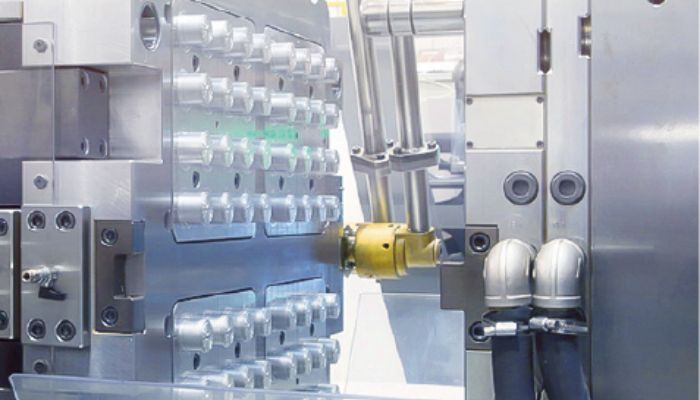
Injection molding is useful for large-scale production. (Photo Credit: PCBWay)
A Path, Not a Choice
Many products move through all three processes as they mature: 3D printing for early validation, CNC machining for functional or precision parts, and injection molding for volume production. Others go straight to one process based on material and volume needs. “What we do is to consider the stage of each part and help customers choose the manufacturing solution that best fits their needs,” says PCBWay.
Having every process on one platform makes that path smoother. On PCBWay, customers upload a CAD file, choose the process, material, quantity and finish, and get an instant preliminary quote. An engineering (DFM) review then flags potential manufacturing issues and confirms the final price before production. This is also where customers are most likely to deal with a real person: for unusual geometries, custom materials, tight tolerances or special surface finishes, PCBWay’s engineers get in touch to confirm the details. Once production starts, orders can be tracked online through to inspection and delivery.
The same platform also covers PCB fabrication and assembly, sheet metal and packaging, so a hardware team can source its circuit board, 3D printed enclosure and machined brackets from a single partner.
If you’re ready to start your next project, you can explore PCBWay’s 3D printing and rapid prototyping services here.
Do you outsource your 3D printed parts, or do you prefer to manage production yourself? Let us know in a comment below or on our LinkedIn or Facebook pages! Plus, don’t forget to sign up for our free weekly Newsletter to get the latest 3D printing news straight to your inbox. You can also find all our videos on our YouTube channel.
*Cover Image Credit: PCBWay