


How Nike Used 3D Printing to Make Keely Hodgkinson’s Speed Suit More Aerodynamic
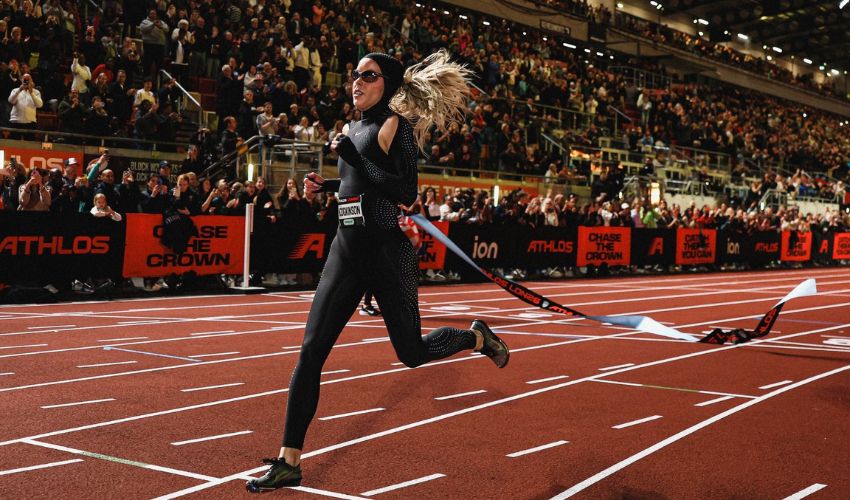
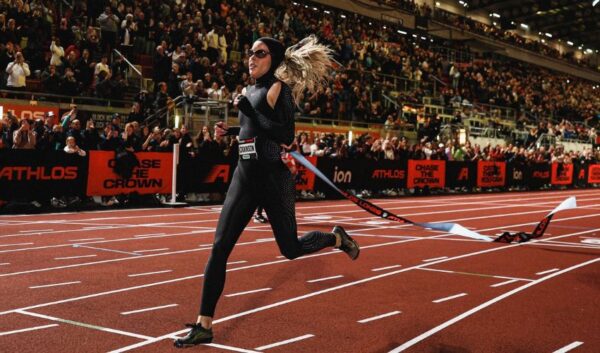
What if just a few millimeters of 3D printed material were enough to save time on the track? Nike has unveiled the custom-made racing suit for Keely Hodgkinson, the Olympic 800-meter champion, which incorporates small 3D printed parts to reduce aerodynamic drag. The British athlete wore it for the first time at Athlos London, where she won the 800-meter race in 1:56.80.
What Are 3D Printed Vortex Generators?
The suit is black, full-body, with a hood and an open back. Small triangular, delta-shaped raised patterns stand out on the fabric, which Nike calls vortex generators. These are aerodynamic devices manufactured using 3D printing. According to the brand, these are the fastest ones it has developed to date.
To understand their role, consider what happens when a person runs. Air breaks away from the body, leaving behind an area of low pressure: a wake that slows the athlete down. The vortex generators create small vortices that force the fast-moving air circulating around the body to mix with the slower air that remains attached to it. As a result, the airflow stays attached longer, the wake is reduced, and, with it, drag.
A Different Geometry for Each Area of the Body
Not all the pieces are identical. Their size and orientation vary, and their placement was calculated using computational design. This is where 3D printing really comes into its own: it made it possible to produce tiny, unique pieces, resulting in a one-of-a-kind combination.
What’s more, they change color depending on the light. “There’s a beautiful, healthy tension between mathematical function and visual aesthetic,” explains Hannah Amis, Director of Product Design for Innovation Apparel at Nike. “We spent six months endlessly tweaking, shifting and obsessing over every detail. Even during our final meeting in Manchester, I checked in to see if she wanted to back out of the hood. She told me she was completely all in. When she pulls it up, it creates an absolute zero-distraction zone. She’s locked in.”
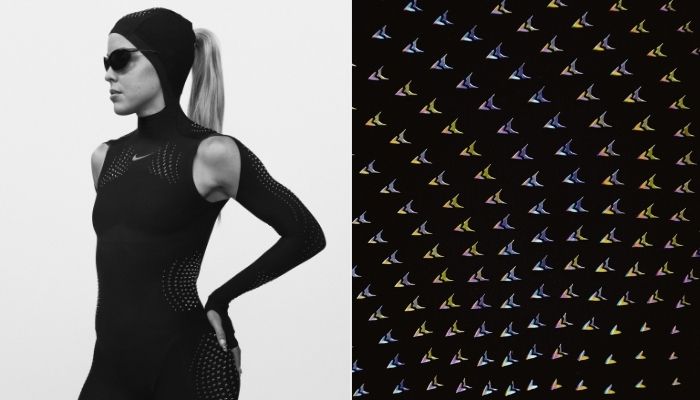
The 3D-printed vortex generators are distributed across the shoulders, thighs, torso, and hood of the suit.
Nike did not specify the 3D printing technology or the material used, nor did it provide details on the reduction in resistance achieved.
The rest of the suit follows the same customization philosophy: minimal seams, no fasteners, and a pattern designed around the body in motion, rather than a static silhouette. It was handcrafted almost entirely at the brand’s LeBron James Innovation Center. If you want to learn more about the suit, click HERE.
What do you think of the use of 3D printing in Keely Hodgkinson’s jumpsuit? Let us know in a comment below or on our LinkedIn or Facebook pages! Plus, don’t forget to sign up for our free weekly Newsletter to get the latest 3D printing news straight to your inbox. You can also find all our videos on our YouTube channel.
*All photo credits: Nike