

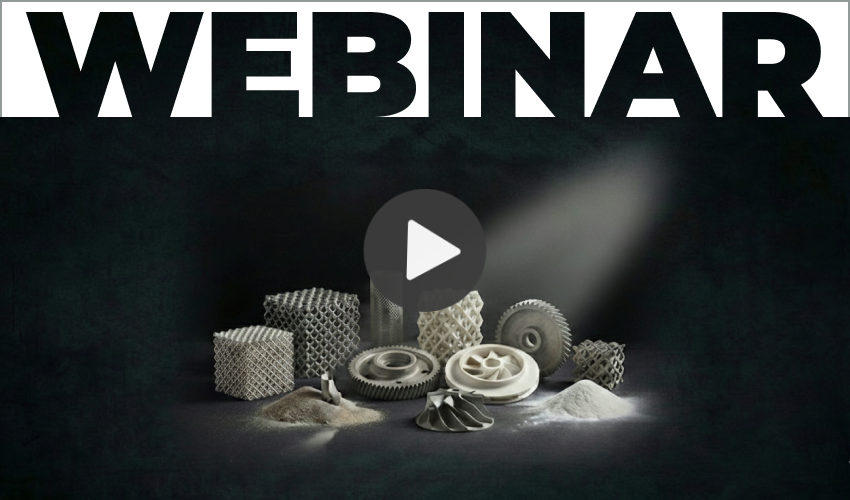
WEBINAR: Binder Jetting as a Research Platform for Ceramic and Metal Powder Systems
When the University of Applied Sciences and Arts of Southern Switzerland (SUPSI) integrates a technology into its research workflow, the focus is rarely on high-volume production. Instead, the interest lies in the precision, repeatability, and material flexibility required for rigorous scientific inquiry. That’s why one of its labs is utilizing binder jetting as a research platform.
Laser-based 3D printing systems have been the academic standard for years, but for researchers pushing the boundaries of material science, binder jetting offers a compelling alternative: a cold-process environment where the printer acts as a precision instrument for ceramic and metal powders. The technology offers unique advantages for material development, process exploration, and experimental flexibility, making it especially relevant for academic and research spaces.
A Collaborative Insight: SUPSI and Arc Impact
To understand the potential of this technology, it is useful to look at the institutions bridging the gap between theoretical research and applied engineering. A prime example is the University of Applied Sciences and Arts of Southern Switzerland (SUPSI).
SUPSI’s work in binder jetting highlights the technology’s ability to function as a formal instrument for scientific discovery. By collaborating with Arc Impact, SUPSI is exploring the mechanical and chemical parameters that determine the success of novel powder systems.
To learn about the uses of binder jetting in research, 3Dnatives invited academic professionals, materials scientists, and researchers to an in-depth webinar: “Binder Jetting as a Research Platform for Ceramic and Metal Powder Systems,” that took place on Wednesday, February 25th. You can watch the webinar HERE.
This session was designed for an audience looking for a technical understanding of binder jetting’s research applications. Our guest experts from Arc Impact and SUPSI examined the mechanical and chemical advantages that make binder jetting suitable for the lab.
Meet the Speakers
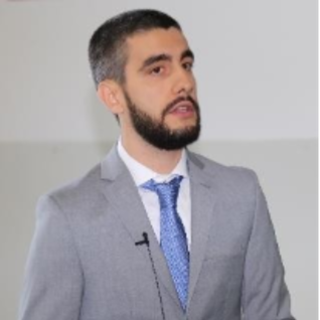 Federico Ferrari, Regional Technical Manager at Arc Impact
 Giovanni Bianchi: Senior Research Engineer at The University of Applied Sciences and Arts of Southern Switzerland (SUPSI)
 Benjamin Groth: Research Scientist at Arc Impact
Dr. Groth has a PhD in Materials Science from Rutgers University, where his focus was on residual stress analysis of dense carbide materials. He joined Arc in January of 2021 (as ExOne, prior to DM/Arc acquisition), to develop capabilities in printing and densifying ceramic materials for a variety of end users and applications. Prior to this, Dr. Groth spent 9 years working as a Senior Research Engineer for a leading refractories company serving the non-ferrous foundry industry. In this role, he developed metal treatment, transfer, and holding products, as well as researching sensor technologies to aid aluminum metal casting.
 Julia Steiner: Content Specialist at 3Dnatives
Redefine Your Research Parameters
If your work involves the exploration of novel material compositions or the fabrication of complex ceramic and metal geometries, binder jetting provides the experimental flexibility needed for high-level research. Watch the conversation to see how this platform can expand your lab’s capabilities.
Did you attend this webinar? Let us know in a comment below or on our LinkedIn or Facebook pages! Plus, don’t forget to sign up for our free weekly Newsletter to get the latest 3D printing news straight to your inbox. You can also find all our videos on our YouTube channel.