


Underwater Concrete 3D Printing Using Seafloor Sediment
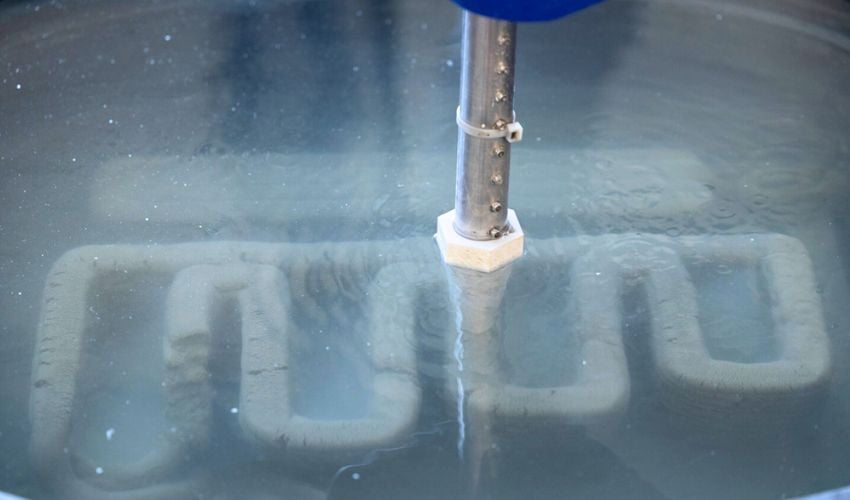
The ocean has never been an easy place to build. Depth, pressure, and limited visibility make even routine construction and repair complex and expensive, particularly for the infrastructure hidden beneath the surface.
Rethinking Construction Beneath the Surface
At Cornell University, researchers are exploring whether these constraints could be addressed through in situ construction. Rather than adapting traditional land-based methods to underwater conditions, the team is developing a way to fabricate structures directly on the seafloor using concrete 3D printing. The approach could enable maritime infrastructure to be built where it is needed, without prefabrication on land or deployment from the surface.
If successful, the method could support a quieter and more adaptive model of maritime construction, reducing both logistical complexity and environmental disruption. “We want to be constructing without being disruptive,” said Sriramya Nair, assistant professor of civil and environmental engineering at Cornell and leader of the project. “If you have a remotely operated underwater vehicle that shows up on site with minimal disturbance to the ocean, then there is a way to build smarter and not continue the same practices that we do on land.”
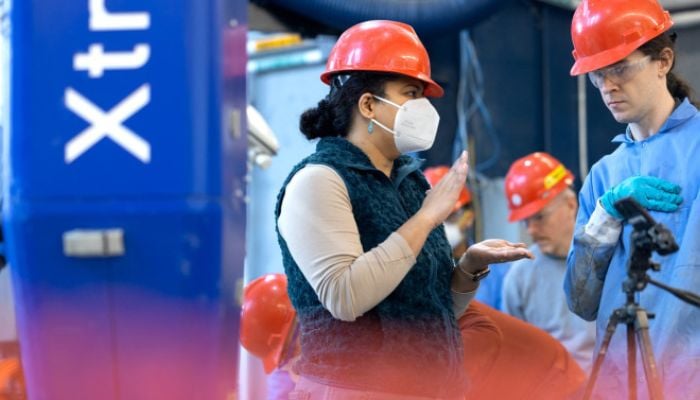
The Cornell-led effort began in 2024 and is supported by the Defense Advanced Research Projects Agency (DARPA), which launched an ambitious one-year challenge to develop 3D-printable concrete capable of being deposited several meters underwater. In 2025, the team was awarded a $1.4 million grant contingent on meeting a series of technical benchmarks and is competing alongside five other teams. The challenge will take place this March, when each team must 3D print a concrete arch underwater.
Printing With the Seafloor Sediment as Feedstock
DARPA added a significant constraint: the concrete must consist primarily of seafloor sediment, with only a small amount of cement. Using locally sourced material would reduce the need to transport large quantities of cement by ship, but it also introduces substantial material and process challenges. To date, no one has successfully 3D printed structural concrete using seafloor sediment. “Nobody is doing this right now,” Nair said. “Nobody takes seafloor sediment and prints with it. This is opening up a lot of opportunities for reimagining what concrete could look like.”
Solving Washout and Visibility Underwater
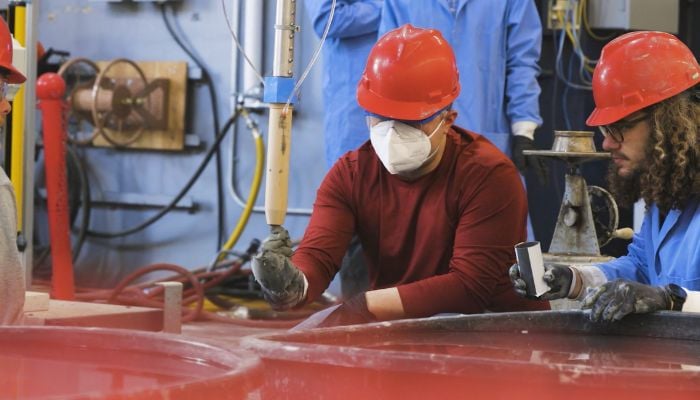
Another major obstacle is washout, which occurs when cement particles disperse in water before properly binding, weakening the printed structure. Chemical admixtures can help prevent this, but they also increase viscosity, making the material more difficult to pump and extrude. “When you add those chemicals, it makes your mixture really viscous, and you can’t pump,” Nair explained. “You’re balancing pumpability with anti-washout agents, while still making sure the material holds its shape and bonds well between layers.”
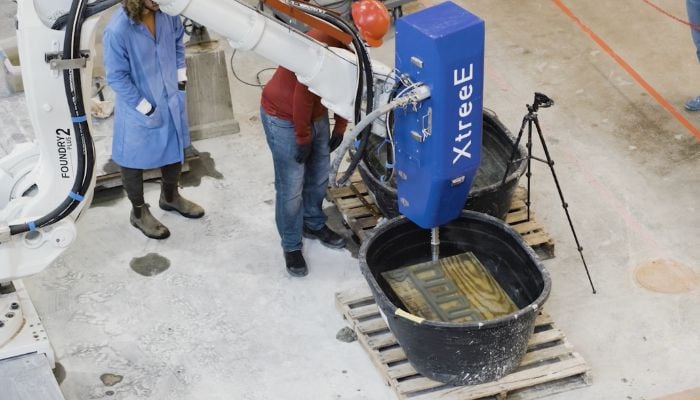
To refine this balance, the team conducts frequent test prints in a large water-filled tank at Cornell’s Bovay Civil Infrastructure Laboratory Complex. While the controlled environment allows close inspection of layer placement, strength, and geometry, such hands-on evaluation is not possible underwater in real-world conditions.
As a result, the researchers are also developing sensor-based systems and robotic control to enable real-time monitoring and adjustment during printing. Underwater visibility can drop to near zero once sediment is disturbed, making autonomy a necessity rather than a convenience.
As the final demonstration approaches, the project offers a glimpse into how in situ additive manufacturing could extend large-scale 3D printing into one of the most challenging construction environments on Earth.
*All Photo Credits: Ryan Young/Cornell University


This Additive technique and industry is important. Underwater growing environments might be possible and are needed for off-world growing pods and training. GLOBAL SCIENCE ENVIROTECH INC discussed this during camp back in 2022 forward. I’m so glad a company had the know with all to invest in underwater building materials, now what?
Let’s put in a structure for a living shoreline wrapping around the Sanibel pier. The pier was destroyed and a honeycomb to promote mangrove growth will stabilize the beach there. That location is identified as vulnerable and the lighthouse may go next storm