The 10 Food 3D Printers You Should Know
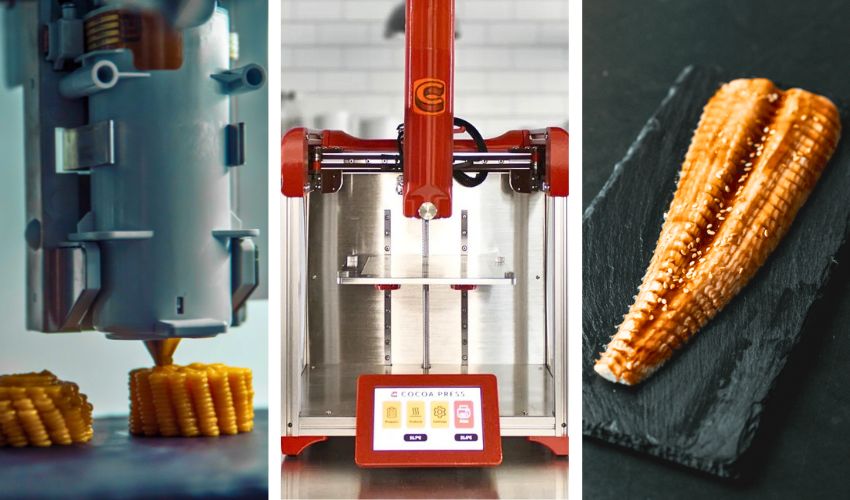
Could food 3D printing have a place in your kitchen? Increasingly, yes: the technology is now being used in fine dining, personalized nutrition and alternative proteins, among other fields. In all of these applications, food 3D printers work the same way, building food layer by layer from a digital model, most often through extrusion. Available machines range from DIY kits for home cooks to systems for professional kitchens and industry. In this ranking, we focus exclusively on food 3D printers currently available for purchase, listed alphabetically.
Chocola3D
Developed in Bulgaria, Chocola3D is a food 3D printer based on an open syringe system. Users prepare and load their own ingredients, with no need to buy proprietary capsules or refills. The machine can print up to 26 different food materials, including chocolate, dough, cheese, meat, vegetable and fruit purées and pea protein. Chocola3D has a build volume of 250 x 230 x 150 mm, weighs 24 kg and is priced at €1,990. Alongside the printer itself, the company offers consulting, training for educational institutions, 3D model design for food and live food 3D printing shows for events.
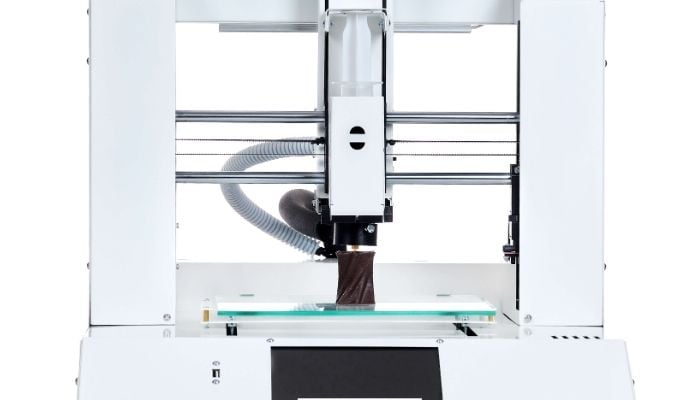
Photo credits: Chocola3D
Cocoa Press 2
The Cocoa Press 2 prints chocolate directly from a digital file, so you don’t need a mold to make custom shapes. It comes as a $1,499 DIY kit, where you print some of the parts and assemble the machine yourself, or as a $4,499 Pro package that arrives assembled. The Pro is only sold in the US, but European buyers can order the kit through UK reseller Vector3D. Both versions have a 135 x 135 x 150 mm build volume and ship with 0.8 mm and 1.6 mm nozzles. The extruder holds the chocolate’s temperature to within ±0.1°C. The printer runs Klipper firmware and works with open-source slicers such as PrusaSlicer, and its quick-swap extruder leaves room for upgrades like multicolor or continuous printing. The Pro package adds stainless steel side panels, a hard travel case, maintenance tools and access to a Discord channel for professional users. That makes it the obvious pick for small food businesses, while the kit suits hobbyists who don’t mind building their own printer.
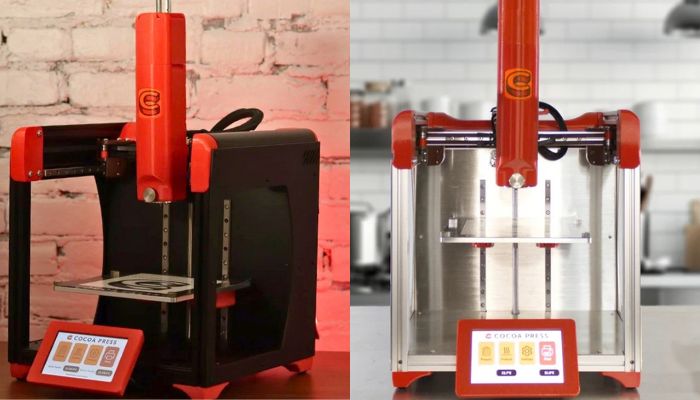
Photo Credits: Cocoa Press
FELIX Food 1.6
Dutch manufacturer FELIXprinters developed a line of food 3D printers called FELIX Food 1.6. It is currently available in three versions, the most popular being the “Single Head.” This machine is designed to be easy and intuitive to use, and its syringe system can extrude all kinds of pastes. It offers a build volume of 125 x 195 x 170 mm and a speed of up to 50 mm/s. With its touchscreen, camera and Wi-Fi connectivity, it is an accessible, user-friendly food 3D printer.
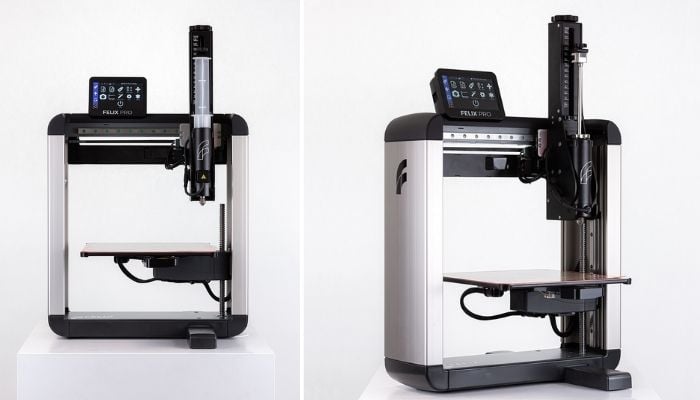
Photo Credits: FELIXprinters
Foodini
Foodini is one of the most popular food 3D printers. Developed by Natural Machines, it lets users 3D print personalized food. All you need to do is prepare the ingredients and load them into the machine’s five stainless steel capsules. The mixture is then fed automatically to the nozzle, which prints dishes layer by layer. The machine has a compact footprint (43 x 45.8 x 43 cm) and can be kept in the kitchen alongside other appliances. It is designed mainly for professional use in restaurants, hotels and catering businesses. Foodini currently costs €6,300. As an alternative to buying the machine, Natural Machines offers the Advantage Program, a subscription that lets customers rent the printer on a monthly or annual basis. The subscription is only available in the United States, the European Union and China. At the end of the contract period, customers can either renew their plan or return the machine.
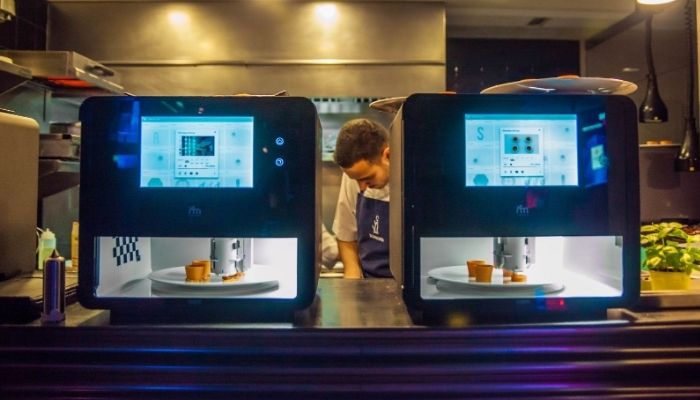
Photo credits: Natural Machines
OPUS
The OPUS, from byFlow, is a chocolate 3D printer designed for chocolatiers, bakeries and pastry shops. Its main job is personalization: names, messages, logos and seasonal shapes that skilled staff would otherwise pipe by hand. byFlow says the machine can turn out up to 550 decorations per hour, about 10 times faster than manual piping, and that no technical background is needed to run it. The OPUS tempers the chocolate itself, so users just load their own callets into its three 200 g cartridges, which refill automatically. The build volume is 250 x 280 x 150 mm. Designs are made in byFlow’s online software, byFlow Studio+, either from scratch with text and uploaded logos or from a library of ready-made designs, and sent to the printer over Wi-Fi. byFlow also offers free online training, and pricing is available on request.
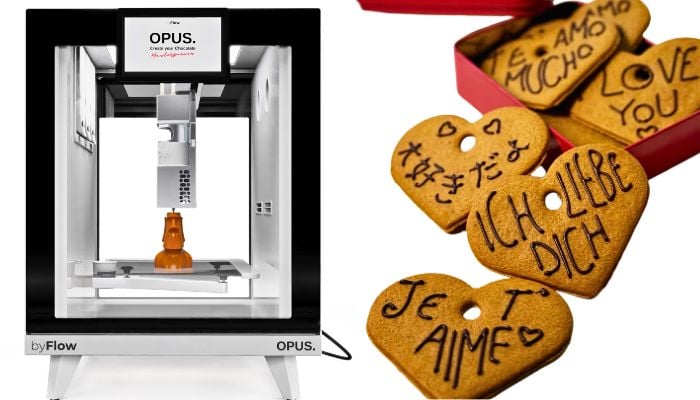
Photo Credit: byFlow
Panda3D
The Panda3D printer doesn’t do anything technically groundbreaking: it prints flat sugar art. What makes it interesting is how it’s used. Made by a Chinese manufacturer based in Hangzhou, the machine is a modern take on traditional Chinese sugar painting, and it’s designed to be set up in busy public places like malls, parks, markets and parties. Passersby, often kids, can generate a design with AI or turn a selfie into artwork, then watch it print in just a couple of minutes. The design is printed onto a wooden stick, creating a personalized lollipop.
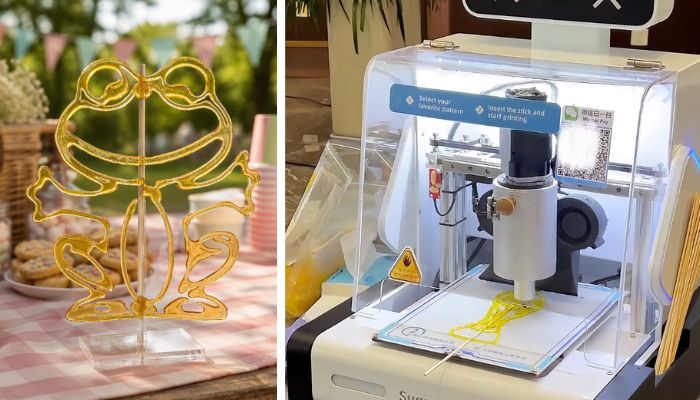
Photo Credit: Panda3D
Patiss3
The Patiss3 was created by French startup La Pâtisserie Numérique, and the way it works is surprising. Instead of relying on extrusion like most food 3D printers, the Patiss3 uses a powder-based process. An edible binder is deposited layer by layer into a bed of edible powder, and the whole bed is then baked before the finished piece is removed from the loose powder. The process is similar to binder jetting, but instead of an industrial part, you get a shortbread cookie! The machine can make biscuits, macarons, savory crackers and more, letting chefs create designs that would be impossible to achieve by hand, all without a mold.
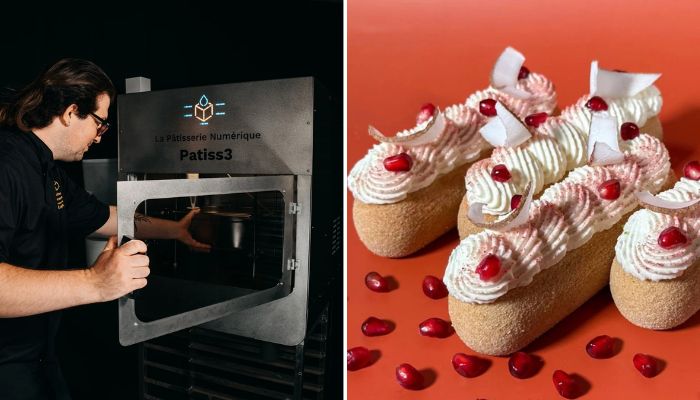
Photo Credit: La Patisserie Numerique
PureAdditive Bio&Food
LINCSOLUTION is a Korean manufacturer of professional 3D printers. Its range of machines meets a variety of industrial needs, whether in aerospace, automotive or healthcare. And as it happens, the company has developed a 3D bioprinter that is also compatible with food. Admittedly, this may be the machine furthest removed from the traditional FDM solution that extrudes chocolate. But we had to mention it: its PureAdditive Bio&Food solution offers a build volume of 300 x 300 mm and is compatible with cellulose, gelatin and food. Thanks to a modular extruder system, users can print different viscosities and work with several materials at once. This food 3D printer will let you take your ideas and creations even further!
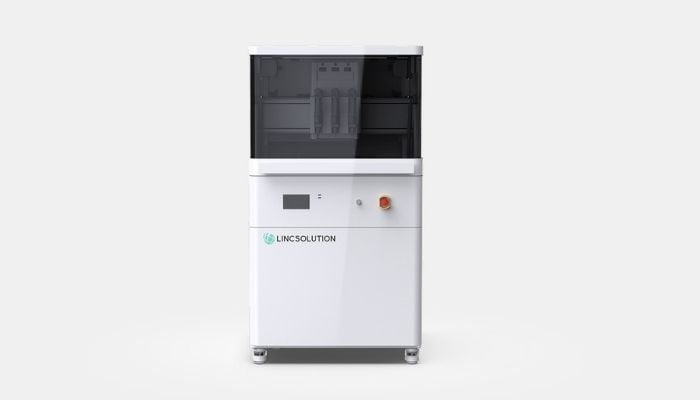
Photo Credit: Lincsolution
Steakholder Foods MX200 and HD144
Steakholder Foods takes food 3D printing to an industrial scale, with two printers designed to produce plant-based meat and fish alternatives. The MX200 Meat Printer uses the company’s Fused Paste Layering (FPL®) technology, in which a single print head lays down two materials to recreate the marbling of meat and aligns plant fibers to give it a meat-like texture. According to Steakholder, it can produce up to 420 kg per hour. The HD144 Fish Printer uses a process called Drop Location in Space (DLS®), which deposits ingredients in set patterns to reproduce the flaky texture of fish, at up to 100 kg per hour. Both printers run on Steakholder’s premixes, including beef steak and white fish, and the company also provides maintenance, spare parts and operator training. Pricing is available on request.
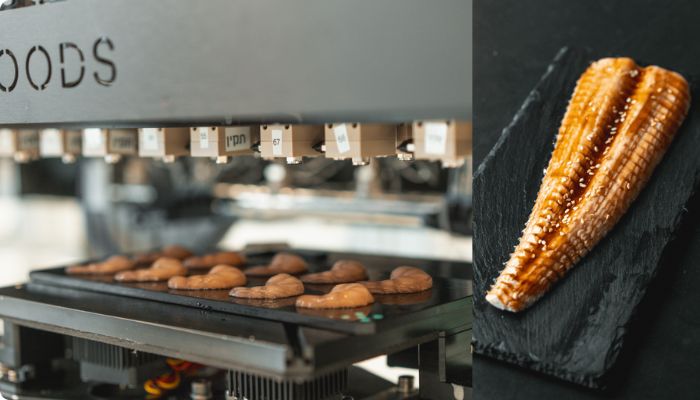
Photo Credit: Steakholder Foods
WiibooxSweetin
Chinese manufacturer Wiiboox is behind the WiibooxSweetin food 3D printer. The company developed it for professional use while keeping it highly accessible. Using the touchscreen, users can easily upload their 3D file and start printing. According to the manufacturer, the printer is compatible with a range of materials, including chocolate, cheese, mashed potatoes, beans, caramel, honey, jam and cookie dough. It features real-time temperature control to ensure the food holds its shape. The printer uses fused deposition modeling (FDM) technology, comes with several nozzle types and supports .stl, .obj and .amf files.
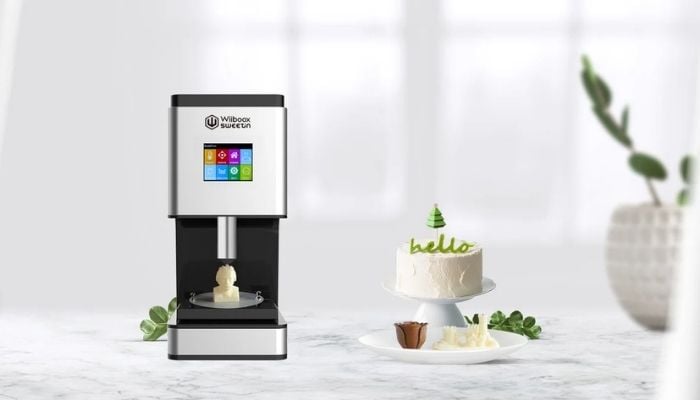
Photo Credit: WiibooxSweetin
Which of these food 3D printers would you choose? Let us know in a comment below or on our Linkedin, Facebook, and Twitter pages! Don’t forget to sign up for our free weekly Newsletter here for the latest 3D printing news straight to your inbox! You can also find all our videos on our YouTube channel.
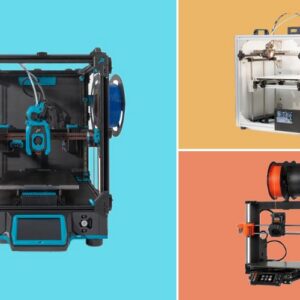
Cover Photo Credits (left to right): Natural Machines, Cocoa Press and Steakholder Foods