


Stratasys Expands Availability of RadioMatrix™ Radiopaque Material to the United States
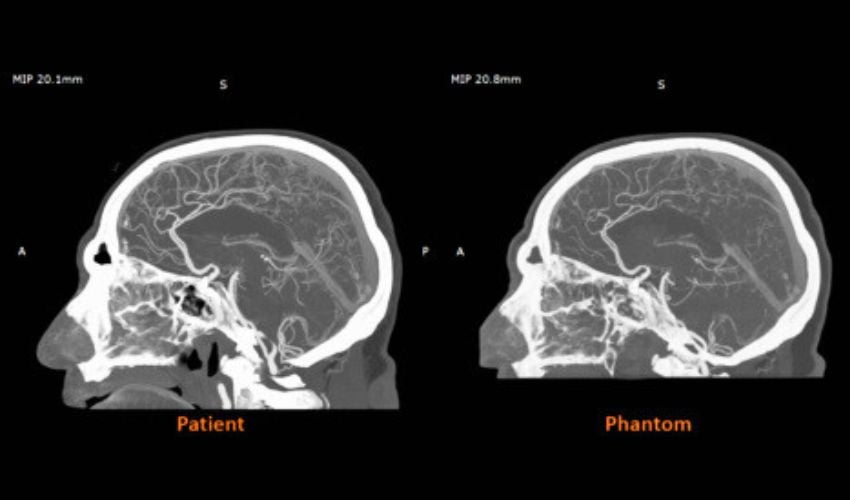
Stratasys has announced full U.S. availability of RadioMatrix™, its radiopaque 3D printing material designed for advanced medical imaging education, device testing, and research. The material was previously limited to select programs in Europe. It is now available for healthcare providers, imaging centers, and manufacturers in the United States to integrate into their workflows.
RadioMatrix™ is currently the first and only 3D printing material that allows controlled radiopacity. This capability lets users match the appearance of specific tissues on CT and X-ray scans with a high degree of accuracy. The material is compatible with the Stratasys J750 and J850 Digital Anatomy™ printers, which already produce lifelike soft tissue and bone models. With RadioMatrix™, the same models can also replicate how anatomy behaves under imaging conditions, which expands their usefulness for teaching and research.
Precise Control Over Radiopacity
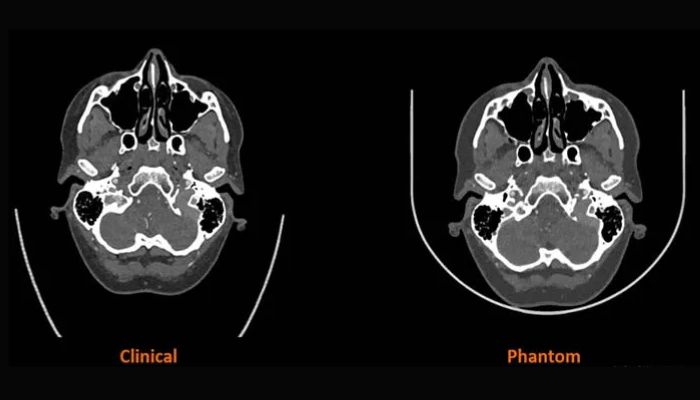
A key advantage of the material is the ability to tune Hounsfield unit values. This tuning allows printed structures to mimic bone, gray matter, fat, veins, or any feature expected in a clinical scan. Early work between Stratasys and Siemens Healthineers shows that RadioMatrix phantoms can match human tissue densities with deviations as small as a single Hounsfield unit (HU). This level of precision is nearly indistinguishable from real tissue on a CT scan and supports the accurate replication of complex anatomy. This accuracy makes the material well suited for imaging education, the study of pathology, and the validation of CT protocols and imaging algorithms.
Benefits for Radiology Education
For radiology programs, the timing is significant. Cadavers are costly, difficult to access, and limited in number. Traditional phantoms offer more availability but lack realism and cannot be customized for specific pathologies. RadioMatrix™ provides a repeatable and scalable alternative that allows educators to produce the anatomy or disease state they need to teach. These printed models can then be reused for consistent and repeatable training sessions across larger groups of students.
“Providing full availability of RadioMatrix™ in the U.S. is a major step in providing cutting edge imaging education and training,” said Erez Ben Zvi, Vice President of Healthcare at Stratasys. “By giving radiologists and device manufacturers the ability to print ultra realistic, customized radiographically accurate models, we are helping replace traditional phantom solutions and reliance on cadavers with customizable, repeatable, and scalable alternatives.”
Growing Clinical and Research Applications
In the United Kingdom, partners such as Beaumont Hospital and CPI have already used the material to produce cerebral angiography models for training in imaging guided procedures. These early results show that printed radiopaque anatomy can support more consistent and controlled training environments. The material also benefits manufacturers and researchers who need reliable test models for new devices and imaging tools. Instead of waiting for donor material or relying on generic phantoms, teams can print standardized structures tailored to their studies. With expanded access now in place, more U.S. institutions are expected to adopt radiopaque 3D printing and deepen their use of Digital Anatomy technology. To learn more about the RadioMatrix™ materials, click HERE.
What do you think about radiopaque 3D printing becoming more accessible to hospitals and imaging programs in the United States? Let us know in a comment below or on our LinkedIn and Facebook pages. Plus, sign up for our free weekly Newsletter to get the latest 3D printing news straight to your inbox. You can also find all our videos on our YouTube channel. Interested in more medical and dental 3D printing news? Visit our dedicated page here.
*All Photo & Video Credit: Stratasys