#Startup3D: Scrap Labs Shrinks Metal 3D Printing to Desktop Size
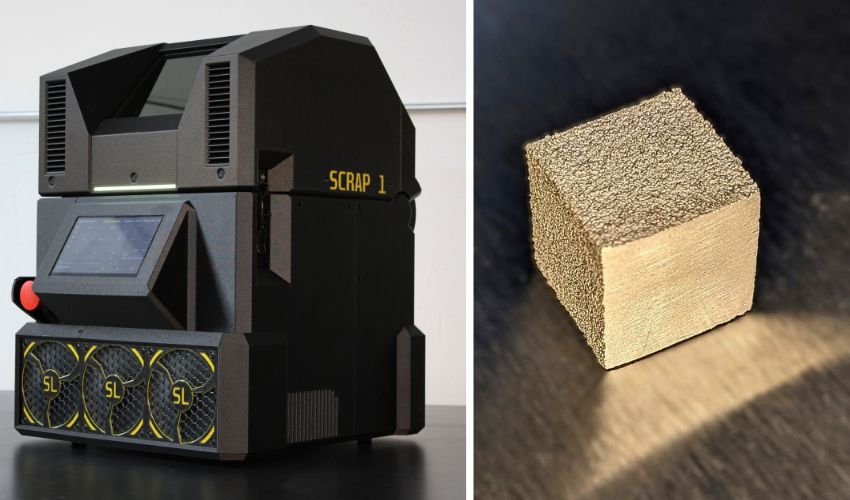
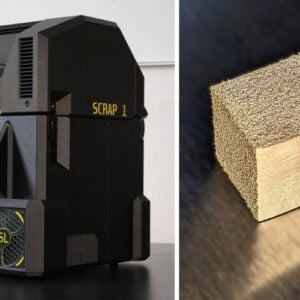
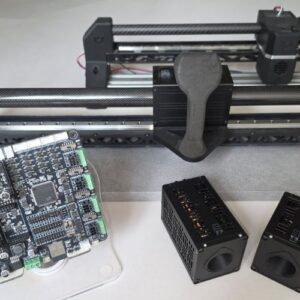
Metal 3D printers that use laser powder bed fusion (LPBF) typically cost six figures and take up a room of their own. A sealed build chamber, precision optics and a powerful laser all add size and cost. US startup Scrap Labs wants to change that with Scrap 1, a desktop LPBF printer built almost entirely from FDM-printed parts.
The company was founded by Matt Woods, formerly of SpaceX and Xact Metal. Based in Boulder, Colorado, Scrap Labs is targeting a 200 W laser, a 100 mm build volume and 316L stainless steel parts, with a production launch planned for June 2027, initially in the US. We spoke with the founder to understand how you build a metal printer out of polymers, how he plans to cut the price by another order of magnitude and who he expects to use it. Don’t miss it!
3DN: Could you introduce yourself and your connection with additive manufacturing?

I’m Matt Woods. My first exposure to additive manufacturing came in high school, around 2008, when a technology education class gave us hands-on time with a Stratasys Dimension printer.
I didn’t really dive in until my first year of college. At one of the innovation centers at Penn State Berks, I met someone building a RepRap Prusa Mendel, and I was amazed that you could build your own 3D printer. That summer I bought a Prusa Mendel V2 kit, spent the whole break assembling it and working out how it functioned, and became deeply involved in open-source 3D printing.
I used it to build custom drones and all kinds of prototypes. What captivated me was having an idea in my head and holding it in my hands within hours. As a kid I had dreamed of a technology like that, but usually settled for duct tape and hot glue.
I soon became known as “the 3D printing guy.” In the clubs I joined at Penn State, including the Lunar Lion team competing for the Google Lunar XPRIZE, I was put in charge of 3D printing our reaction control system (RCS) thrusters. That gave me direct experience with an EOS M 280 in CIMP-3D, Penn State’s metal 3D printing lab. It also helped me land an internship on SpaceX’s additive manufacturing team, working on metal 3D printing for rocket engines such as SuperDraco and Raptor. That experience gave me the insight and confidence to start building my own metal 3D printers during my senior year at Penn State. Since then, I have built three companies, all focused on pushing the limits of metal AM.
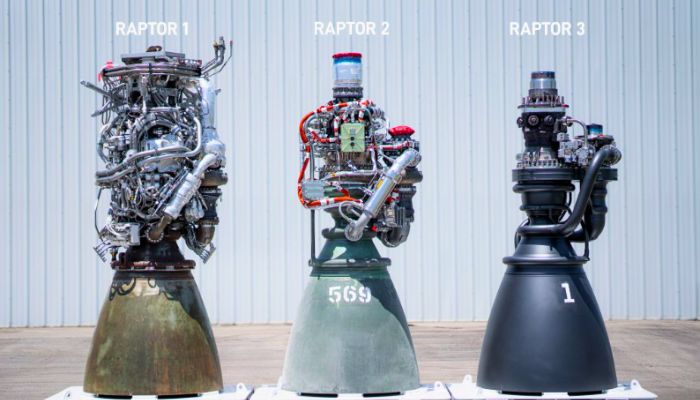
SpaceX’s Raptor 1, Raptor 2 and Raptor 3 engines. Matt Woods worked on metal 3D printing for the Raptor engine during his internship on SpaceX’s additive manufacturing team. (Photo credit: SpaceX)
3DN: Why did you create Scrap Labs?
Scrap Labs is the vehicle for a vision I’ve had for more than ten years: affordable desktop metal 3D printing. I first pursued it with my first company, X Material Processing, which later became Xact Metal. Xact Metal was a big step toward that vision. The best we could do at the time was a metal 3D printer at roughly $100,000. That isn’t as affordable as any of us would like, but it was already an order of magnitude cheaper than an EOS or comparable system.
I eventually left Xact Metal because I wanted to keep innovating and pushing the limits, which gets harder in a more mature company with many stakeholders.
3DN: Could you tell us more about Scrap 1 and the technology behind it?
Scrap 1 is a new kind of laser powder bed fusion (LPBF) system. To our knowledge, we’re the first to simplify an LPBF system enough to fit entirely on a desktop. We questioned every assumption about how metal 3D printing equipment is designed and manufactured, and left nothing untouched. Once you strip away those assumptions and rebuild from first principles, you end up with something that has never existed before.
One notable result is that we use additive manufacturing to make Scrap 1 itself. Fused deposition modeling (FDM) has matured dramatically in recent years, and it is now the core production method for essentially all of the machine’s mechanical parts. That gives us enormous design freedom: internal geometries, consolidated assemblies and intricate cooling designs. It also delivers a level of efficiency and space utilization that is very hard to achieve with sheet metal enclosures, injection molding, casting or CNC machining. On top of that, it gives us speed, agility and a high degree of vertical integration.
At the core of Scrap 1 is a fiber-coupled solid-state laser, delivered by a high-speed precision gantry. We also take advantage of the motion-control gains made possible by open-source firmware such as Klipper. Together, that makes a very efficient, high-performance metal 3D printing platform that fits on a desk or workbench.
3DN: Metal 3D printing has long meant six-figure industrial systems. How were you able to bring the cost down so significantly?
It’s actually the second time we’ve done this. In 2017, my team and I introduced the XM200 LPBF system at around $100,000, when most metal 3D printers cost closer to $1 million. We got there by rigorously questioning how much engineering an industrial metal 3D printer really needs and eliminating the over-engineering that drives up cost. We found a few key areas where we could cut significant costs, which brought the price down roughly an order of magnitude. Scrap Labs is applying the same engineering rigor to bring the price down by another order of magnitude. We didn’t choose the company name on a whim: we are incredibly scrappy, and we do things differently.
A major part of the answer is using additive manufacturing to build the machine, which dramatically simplifies assembly. Even a machine as compact and efficient as the XM200 has thousands of parts: fasteners, seals, gaskets, clamps and fixtures, plus the labor to assemble them all.
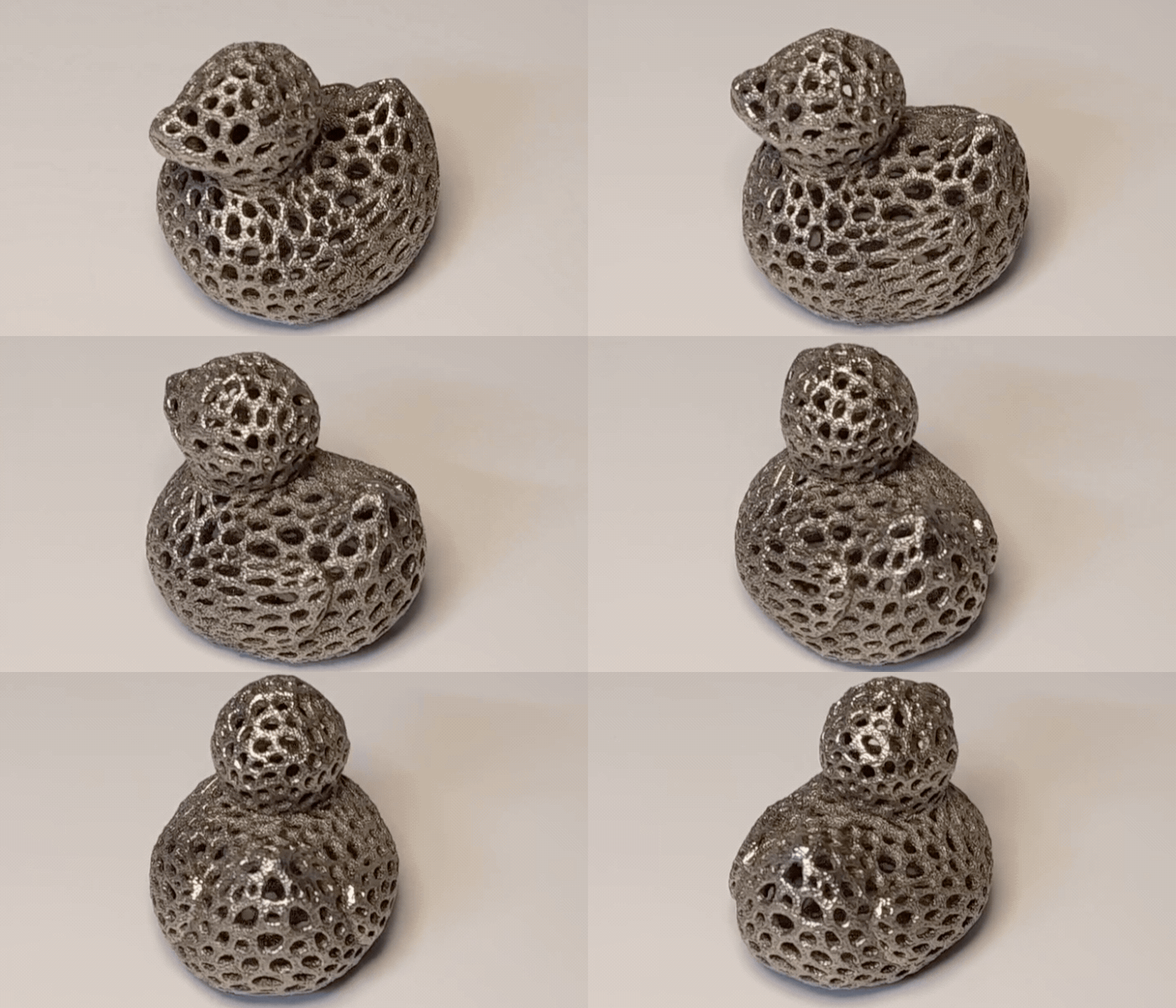
A Voronoi-style rubber duck printed in 316L stainless steel on a Scrap 1 prototype. Design by roman_hegglin, via Printables. (Photo credit: Scrap Labs)
Many of our design choices were made deliberately to extract value from the additive process. Take internal channels: our ventilation system has the lowest leak rate I have ever seen in a metal 3D printer, because there are very few leak points and none that depend on human assembly in the most sensitive areas. And because our FDM machines run the same program every time, they produce the same parts again and again, with a consistency that human labor simply can’t match.
The other big factor is the evolution of the laser. When I started building metal 3D printers in 2015, diode lasers didn’t have the beam quality we needed, so at Xact Metal we used fiber lasers, which worked but were expensive. I kept a close eye on diode lasers, though, and they have evolved enormously.
Finally, we run a very lean team. We are entirely self-funded and crowdfunded, so we spend every dollar deliberately. Above all, we trim the fat. We ask what is essential, what is safety-critical and what is performance-critical, and we spare no expense there. Everywhere else, we cut costs relentlessly.
3DN: What are some of the challenges you have faced since starting Scrap Labs?
In the early days, the challenge was simply proving that something this ambitious could exist, and getting the bill of materials into a range that makes the printer attractive to individuals.
Then came the technical challenges. One of the biggest is an inverted materials stack. Machines that make polymer parts are usually made of metal; we’re building a machine out of polymers that is designed to melt metal. Getting the parts to print, getting them to seal and getting the thermal design right took a major effort.
The last big piece was the optics: finding a laser source that produces a spot small enough to melt metal with high precision, and that can survive such a demanding application without burning up. We were fortunate to have some excellent experts help us solve those problems.
Doing all of this on a lean budget is a challenge in itself. We’ve watched plenty of companies raise enormous sums, reach unicorn status and then fade away. We want to be around for the long haul and to build technology that creates lasting value, not hyped-up pitch decks.
The one area that turned out easier than expected was marketing. People have been waiting for this product to exist, so our focus is on execution.
3DN: Who are you building Scrap 1 for, and what kinds of applications do you expect to see?
We’re building it for engineers, makers, designers and anyone who wants to manufacture complex metal components in engineering-grade materials from practically any space. Imagine someone passionate about amateur rocketry who wants to build, test and iterate in their garage, without sending their most prized designs to an outside facility and waiting weeks for parts.
Privacy matters a great deal to me. Printing in-house means your designs never leave your hands.
We also see strong potential among tool and die makers, the people who make the things that make other things: fixtures, robotic end effectors, even other 3D printers.
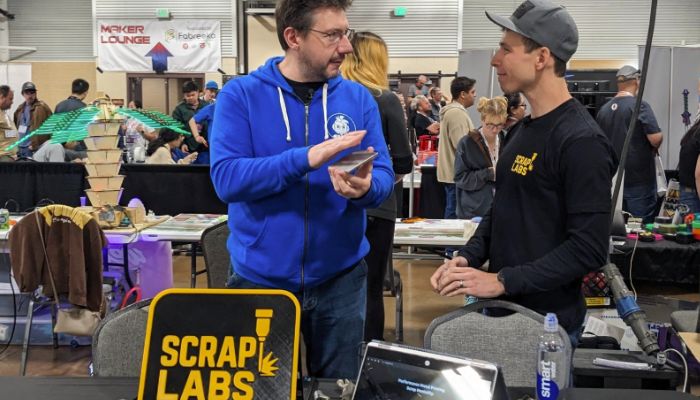
Matt Woods (right), founder of Scrap Labs, with Joel Telling of 3D Printing Nerd at the Rocky Mountain RepRap Festival (RMRRF) in 2025. (Photo credit: Scrap Labs)
It connects to education and research, too. Not every makerspace or school can afford a six-figure metal 3D printer, and universities and research labs could use it to advance the frontier of materials and manufacturing processes.
But above all, Scrap 1 is for the individual innovator who wants to see ideas brought to life quickly in fully dense metal. Getting parts in hours instead of days or weeks is incredibly powerful.
As for applications: automotive, robotics, drones and RC, jewelry, prototyping, tooling and much more. I think defense organizations would also be interested in machines that don’t need an entire shipping container for a single printer. Imagine 20 or 30 machines in one container; that could be very powerful for deployable manufacturing.
3DN: Any final thoughts for our readers?
Don’t hesitate to be bold and scrappy. You can just make things. Having a brain and hands that can do this is an incredible gift. Don’t waste it.
To learn more about Scrap Labs, visit their website HERE.
Would you put a desktop metal 3D printer on your workbench? Let us know in a comment below or on our LinkedIn or Facebook pages! Plus, don’t forget to sign up for our free weekly Newsletter to get the latest 3D printing news straight to your inbox. You can also find all our videos on our YouTube channel.
*Cover Photo Credit: Scrap Labs