



The Best DIY 3D Printer Kits
Most 3D printers today are sold as ‘plug-and-play’ systems—either fully assembled or semi-assembled and ready to print out of the box. However, this wasn’t always the standard. The industry’s roots can be traced back to the RepRap project, launched by Adrian Bowyer in 2005. His vision was a self-replicating machine capable of manufacturing its own parts. This sparked a global community of makers who build their printers from scratch, a movement that remains highly active two decades later.
In the DIY ecosystem, there are two main paths. The first involves fully open-source projects, such as Voron, where every component is sourced or printed individually. The second path is 3D printer kits: curated sets provided by manufacturers with all necessary components and instructions. Kits are generally more affordable than their pre-assembled counterparts and offer the builder a deep understanding of the machine’s mechanics, making future troubleshooting and modding much easier. This list focuses on the latter category. While most are FDM/MEX systems, we have included one unique technological outlier, ordered from highest to lowest price.
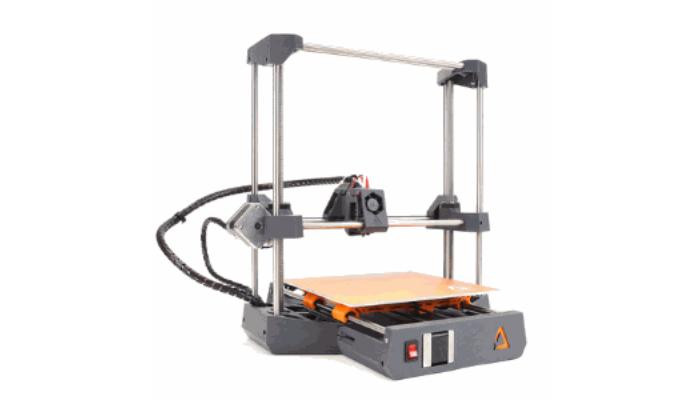
1. Dagoma Disco Ultimate: An Affordable FDM Classic
Starting at €399, the Disco Ultimate from French manufacturer Dagoma is one of the most affordable 3D printer kits, marketed as the most accessible dual-color 3D printer on the market. It uses an SD card, an inductive probe (for bed leveling), and several 3D-printed components, which take less than a day to assemble. Despite its appearance, the Disco Ultimate offers a build volume of 200 x 200 x 200 mm. It also features a layer thickness of 50 microns, XY positioning accuracy of 50 microns, and a maximum print speed up to 30% faster than its predecessor, the DiscoEasy 200.
2. Sovol SV08: High-Speed CoreXY
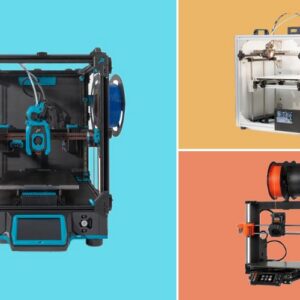
The Sovol SV08 is a CoreXY 3D printer inspired by the open-source Voron 2.4 design. Unlike a traditional Voron kit, which can take over 30 hours to assemble, the SV08 arrives largely pre-assembled and can be up and running in about an hour. It runs on Klipper firmware, features linear rails on all axes, four independent Z-motors for automatic gantry leveling, and can reach print speeds of up to 700 mm/s. The print volume is 350 × 350 × 345 mm, and a built-in camera allows for remote monitoring of prints. An optional glass enclosure is also available, which improves thermal stability for materials like ABS or PETG, though it slightly reduces the print height to 330 mm.
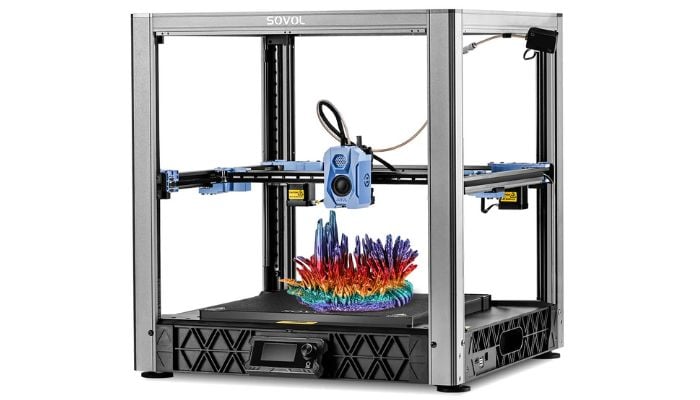
Photo Credits: Sovol 3D
3. The Prusa MK4S
For the Prusa MK4S, you actually have the choice to either buy it pre-assembled, or purchase it as a kit. Prusa originally shared their 3D printers as assembly kits, and they kept the option over time because the kits remained popular. For some makers, building the printer is half the fun! According to Prusa, assembling the MK4S is easy and requires no soldering because cables are cut to length, ready to be plugged in. The machine has 360° cooling and a high-flow nozzle for efficient printing. With its user-friendly design and proven reliability, the machine is suitable for professionals and beginners alike. There are also add-ons available, including the MMU3 (which allows you to print with up to five colors at the same time), and an exclosure, which could come in handy for printing with advanced materials.
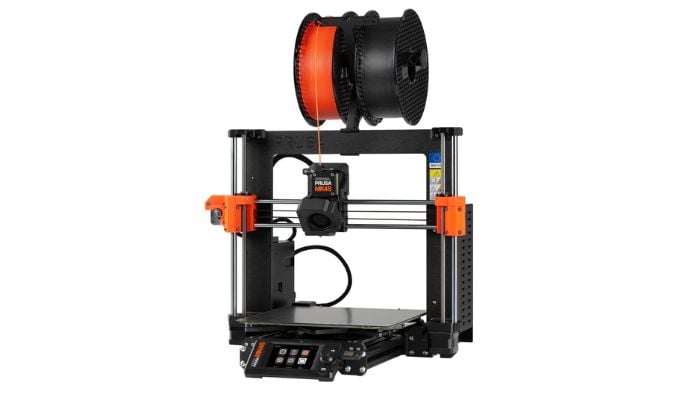
Photo Credits: Prusa Research
4. LDO Micron Plus
The Micron Plus printer is an open-source design created by the PrintersForAnts community and manufactured by the Chinese company LDO Motion. The kit includes almost everything needed for assembly, with two important exceptions to note: the hotend and the 3D-printed parts, which the user must obtain separately. Featuring a flying gantry CoreXY architecture and a build volume of 180 × 180 × 165 mm, the machine is equipped with the LDO Leviathan mainboard, the Nitehawk-36 toolhead board, a 300 W heated bed, and Klipper firmware. It supports ABS, ASA, PC, PLA, PETG, and TPU. This is a kit aimed at experienced makers who value customization and total control over their machine. LDO Micron does not sell the kit directly, but you can find it for sale through various resellers for around 780 euros.
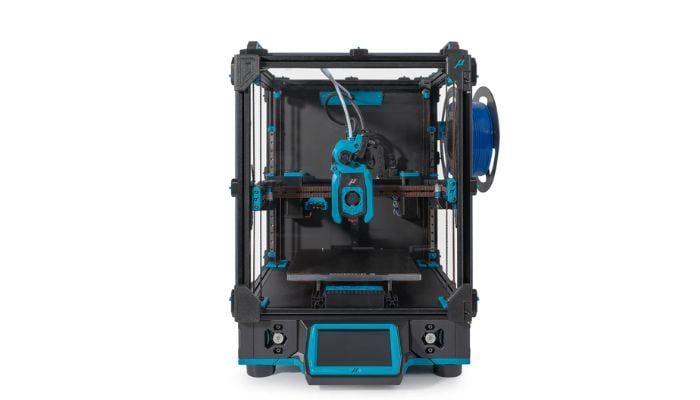
Photo Credits: LDO Motion
5. The HPRO-330 from HTA3D
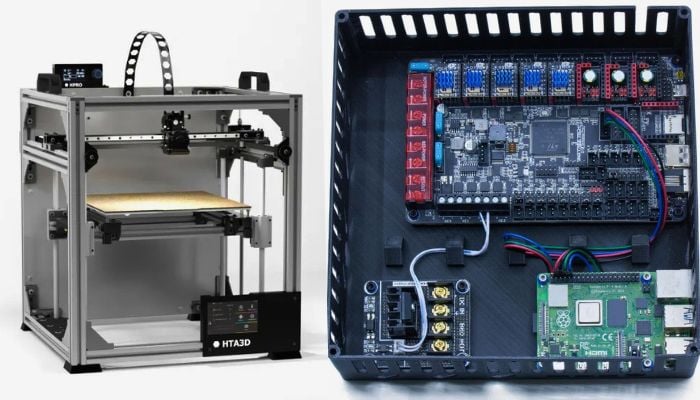
The HPRO-330 from Spanish manufacturer HTA3D is a CoreXY-style DIY 3D printer kit designed for makers looking for speed, precision and customization. The machine is built for fast and stable printing, with speeds up to 600 mm/s and professional MGN linear guides, while still giving users the hands-on experience of assembling it themselves. It is also available pre-assembled for users who want to skip directly to printing. The kit runs on native Klipper firmware powered by a Raspberry Pi 4, and is highly modular: users can choose their extruder, hotend and even the Z-axis height, with the tallest configuration offering an impressive 725 mm build height. Optional enclosure panels are available as well, including a fully enclosed version with active chamber heating, making the printer suitable for technical materials like ABS and ASA.
6. The V-Core 4.1 from RatRig
If you’re looking for a larger 3D printer to build, you might want to explore the V-Core 4.1 from RatRig. It’s a large-format, open CoreXY 3D printer kit designed to grow with the user. The build volume goes from 300x300x300mm to 500×500×500mm, and the machine has a customizable architecture. The basic kit comes with a single tool option, but users can upgrade with the Hybrid feature, which doubles your y axis acceleration. There’s also the IDEX upgrade, which enables printing with two materials at once, and doubling your output. The motion system is fully made of metal, making for sturdier prints, and designed for real-world use and easy maintenance.
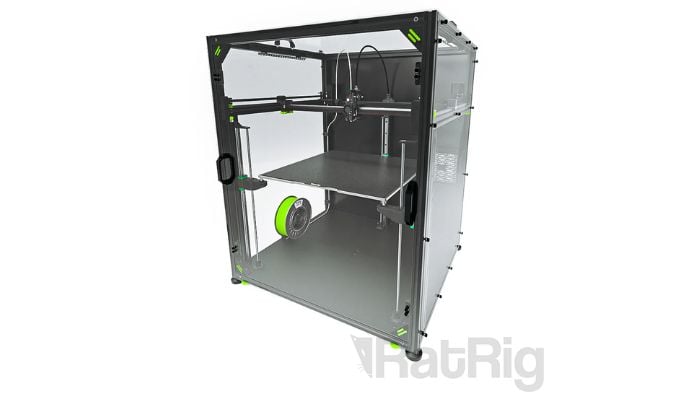
Photo Credit: RatRig
7. CORE One+ from Prusa
If there’s one thing that defines Prusa, it’s its tradition of offering kits. That’s why we’ve also included the CORE ONE+. This is the manufacturer’s latest enclosed CoreXY printer, featuring new features such as automatic opening of the top fan and a redesigned flexible filament loader. The kit is priced at $999, and according to the user community, assembly takes between 8 and 12 hours. In terms of specifications, it offers a print volume of 250 × 220 × 270 mm, a maximum nozzle temperature of 290 °C, and a heated bed up to 120 °C. It is compatible with PLA, PETG, Flex, PC, and PP, and—with the optional filtration system—also with ABS and ASA. In addition, it supports several interesting add-ons: the MMU3 for printing with up to five filaments simultaneously, and the upcoming INDX update, which will increase that number to eight materials or colors.
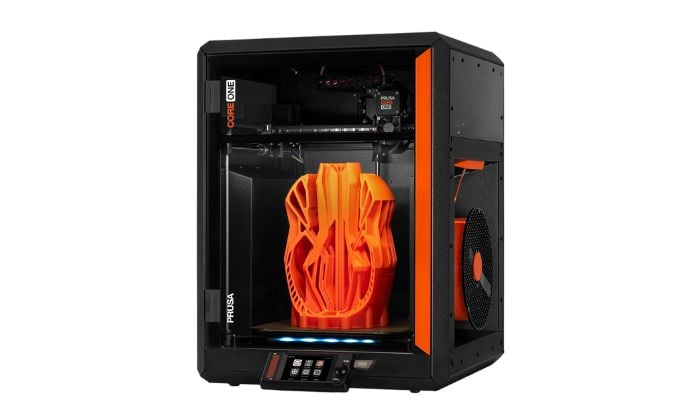
Photo Credits: Prusa Research
8. Inova MK1 from SLS4All
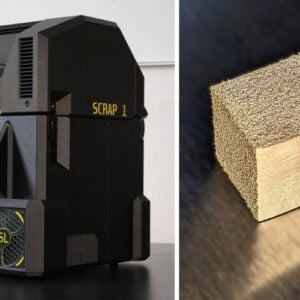
We wrap up the list with a kit that’s completely different from the others: an SLS printer. The Inova MK1 is a selective laser sintering printer developed by SLS3All, a project founded in late 2020 by two Czech engineers. The printer is open-source and available in two formats. The complete kit (€6,490) includes all the components needed for assembly, from the frame and electronics to the optics and wiring. The DIY set (€3,480), designed for those who want to fabricate the structural parts themselves, includes only the electronics, optics, and heating elements.
According to the manufacturer, the estimated assembly time is between 4 and 7 days, with no prior experience in printer construction required, thanks to a detailed interactive manual and a series of community videos. As for specifications, the machine has a print volume of 177 × 177 × 200 mm, a 10 W blue diode laser with a galvo scanner, and an average scanning speed of 2,800 mm/s. It is compatible with PA12, TPU, and any polymer with a melting point of up to 200 °C.
What do you think of these 3D printer kits? Let us know in the comments below or on our LinkedIn and Facebook pages. Plus, sign up for our free weekly Newsletter to get the latest 3D printing news straight to your inbox. You can also find all our videos on our YouTube channel.






Just investigating at this time.
You should mention that with a TronXY 3d printer you also get the worlds worst customer service I received aTronxy-X5SA-400 printer on March 12th and on March 17th I let them know the print plate was warped beyond use. over 60 emails ( 2 of which I was told “We will take full responsibility”) and 2 months later I still don’t have a replacement plate. PLEASE< tell people to stay away from this printer and company.
I have two Creality ender5 pro printer’s, I’ve had them for over a year and when I’m at home they are printing 24/7. Had no 3D printing experience, so has been a steep learning curve.
Both printer’s are very reliable, and would recommend these printer to novice and skilled operators.
Cost approx $600 Australian dollars, once you have the correct printer settings they are very good for the price
I bought the GEEETech I3 kit in early 2016 for about $450 AUD. It took two days to assemble the 400+ parts (incl all screws &nut). I subsequently bought another two (cheaper). They are easy and reliable. Assembling them yourself helps to understand how to susequently fix problems. The supplier was helpful in replacing a damaged part and later in a software problem I caused.one now sports a small laser head instead.
Such an amazing and fantastic blog with unique ideas and informations!
The Ender 3 comes with several assembled parts, meaning that it will only take
It is one of the most accessible machines on the market
DIY 3D printer kits continue to attract users, with many options ranging from high-end brands like Sintratec and Prusa to budget-friendly options like Anycubic, Voxelab, and Ender 3, offering easy assembly and stable printing.
Great article! I’ve always believed that building a 3D printer yourself is the best way to truly understand the mechanics and electronics behind additive manufacturing. It requires patience, but the payoff is worth it. I often look for ideas on optimizing personal time and finding a balance between productivity and hobbies, and DIY projects like this are a perfect example of how deep dives into a process can improve the quality of our skills. Thanks for the inspiration!
Great list of DIY 3D printer kits! It’s really helpful for beginners who want to start building their own printer and learn how everything works.
I’ve been thinking about getting a DIY 3D printer kit, and this guide is very useful. It’s nice to see the pros and features of different options.
Thanks for sharing this comparison. Building a 3D printer yourself sounds like a fun and educational project.
Your insights are clear and simple to comprehend due to the manner in which you structured your thoughts.
ایم آئی ٹی (MIT) کے محققین کی جانب سے تھری ڈی (3D) پرنٹنگ میں مصنوعی ذہانت (AI) کا یہ انضمام ٹیکنالوجی کی دنیا میں
Those are so cool! I’ve seen someone create 3D items with one and sell them—that takes real talent!
Can cartoon characters be 3D printed?
Seeing these self-assembled 3D printers adapt dynamically is incredible. Once setup is finished, Cobb Can Move manufacturing forward by letting anyone create precise, custom components right on their personal desktops.
Honestly, these kits are pretty impressive. Prusa’s CORE One+ looks like a safe, well-built choice for most users, while the Inova MK1 is on a totally different level with SLS printing. Overall, it’s cool to see DIY 3D printers getting more powerful and still staying Crossy Road accessible.
This 3D printer is truly the best value for money I have ever seen.
Wow, that walkthrough of building an SLS printer from scratch is insane – I had no idea you could rig the laser with just a few off‑the‑shelf parts. The part where you showed the powder‑recoating mechanism really caught my eye; looks tricky but clever. Any tips on keeping the enclosure sealed when you’re printing at home?
These 3D printing technologies seem to pale in comparison to AI.
I get where you’re coming from—AI tools are absolutely transformative for design workflows these days! That said, DIY 3D printer kits still hold such unique value for makers: they let you physically build, calibrate and iterate tangible objects from digital models, a hands-on creative process AI alone can’t fully replicate. The two actually work great side by side, with AI aiding design and 3D printing bringing those concepts to life physically.
After bouncing between AI design work and tinkering with 3D printers for hours, I love slow, quiet narrative media to unwind. If you’re after a calm atmospheric browser story to decompress, check out this psychological visual novel with gentle countryside scenes: thefalsesun.net
I was reviewing some of the content on this website and I am of the opinion that it is highly informative.
This is a fantastic dive into the DIY 3D printer kit world. It’s great to see a focus on kits, offering that hands-on building experience and a deeper understanding of the mechanics. For those who enjoy building things from the ground up, even a challenging game like Slope Game can’t compare to the satisfaction of assembling your own printer.
It’s interesting how DIY kits have evolved alongside the rise of plug-and-play printers. Instead of competing on convenience, they’re now appealing to users who want repairability, open-source hardware, and full control over upgrades. The growing popularity of CoreXY designs, Klipper firmware, and modular tool-changing systems shows that the maker community is still pushing innovation from the ground up. Great to see both FDM and an SLS option included, it really highlights how diverse the DIY ecosystem has become.
You’ve shared a sharp, well-informed overview of the DIY 3D printing ecosystem—great balance of context and practical guidance. Keep building, and feel free to point me at whatever specific printer or next step needs a hand.
The CoreXY emphasis here is useful; assembly time matters too.
Word games have always been a favorite pastime for people who enjoy testing their vocabulary and logical thinking. When Wordle became a global sensation, millions of players eagerly returned every day to solve the daily five-letter puzzle. However, many fans found themselves wanting more after completing the single daily challenge. Fortunately, Wordle Unlimited solves this problem by allowing players to enjoy as many puzzles as they like without any daily restrictions. Whether you are a beginner trying to improve your vocabulary or an experienced player looking for a greater challenge, Wordle Unlimited provides endless entertainment while helping you strengthen your language skills.
Great to see kits like the Prusa MK4S on this list—it’s a solid choice for anyone who wants to really understand their machine’s mechanics. For music fans building playlists as carefully as they build printers, tools like a playlist name generator can be just as handy for organizing those custom setups.
Fantastic blog. I enjoyed reading your writings. This was a novel that I truly enjoyed. I’ve bookmarked it and am excited to read more from it. Continue your fantastic efforts!
The open-source background of many of these projects is probably one of the most interesting aspects of DIY 3D printing. Being able to modify a machine rather than treating it as a fixed product gives makers a lot more room to experiment.
What stands out throughout this list is the balance between following a structured kit and still having room for personal customization. That combination seems to be a big part of why maker projects remain appealing.