


Must-See Product Launches of 2025

Still undecided on a Christmas gift? Don’t panic, we have a solution for you. If you’re considering investing in a 3D printer or a 3D scanner, this list should be right up your alley. We took a closer look at the products released in 2025 and asked which launches truly stood out, both in the desktop 3D printer segment and among 3D scanning solutions. This year saw a wave of new releases, particularly in the FDM and resin categories, with machines that are relatively affordable and easy to use. With so many updates hitting the market, it can be difficult to tell whether there is real innovation at play or simply incremental improvements. That’s why we’ve selected five models, both printers and scanners, that are genuinely worth considering, all while keeping an accessible budget in mind. This list is not exhaustive, so feel free to share your thoughts in the comments at the bottom of the article.
Bambu Lab H2 Series: Speed and modularity in focus
It’s hard to overlook Bambu Lab in this selection. The Chinese manufacturer made a strong impression in 2025 with a steady stream of new announcements. Rather than launching a single standout product, the company introduced an entire lineup: the H2 series. If you’ve been following the news, you’ll know that Bambu Lab has placed a strong emphasis on speed, whether with the H2S or the P1S. What truly stood out in 2025, however, was the H2D and the introduction of genuine modularity within the company’s ecosystem.

The H2D 3D printer (Photo Credit: Bambu Lab)
Let’s be honest: Bambu Lab didn’t invent modular 3D printing. Companies like Snapmaker have been offering 3-in-1 machines with CNC and laser modules for years. What Bambu did differently, however, is integration. The company developed a software workflow that makes it possible to move seamlessly from printing a template to laser-engraving a serial number. Almost overnight, users were able to swap a print head for a laser cutter or vinyl cutter in just a few seconds. The 3D printer effectively becomes a true fabrication hub, well suited to an office environment.
We’ll wrap up with the H2C, recently unveiled at this year’s Formnext trade show. This printer supports up to six hotends and 24 filaments, making it possible to bring even the most complex multicolored parts to life. If you’re looking to work with a wide range of colors and materials, it offers a reliable and fast solution for under €2,250.
Prusa Core One Ecosystem: Reinforcing its position through modular upgrades
The Czech manufacturer is pushing back against growing competition from China, with its Core One ecosystem standing out as a strong Christmas gift contender this year. Launched in 2024, the machine underwent several upgrades in 2025, with Prusa further strengthening the platform’s capabilities. The company first introduced the Core One L, which, as the name suggests, offers a significantly larger build volume of 300 x 300 x 330 mm, roughly double that of its smaller counterpart.
What stands out most, however, is the INDX update unveiled by Prusa at Formnext. This new architecture, developed specifically for the Core One, enables the use of up to eight different filament spools through fast and efficient tool changes. As a result, users can work with a wider range of colors and materials more easily.

The INDX system (Photo Credit: Prusa)
Shining 3D Einstar Rigil: Faster, more accessible 3D scanning
Are you tired of printing STL files downloaded online? Why not take the next step and create your own models using a simple 3D scan? 3D scanning is no longer a time-consuming process, thanks to solutions that are easier to use and offer faster, more comfortable workflows. This is precisely the case with the Einstar Rigil scanner from Shining 3D. Equipped with new sensors, the device delivers significantly faster scanning speeds and can capture dark or shiny surfaces without the need for a spray. Battery life has also been improved, allowing for uninterrupted daily use.
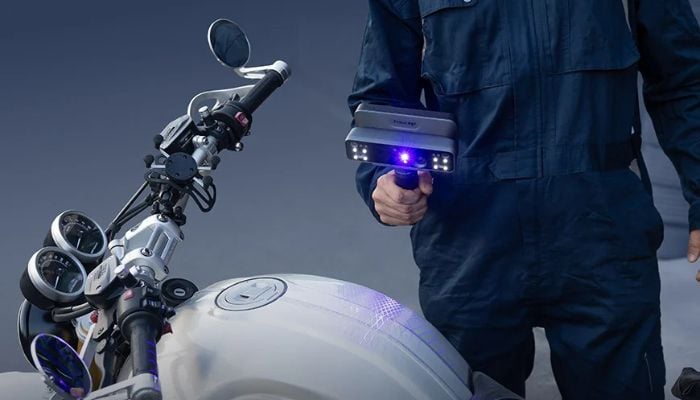
Photo Credit: Shining3D
Elegoo Centauri Carbon: A more affordable desktop alternative
While 3D printers from Bambu Lab and Prusa are relatively accessible, they still represent a significant investment. If your budget is more limited, turning to Elegoo is a logical and appealing option. That said, it is worth noting that the new version of the Centauri Carbon will not be available until the first quarter of 2026. Even so, the machine is still worth a closer look. The Centauri Carbon V1 already generated plenty of attention, thanks to its 500 mm per second print speeds, Klipper integration, and robust CoreXY frame, all offered at a price below $400. At Formnext 2025, the manufacturer unveiled a V2 version of the FDM printer, featuring a reinforced chassis to reduce vibrations, broader material compatibility, and a new camera with onboard AI designed to stop the machine in the event of a printing issue. The printer also includes a brass hardened steel nozzle and a heated build plate capable of reaching 110°C, ensuring improved thermal stability. If you are not in a rush, we strongly recommend waiting for the official release of this V2. Otherwise, the previous generation remains a solid option for smaller budgets.
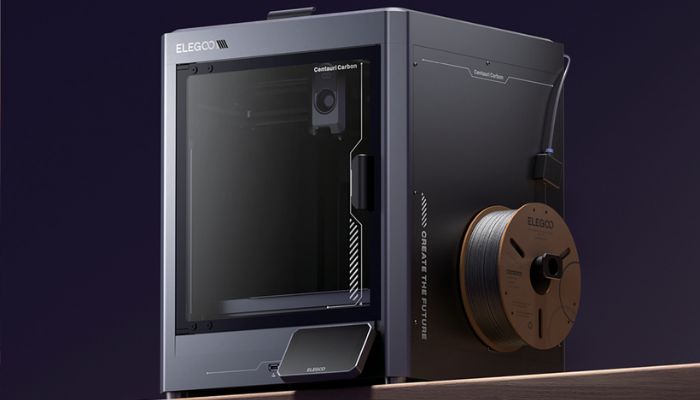
The Centauri Carbon V2 is not yet available. (Photo Credit: Elegoo)
HeyGears Reflex Series: A refined approach to resin printing
We have focused heavily on fused deposition modeling (FDM) so far, but what about resin solutions? If this type of machine is more your speed, we strongly recommend taking a look at HeyGears and its Reflex range, which stood out in 2025 thanks to its resin 3D printers. Last year, we tested the Reflex RS and the Reflex, and were already impressed by the manufacturer’s “Auto-Peel” technology. This year, HeyGears went a step further with the Reflex 2 Pro. The new machine offers a larger build volume of 230 x 144 x 350 mm compared to its predecessor, along with more precise light projection for optimized resin curing. The result is improved surface quality and reduced material waste. The Reflex 2 Pro is also equipped with the “Resin Capsule” system, which automatically manages resin tank filling and drainage. This eliminates the need to manually pour resin bottles and deal with sticky gloves every time materials are changed.
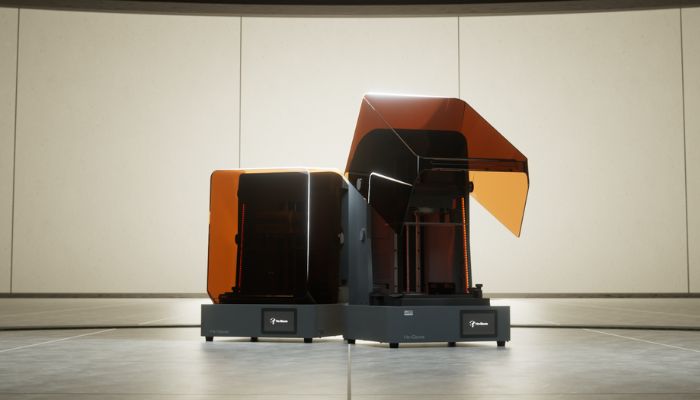
The Reflex 2 range (Photo Credit: HeyGears)
So there you have it, our selection for the end of the year! As mentioned earlier, this list is not exhaustive and there are plenty of other 3D printers and 3D scanning solutions on the market. That said, the models released in 2025 stand out, in our view, as some of the best options for anyone looking to invest in the technology. Feel free to share your thoughts in the comments below or on our LinkedIn or Facebook pages! Plus, don’t forget to sign up for our free weekly Newsletter to get the latest 3D printing news straight to your inbox. You can also find all our videos on our YouTube channel. Happy holidays to all!