

Lululemon Brings Large-Format 3D Printing to Retail Architecture
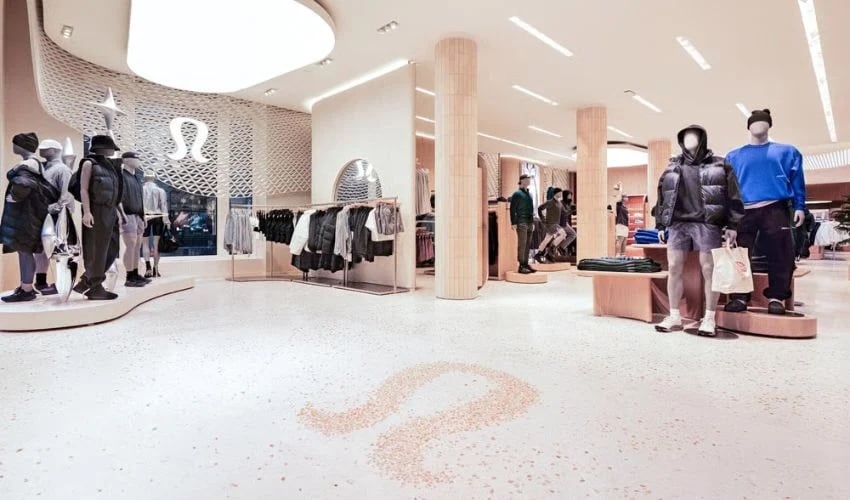
3D printing continues to establish itself as a key tool in architecture and interior design. The latest example comes from Canadian brand lululemon, which has chosen large-format 3D printing to create new architectural elements for its retail stores.
Specializing in running, training, and yoga apparel, lululemon has partnered with Dutch studio Aectual, known for its expertise in XL 3D printing for interior architecture. Together, they developed 3D-printed ceilings and storefronts using large-format extrusion systems.
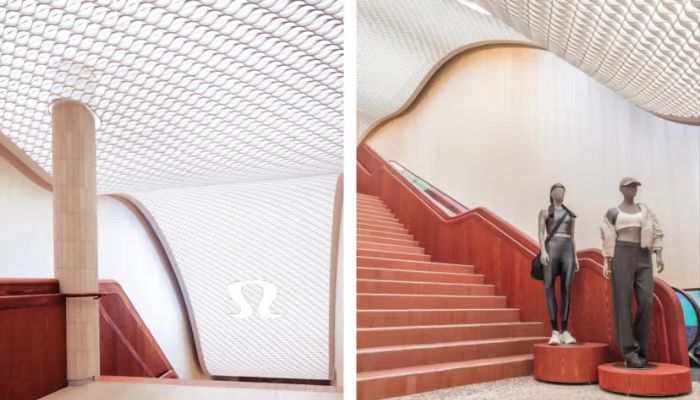
Thanks to 3D printing, lululemon has been able to reimagine the design of its stores.
The first installations debuted in Milan and New York, with additional projects already announced in Birmingham and Tokyo. The structures stand out for their fully curved surfaces, whose organic forms echo the rounded logo of the Canadian brand. Each installation consists of modular panels designed to connect seamlessly, creating a cohesive and fluid aesthetic.
A key aspect of the project lies in its material selection. All elements are 3D printed from a blend of recycled consumer waste processed by Aectual. This approach aligns with the studio’s DNA, which places the circular economy at the core of its business model. Aectual collects end-of-life components and reprints them as new architectural products, creating a closed-loop manufacturing system.
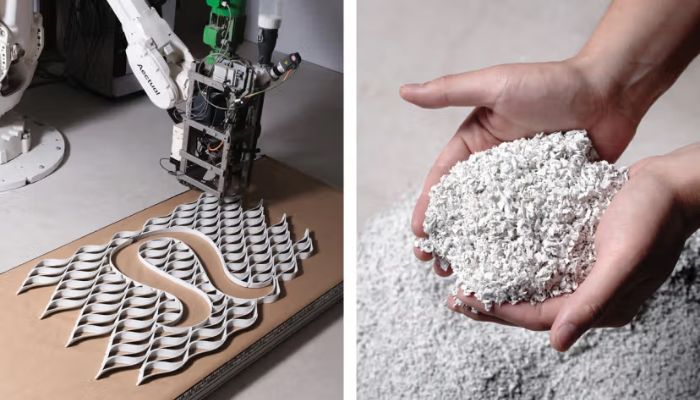
Aectual repurposes waste by transforming it into furniture and interior design elements.
As the studio explains:
Aectual creates fully circular interior systems and objects using XL 3D printing. Our catalog of customizable solutions includes sunshades, wall and floor finishes, as well as objects such as large-scale planters, room dividers, and stools. Our products can be returned after use, ground down, and transformed into new 3D-printed elements, enabling continuous improvement.
As part of this partnership, Aectual explains that each piece is designed to meet local regulatory requirements and the specific constraints of interior applications. Lululemon therefore benefits from a flexible manufacturing process that adapts to its visual identity while accommodating the requirements of each market. The result is a consistent architectural language across stores, despite the brand’s global footprint.
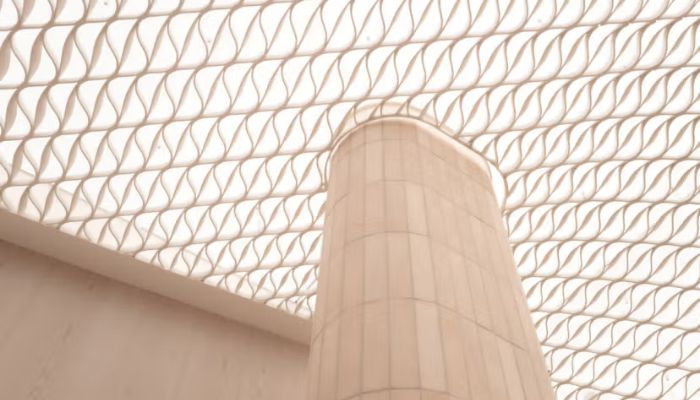
3D-printed ceiling
Have you visited one of lululemon’s new 3D-printed store installations? Let us know in the comments below or on our LinkedIn and Facebook pages. Plus, sign up for our free weekly Newsletter to get the latest 3D printing news straight to your inbox. You can also find all our videos on our YouTube channel.
*All Photo Credits: Aectual

3D printing technology is impressive! Explore and expand your knowledge with many new and innovative designs. Enjoy the thrill of discovery and breakthroughs.