

Columbia Engineers 3D Print and Laser-Cook a Complete Three-Course Meal
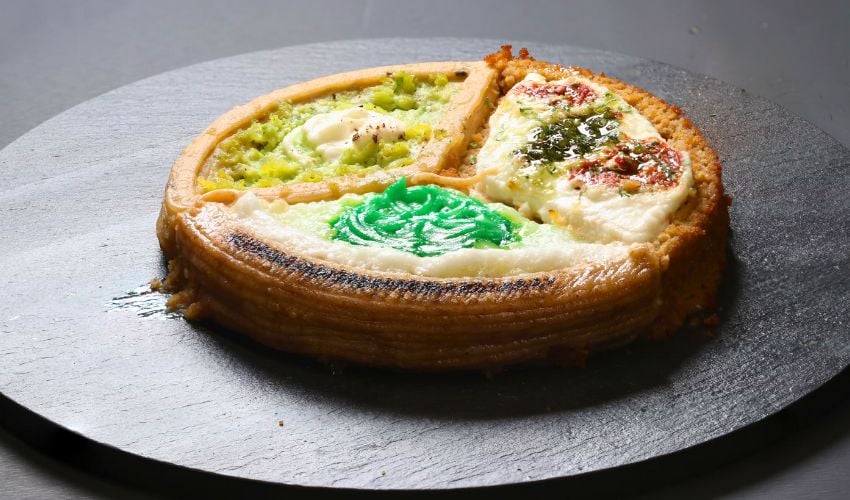
Imagine sitting down to a three-course dinner where every dish, from appetizer to dessert, was entirely 3D printed and cooked by laser. That vision became reality at Columbia University, where researchers produced a complete meal featuring a quiche-inspired tart, cauliflower pizza, and key lime pie, all with textures that rival conventional cooking methods. While 3D food printing has advanced significantly, achieving authentic texture has remained one of the technology’s biggest challenges. Traditional cooking methods lack the spatial resolution needed to match additive manufacturing’s precision, making it difficult to control heat application as accurately as material deposition.
Closing the Texture Gap in 3D Food Printing
The project was led by Jonathan Blutinger during his PhD in mechanical engineering at Columbia University, under the supervision of professor Hod Lipson. According to reporting by the Columbia Spectator, the research unfolded over roughly six years as the team explored whether cooking could be controlled with the same level of precision as digital fabrication. The effort brought together students and engineers from multiple disciplines within Columbia’s research ecosystem.
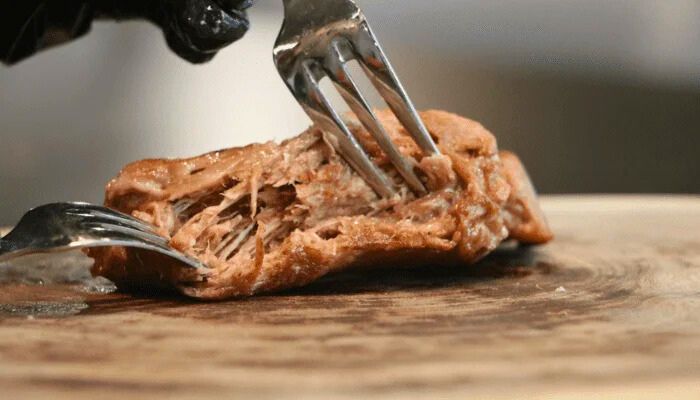
An example of a 3D-printed meat alternative (Photo Credit: Steakholder Foods)
At the core of the project was the integration of laser-based cooking directly into the 3D printing process. Rather than printing food and transferring it to an oven, the system applies localized laser heating during fabrication itself. This method allows specific regions of a printed structure to be cooked selectively while preserving its overall geometry.
From Ingredients to a Fully Cooked Meal
The demonstration meal was produced using 14 ingredients sourced from standard grocery stores. These ingredients were prepared using common food-processing tools before being printed. By adjusting laser exposure during printing, the researchers achieved textures that more closely resemble those of conventionally cooked foods.
The work builds on earlier food-printing research conducted at Columbia’s Creative Machines Lab. In a previous project, the team demonstrated a seven-ingredient 3D-printed dessert made using edible inks and layered deposition. That earlier work focused on multi-material food assembly and raised broader questions about whether future cooking appliances could integrate 3D printing with software-driven heating methods. The three-course meal represents a shift toward addressing texture, one of the most persistent challenges in 3D food printing.
The core research team included Blutinger, Evan Lloyd Omo, and Pol Bernat, with contributions from roughly 30 to 40 additional students and engineers. Their findings were published in September in the Journal of Food Engineering, as reported by the Columbia Spectator. The publication marked a milestone for the group’s ongoing exploration of digitally controlled cooking.
Beyond novelty applications, Blutinger emphasized the potential for more deliberate and transparent food preparation. “This kind of technology could help people, help you be more deliberate about what you’re eating, and give you more transparency in the food that you’re eating and track it in a much better way,” he said. According to the Columbia Spectator, future work will focus on evaluating how laser-cooked foods compare nutritionally to those prepared using conventional methods.
While the system remains a research prototype, the work highlights how digitally controlled cooking could address a core limitation of 3D food printing. The approach suggests new possibilities for personalized nutrition, texture-modified foods, and software-driven food production. It also shifts the conversation from whether complete meals can be 3D printed to how such systems might be used meaningfully in real-world contexts. Bon appétit!
Would you try a laser-cooked 3D printed meal? Let us know in a comment below or on our LinkedIn or Facebook pages! Plus, don’t forget to sign up for our free weekly Newsletter to get the latest 3D printing news straight to your inbox. You can also find all our videos on our YouTube channel.
*Cover Photo Credit: Jonathan Blutinger Courtesy of Columbia Engineering