


Itzcóatl, the 3D-Printed Serpent Head Made of Soil and Obsidian
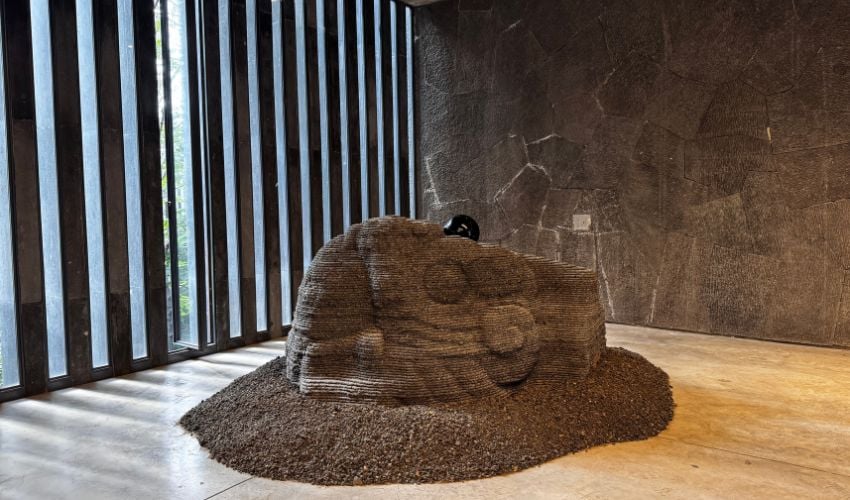
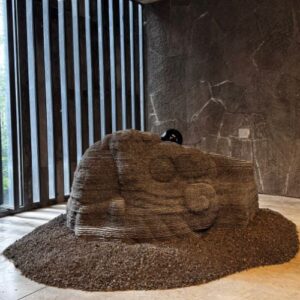
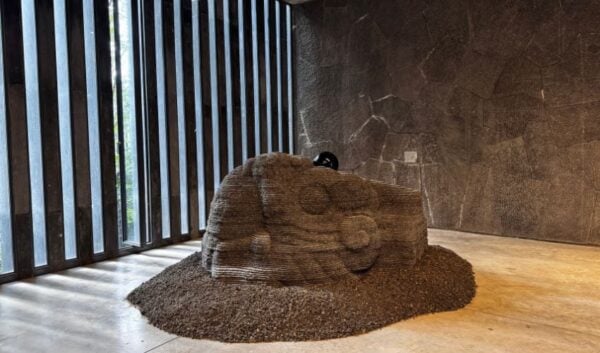
Itzcóatl was the fourth ruler of Mexico-Tenochtitlan, and his name means “obsidian serpent” in Nahuatl. Today, it is also the name of a sculpture 3D printed with soil by Mexican artist Alfredo Salazar-Caro, co-founder of the Digital Museum of Digital Art (DiMoDA). The piece, which was unveiled at the Anahuacalli Museum in Mexico City, is the first fragment of a monumental serpent whose body is still to come. We spoke with the artist to learn how it was made.
What Is Itzcóatl?
Although it bears the name of a ruler, the sculpture draws on another figure from Mexica tradition: the Xiuhcóatl, or fire serpent. Salazar-Caro took a 3D scan of a representation of the Xiuhcóatl and reinterpreted it digitally until it became an entirely new piece, one he himself places somewhere between archaeology and speculation.
The head measures 1.70 meters long and 80 centimeters tall, and weighs 770 kilograms. For those unfamiliar with 3D printing with soil, the technique works by depositing a wet paste made of soil and other natural materials layer by layer, which gradually dries and hardens to form the object. The technology is used primarily in architecture to build walls and homes.
In this case, the mix combines dark soil, volcanic sand, charred material, and obsidian, resulting in a rough black surface reminiscent of cooling lava.
A Volcanic Serpent in a Museum of Volcanic Stone
The choice of location was no accident. The Anahuacalli was designed by Diego Rivera, with the help of Juan O’Gorman, to house his collection of pre-Hispanic art. The building is inspired by a teocalli, a Mesoamerican pyramid temple, and is constructed of volcanic stone quarried on the very same site, originating from the eruption of the Xitle volcano. A serpent made of soil and volcanic sand thus finds a setting tailor-made for it: the piece engages in a dialogue with the very material of the museum.
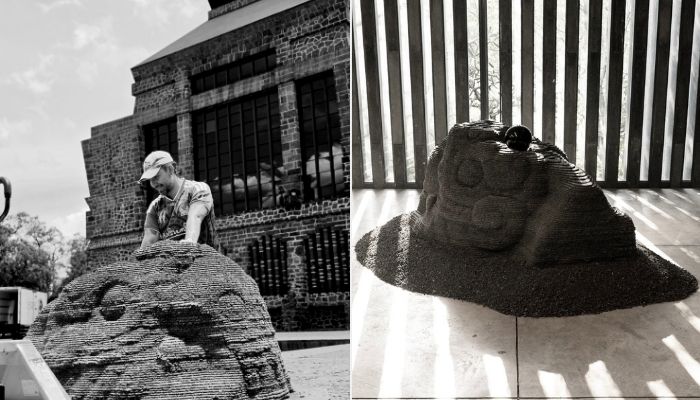
Installation of Itzcóatl at the Anahuacalli Museum.
Making the Piece
Salazar-Caro’s process begins long before the printer starts up. His starting point is a personal archive:
“It all starts with a library of 3D scans that I’ve been collecting for several years now, mostly of ancient artifacts of Mexica or ‘pre-Hispanic’ origin.”
From there, the workflow follows several stages:
- Digital remixing. The artist combines and transforms these scans in 3D modeling software such as Blender or Rhino to create new sculptures.
- Material formulation. The soil is selected based on the conditions of the site where the piece will be installed, such as whether it needs to withstand rain or heat. A custom formula is then developed to meet these requirements.
- Preparation for printing. The model is processed in Grasshopper, a parametric design tool, to generate the G-code: the instructions that tell the machine where to move and how much material to deposit.
- Printing. The piece is fabricated on a Crane WASP, a large-format printer, at the laboratory of the Mexican collective SEED in Mexico City.
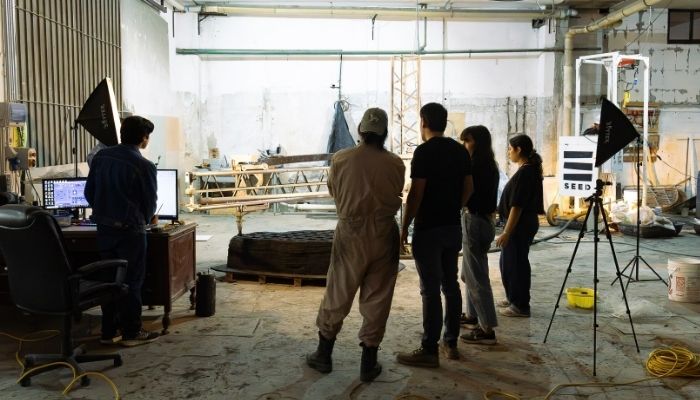
Itzcóatl being 3D printed on a Crane WASP at SEED’s lab.
The Challenges
The first challenge was finding the right mix. The formula for Itzcóatl was developed by architect Lorane Belier, a specialist in earthen construction, based on the project’s initial requirements. According to Salazar-Caro, arriving at the right formula for a piece like this takes an entire team of architects and scientists.
The second challenge was the software. A large-format printer doesn’t work like a desktop 3D printer: generating the G-code requires far more complex programming. That part was handled by industrial designers and programmers Tony Gutiérrez Rangel and Leo Flores.
The third was physical. Printing the head took three days, but not for lack of speed:
“The print took three days, not because it’s slow, but because we can’t build up much height each day: the lower layers could be crushed under the weight of the upper ones.”
Technology and Ancestral Knowledge
The choice of material stems from a conviction. For years, Salazar-Caro’s work has centered on the relationship between ancient knowledge and technology. The artist maintains that ancestral cultures had an understanding of balance with nature that we have since lost, and that technology can help us regain it.
“For me, this 3D printing technique using earth strikes a perfect balance between cutting-edge technology and ancestral techniques.”
For him, the climate crisis is the defining issue of our time, and art is a way to help the public imagine possible near-term solutions. Building with soil, a local and abundant material, is one of them.
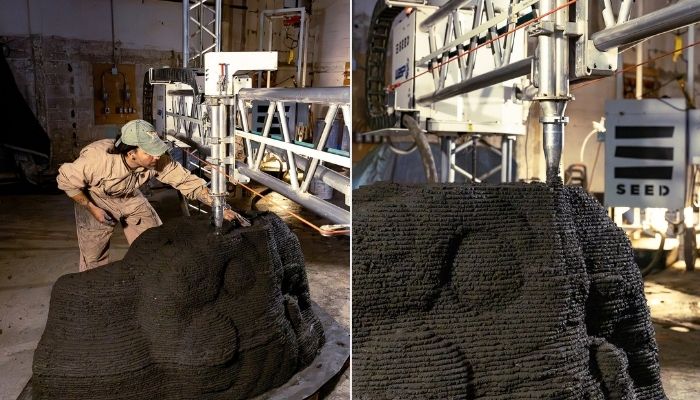
Close-up of the layers of soil during the printing of Itzcóatl.
The Serpent’s Body
Itzcóatl is only one part of a larger project. The artist and his team are already working on the serpent’s full body, which will be unveiled this year. They are still looking for the right place to show it, but Salazar-Caro offers a glimpse of where the project is headed:
“It will be an interactive architectural intervention, designed so that people can sit and enjoy a public space.”
If the first fragment already weighs 770 kilograms, the full body promises to take 3D printing with soil to an even larger scale. We’ll be keeping an eye on this project and will let you know how the story unfolds.
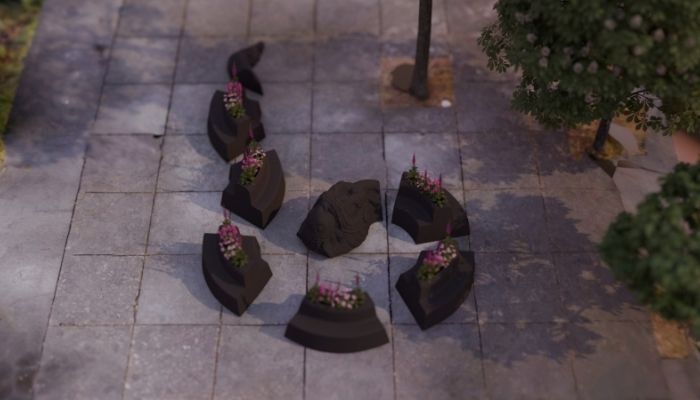
Model of the final project: a public space where people will be able to sit and enjoy the work.
What do you think of this project? Let us know in a comment below or on our LinkedIn or Facebook pages! Plus, don’t forget to sign up for our free weekly Newsletter to get the latest 3D printing news straight to your inbox. You can also find all our videos on our YouTube channel.
*All Photo Credits: Alfredo Salazar-Caro