




UWE Bristol Researchers Grow Rubies and Sapphires Inside 3D Printed Platinum
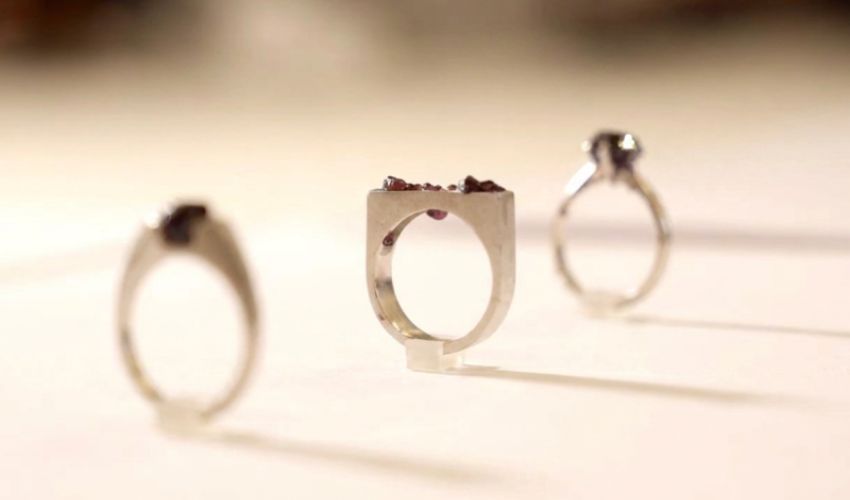
A team at the Centre for Print Research (CFPR) at the University of the West of England (UWE Bristol) has developed a method for placing a seed crystal inside a platinum structure during manufacture. The gemstone can then grow directly within the part. Led by researcher Sophie Boons, the project is called neo-gemstone. It aims to grow rubies and sapphires in platinum settings using scraps and offcuts from existing gemstones, rather than mining them or growing them in an industrial environment.
So, what does it mean to “grow” a gemstone? Gemstones can be made in a laboratory, in addition to being extracted from a mine. Essentially, the process speeds up the recreation of conditions found in the Earth, including pressure, temperature, and chemical composition, to crystallize pure minerals. The CFPR team used a hybrid system to grow gemstones without reproducing these industrial conditions.
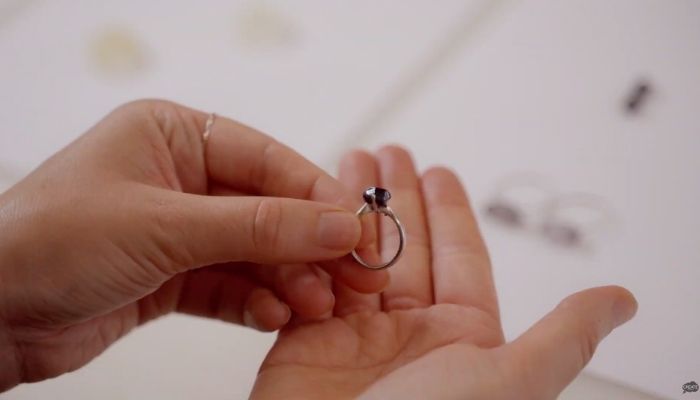
Photo credits: CREATE Education
The seed crystal had to remain in an exact position within the metal structure without moving or being damaged during manufacturing. Conventional methods could not meet these requirements. In investment casting, molten metal is poured into a mold. The flow, buoyancy, and thermal shock can displace or break any seed inside. Platinum’s high melting point further increases that risk. Laser powder bed fusion (LPBF) was also unsuitable. The part would remain buried in metal powder throughout manufacturing, preventing access to insert a seed before continuing the process.
A Hybrid Process
The team instead used a HAAS 5-axis milling machine equipped for wire laser metal deposition (W-LMD), a form of directed energy deposition (DED), and 5-axis CNC machining. W-LMD builds the part layer by layer while keeping it accessible. The team can pause deposition, position the seed manually and then continue manufacturing. Deposition and finish machining take place on the same machine, so the team does not need to transfer the part to a second station.
Researcher Michael White also developed a vacuum extraction system that captures platinum waste generated during machining so it can be recycled.
The neo-gemstone project is still in the research phase, but it shows how a hybrid system can be reconfigured for the requirements of a specific part. In this case, the challenge was to insert a seed crystal without damaging it. In another application, the same approach could integrate a sensor, modify an internal geometry or recover another material during machining.
What do you think about using hybrid systems to grow gemstones? Let us know in a comment below or on our LinkedIn or Facebook pages! Plus, don’t forget to sign up for our free weekly Newsletter to get the latest 3D printing news straight to your inbox. You can also find all our videos on our YouTube channel.
*Cover image: rings featuring lab-grown gemstones. Credits: Meltio








This is fascinating research! The idea of growing gemstones directly into the setting is incredibly innovative. It makes me wonder if they could apply this to other materials someday, maybe even making tiny, intricate designs with ragdoll archers or something equally unique embedded right into the metal. The sustainability aspect is a huge bonus too.
Bleibt bei dem Verfahren, Rubine und Saphire direkt in 3D-gedrucktem Platin wachsen zu lassen, noch offen, wie wirtschaftlich es sich im größeren Maßstab umsetzen lässt? Die Kombination aus additiver Fertigung und mechanischer Bearbeitung klingt spannend, aber auch bei digitalen Freizeitangeboten sollte man genauer hinsehen, statt sich nur von einer technischen Neuerung beeindrucken zu lassen. Wer sich für ein ausland casino interessiert, sollte beispielsweise Lizenzangaben, Auszahlungsbedingungen und verantwortungsvolle Spiellimits prüfen; topcasinoausland kann als Ausgangspunkt für weitere Recherchen dienen.