





GH Induction Has 3D Printed the Largest Pure Copper Induction Coil
GH Induction has announced the creation of the largest 3D printed coil made of pure copper, made using electron beam melting (EBM). This is a key component used in electromagnetic induction technology to heat metal parts as efficiently as possible. The company actually launched its 3D Inductors brand in 2014, which involves 3D printing these coils, directly from pure copper. The use of additive manufacturing was clear for the company as it offers many advantages such as a reduction in production costs per part created or a longer life span of the coil. In any case, GH Induction has succeeded in designing a larger coil by optimizing the printing volume – this has been increased to 180 x 180 x 350 mm.
Traditionally, coils are manufactured by hand, by brazing or soldering. They are a critical element in induction since they allow the heating process to be activated in a fast, safe and controlled way, while optimizing energy efficiency. In terms of applications, the technology is mainly used to heat treat metals or assemble components in all industrial sectors. 3D Inductors manufactures these famous coils using 3D printing, more specifically via an EBM machine developed by GE Additive.
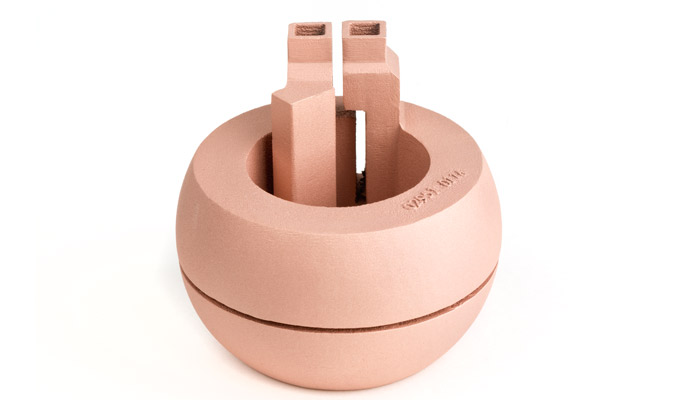
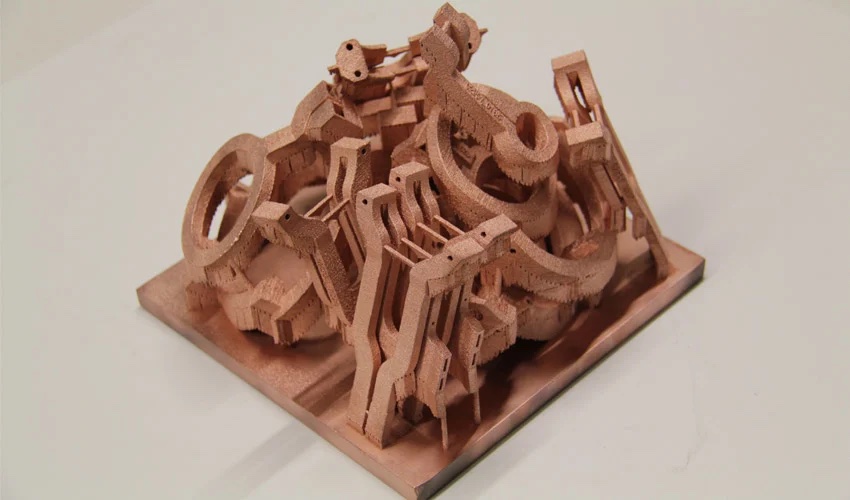
One of the coil’s 3D printed elements (photo credits: GH Induction)
Since its inception, the company has taken advantage of a 180 x 180 x 180 mm printing plate to manufacture its copper coils. Recently, however, the company rethought the arrangement of the various components in a single coil to increase the production volume. As a result, it was able to take advantage of a larger size – 180 x 180 x 350 mm – and design the largest 3D printed coil in pure copper. The company says in its press release, “The ability to stack and achieve full optimization of the build volume and the ability to process pure copper are very advantageous because they also generate energy efficiency gains and longer life for the inductor coils.”
The teams then tested the quality of the material, particularly its purity. The residual resistivity ratio (RRR) was used to determine this: the higher the indicator, the denser the material and therefore the absence of internal voids, which guarantees excellent thermal and electrical conductivity. The copper used by GH Induction has obtained a RRR of over 250, while that of ordinary copper is between 5 and 150.
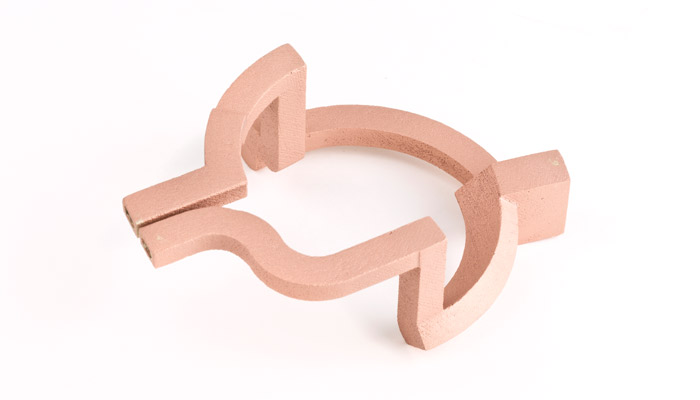
Another 3D printed component for the coil (photo credits: GH Induction)
The use of additive manufacturing would therefore allow for a high quality component, while offering more complex internal and external geometries than conventional coils. If you want to know more about 3D Inductors, click HERE.
What do you think of these 3D printed coils made of pure copper? Let us know in a comment below or on our LinkedIn, Facebook, and Twitter pages! Don’t forget to sign up for our free weekly Newsletter here, the latest 3D printing news straight to your inbox! You can also find all our videos on our YouTube channel.






It is the creation of mankind
Thank you for the great post! Very helpful and well-explained.
These articles interest me, they’re great. I am pulling for you in your next work
A user-friendly AI video creator that transforms short prompts or images into crisp 15-second clips, complete with synced audio, smooth motion, and preset formats for fast publishing.
This is such an impressive achievement! The ability to 3D print with pure copper using electron beam technology opens up incredible possibilities, especially for industries that rely heavily on induction heating. Copper has excellent thermal and electrical conductivity, which makes it ideal for coils, but it’s notoriously difficult to work with in additive manufacturing due to its high thermal conductivity. The fact that GH Induction managed to create the largest pure copper coil is a significant milestone for the industry. This could revolutionize how we design and manufacture induction heating components, particularly in aerospace and automotive applications where performance and weight are critical. I’m curious to see how this technology develops and what other applications might benefit from 3D printed copper components. Great find, thanks for sharing this!
Incredible achievement! 3D printing pure copper is such a technical challenge with the thermal conductivity and laser reflectivity issues. This kind of industrial metal AM advancement is exciting to follow. For more accessible 3D visualization, Modelfy 3D offers an intuitive way to generate 3D models directly from images — great for rapid prototyping and concept visualization.
This is a really impressive use of additive manufacturing. Printing pure copper at this scale is not easy, and the improvement in build volume makes the achievement even more meaningful for industrial induction applications. What stands out to me is not just the size, but the material quality and conductivity performance they were able to maintain. It’ll be interesting to see how this kind of manufacturing approach expands into more customized thermal and electrical components in the future.
Trellis 2 is an AI 3D Generator for Text to 3D and Image to 3D, helping you create high-quality assets fast with preview and export.
https://www.trellis2.art
Incredible achievement! 3D printing pure copper is such a technical challenge with the thermal conductivity and laser reflectivity issues. This kind of industrial metal AM advancement is exciting to follow. For more accessible 3D visualization, Trellis 3d offers an intuitive way to generate 3D models directly from images — great for rapid prototyping and concept visualization.
This is an impressive milestone in copper additive manufacturing! Printing pure copper at this scale opens up incredible possibilities for industrial applications like electromagnetic shielding and thermal management. The precision achievable with modern metal 3D printing continues to push the boundaries of engineering.
This is a solid example of how 3D printing is evolving into real industrial use, not just prototyping. Printing a pure copper induction coil at this scale is impressive in terms of efficiency and design flexibility. It reminds me of how customization matters even in digital tools.
Impressive achievement by GH Induction. Producing the largest pure copper induction coil with 3D printing technology really shows how advanced manufacturing is transforming industrial applications. Innovations like this could improve efficiency, reduce production limitations, and open new possibilities for custom induction systems in the future.
Amazing innovation from GH Induction. Creating the largest pure copper induction coil through 3D printing is a major step forward for industrial manufacturing. It’s exciting to see how advanced technology continues to improve precision, efficiency, and customization in the induction industry.
The development of 3D printed pure copper coils is truly impressive. Additive manufacturing not only improves production flexibility, but also enables more complex and efficient designs that would be difficult to achieve with traditional manufacturing methods. Innovations like this could have a major impact on the future of industrial induction technology.
Very informative post. Thank you for putting this together.
GH Induction’s achievement with its large pure-copper 3D-printed induction coil highlights how additive manufacturing is transforming industrial technology, making components more efficient, durable, and economical to produce. This kind of innovation also fits naturally into a broader evening discovery theme, where technology, science, and entertainment can sit side by side.