

How 3D-Printed Film Could Push the Limits of FDM: Interview With FILDZ Founder Edgaras Janušauskas
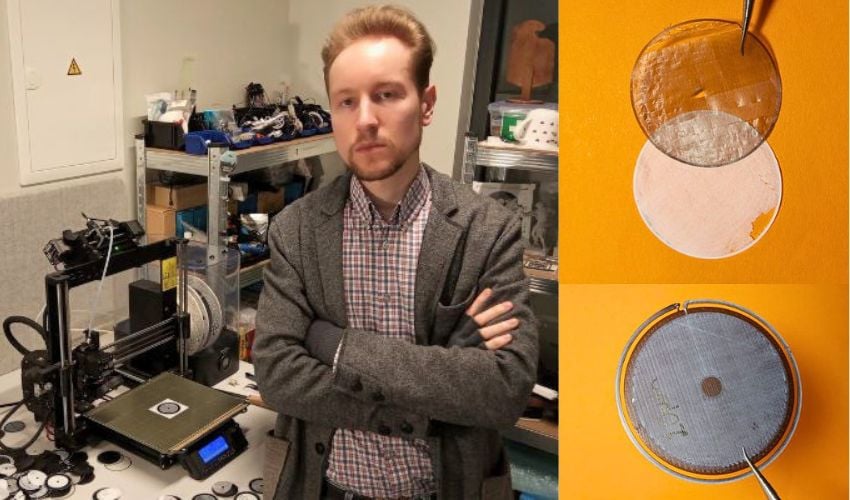
3DN: Could you briefly introduce yourself and explain how you got into 3D printing?
I’m Edgaras Janušauskas, and my path into 3D printing began through education. Early in my career, I worked as a teacher, helping students explore programming, electronics and engineering. Technology evolves quickly, and I often found myself learning alongside my students. That experience made me comfortable with experimentation and trial-and-error.
Outside of school hours, I began developing my own cyberpunk-inspired educational robotics ecosystem: compact robots with embedded computers and sensors designed to be modified and upgraded in a playful, rewarding way.
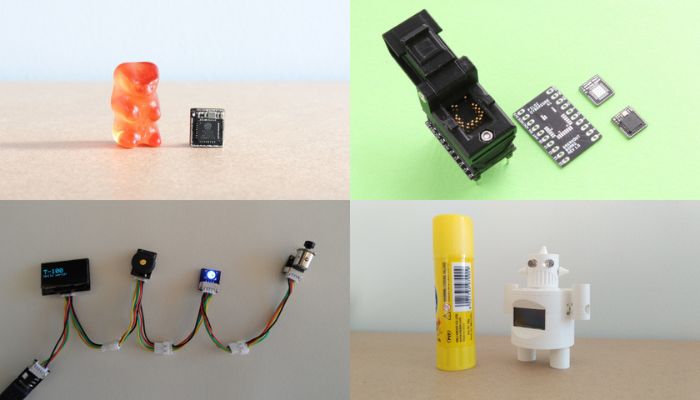
FILDZ CYBERCORE X1 and CYBERWARE embedded in T-100 3D printed robot kit.
In 2015, when 3D printing was still relatively new in Lithuania, I started using it for a simple purpose: creating small trophies and rewards for my students. Over time, it became a tradition—the more difficult or creative the challenge, the more imaginative the 3D-printed award.
3DN: What led you to create FILDZ Research, and what is its main objective?
FILDZ Research began when I decided to focus entirely on 3D printing in 2024. A year earlier, I had the opportunity to organize monthly educational events centered around the technology. Each session required a new concept and a fresh approach: one month we taught participants how to design and print Easter eggs, another month we experimented with printing on T-shirts, and another we created custom drainpipe covers.
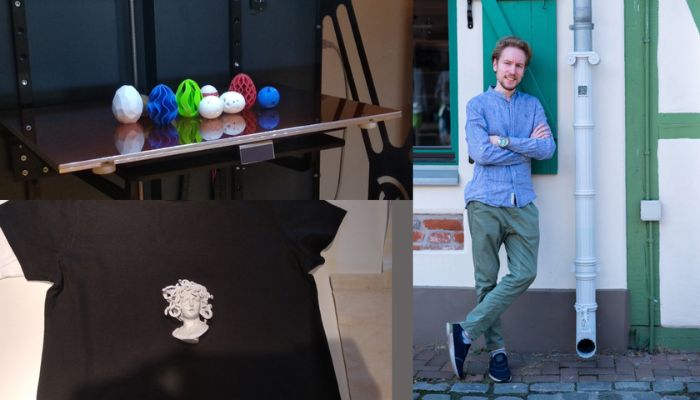
3D printed Easter eggs, Medusa head on T-shirt and drainpipe cover.
This constant cycle of new ideas, constraints and audiences pushed me to think about 3D printing differently—not just as a manufacturing method, but as a system that can be “hacked” through clever design and technique.
During that time, one concept in particular changed everything: 3D-printed fabric. That idea led to deeper research and encouraged me to question the perceived limits of FDM. I realized that with the right design and a few smart toolpath decisions, filament can behave in ways many people assume are impossible.
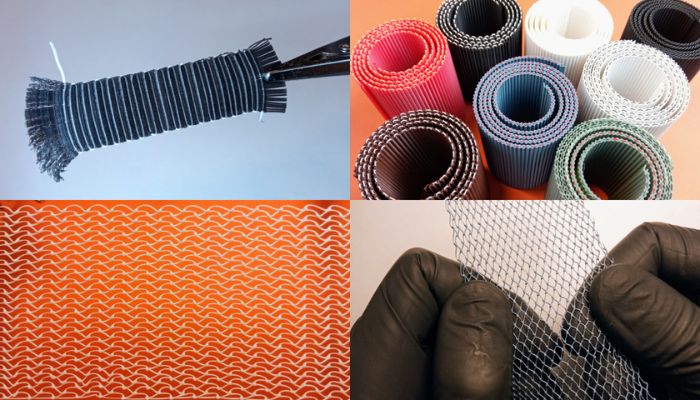
3D printed fabric concepts – “QWeave” and “QArc”.
Today, the main objective of FILDZ Research is to challenge the status quo of what people think 3D printing can do by developing concepts that seem almost impossible at first glance. If a prototype makes someone ask, “Wait… is that really 3D printed?”, then we’ve achieved our goal—because we’ve demonstrated a technique, not just an object.
3DN: What common assumption about FDM made you want to study it more deeply instead of simply using it to produce parts?
One of the most common assumptions is that FDM is already “solved”: it can produce parts, but it no longer surprises anyone. The narrative is always the same—visible layer lines, limited materials, questionable precision and machines that supposedly cannot do anything new.
I wanted to challenge that mindset. In my experience, many of these “limitations” come from conventions rather than physics. If you rethink the design intent and take control of the toolpath—even with small G-code adjustments—you can unlock results that feel impossible for FDM.
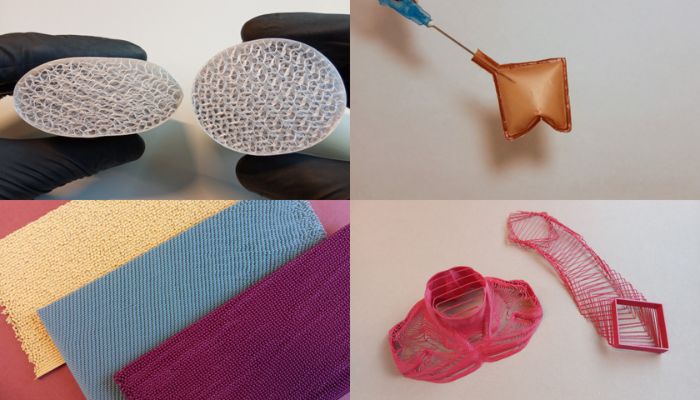
Few concepts – flexible PLA, inflatable 3D prints, fuzzy skin on steroids and printing mid-air.
Instead of asking, “What parts can I print?”, I started asking, “What behaviors can I program?” That shift turned FDM from a simple production tool into a research topic for me. Exploring ideas that aren’t yet documented can be difficult, but that’s often where breakthroughs happen—and why it’s worth pursuing.
3DN: You actively encourage others to replicate your experiments and publish detailed workflows. Why is openness central to your research approach, and how important is community experimentation in advancing additive manufacturing?
Openness is essential because much of our work exists outside standard FDM use. If we only show the final object, people assume it’s magic—or that it cannot be replicated. By sharing photos, videos, parameters and workflow details, we transform that “magic” into a method. It allows others to build on the work, test it and improve it.
That said, it’s also important not to reveal every detail immediately, as some ideas still require further development.
Community experimentation plays a specific role. Major breakthroughs often come from a small number of people who spend years pushing one idea forward. The broader community rarely produces the initial breakthrough, but it is essential for validation and stress-testing. When hundreds of users test a technique on different printers, materials and slicers, it quickly reveals what is robust—and what only works under perfect conditions.
3DN: FILDZ also explores metamaterials and functional structures. What makes FDM particularly suitable for this kind of research?
Metamaterials are challenging to manufacture with any process, and FDM is not necessarily the obvious choice if it is treated like traditional part production. Resolution limits, anisotropy and slicer constraints quickly become bottlenecks.
However, those same constraints are what make FDM interesting for research. The technology is programmable, accessible and allows rapid iteration. The logic of unit-cell structures also aligns naturally with parametric design and toolpath experimentation, making it possible to prototype functional structures quickly—even if the results are not yet perfect.
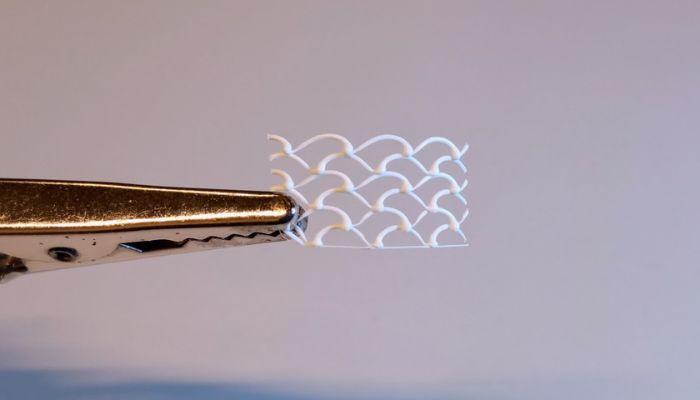
”QArc” concept – repeatable arcs that can be stacked.
This is how our “QArc” concept emerged: a tunable arc-based unit cell designed to scale into repeatable structures. While we achieved textile-like behavior, software limitations prevented us from reliably scaling the concept into full 3D structures. For now, the project is paused, but it is something we may revisit as workflows and software tools evolve.
3DN: What have been your most exciting projects so far, and what are you currently working on?
Over the past year, we’ve been searching for a concept that could genuinely change how people think about FDM. We found it in something that sounds underwhelming at first: 3D-printed film.
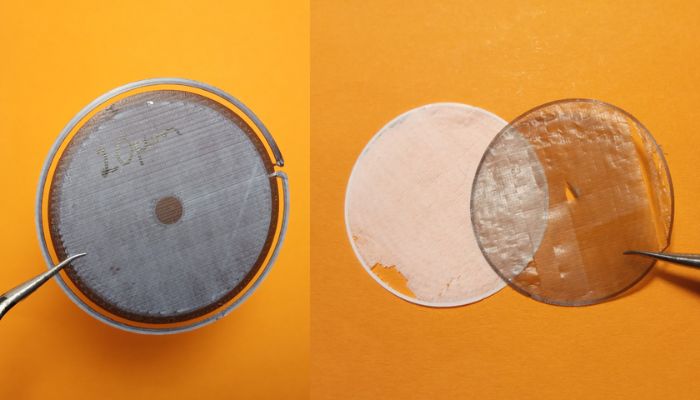
20 µm film made from white PLA and 15 µm from black PETG.
It represents a major shift. We developed a workflow that allows us to print ultra-thin PLA film with a tunable thickness of around 5–20 µm. The real breakthrough is not only the thinness, but the repeatability of the process.
To verify thickness, we currently use a stacking method: printing multiple identical film layers—for example four layers at ~15 µm each—to reach approximately 0.06 mm in total thickness, which we then measure using calipers. In the future, measurements will be performed using a micrometer for greater precision.
Our focus then shifted to making the film useful rather than simply impressive. We developed several reinforcement techniques that transform fragile film into durable sheets. This allowed us to create inflatable structures, including stackable air-filled bags. One bag can be printed in about 35 minutes using a ten-year-old, unmodified 3D printer with a standard 0.4 mm nozzle.
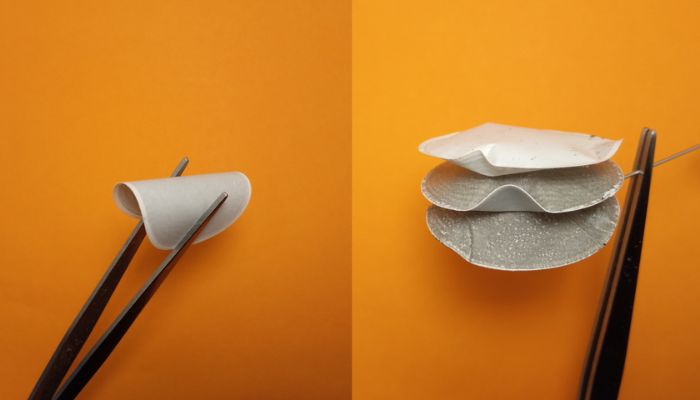
Single bag that contains nine layers of film (15 µm) and three stacked bags (inflated).
One of the most exciting directions is using this film to create bellows-style artificial muscles for soft robotics. The long-term vision is to make motion systems printable and widely accessible. Imagine being able to print artificial muscles, tendons and structural frames at home, dramatically lowering the cost and complexity of robotics research. Whether the end result is a human-like form, a dog or even something like a frog, the key idea remains the same: lowering the barrier to robotics by making actuation printable.
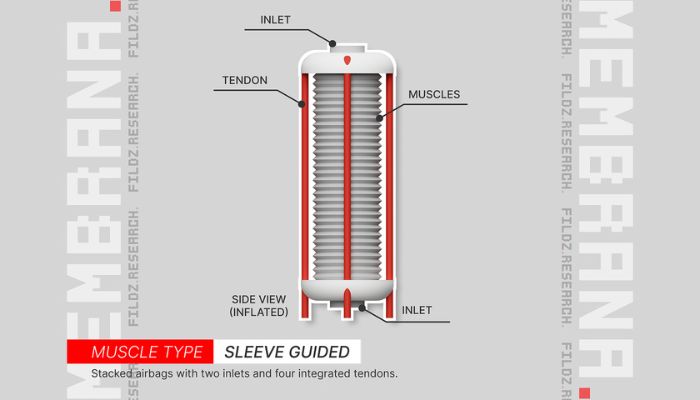
One of the concepts for 3D printable pneumatic artificial muscle.
We have been working on this continuously since late 2024. So far, we have refined the workflows, tested inflatable structures under loads of up to 25 kg and designed several concepts aimed at building a scalable ecosystem.
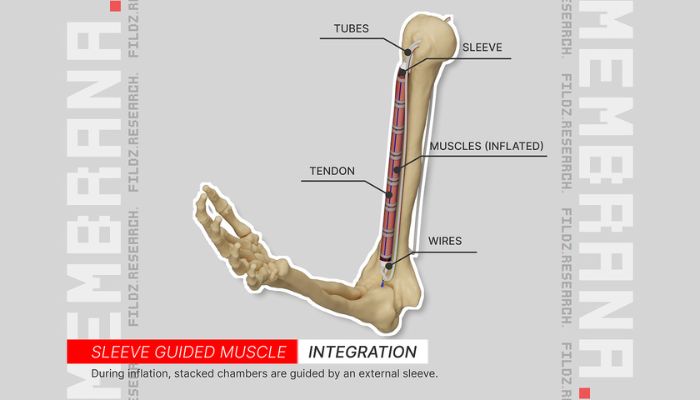
One of the possible ways to integrate bellows-style artificial muscle.
The next key milestone is demonstrating a fully deployed system capable of reliable motion driven by printed actuation. If successful, this could open soft robotics to a much broader audience, from makers and educators to research labs and companies. It may even spark new directions in “not-so-soft robotics,” where printable actuation combines with rigid structures in unexpected ways.
3DN: Any last words for our readers?
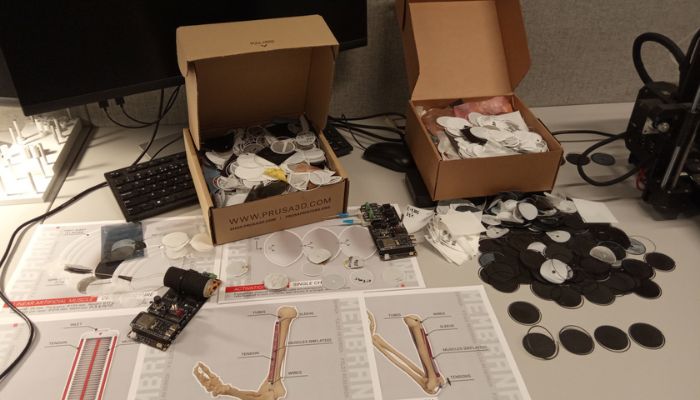
The other side of 3D printing is the amount of waste created (and encouraged).
Those who keep exploring eventually discover what they are looking for. FDM still hides many unexplored possibilities, and I encourage people to experiment and question assumptions, because that is where progress begins.
At the same time, we should acknowledge the environmental cost of 3D printing. Filament production, failed prints, prototypes and constant iteration all generate waste, and we are part of that cycle as well.
For me, the key is intention. If we are going to consume material, it should be for learning, repair or meaningful innovation, not simply printing for the sake of printing.
This is also where community pressure matters. I would like to see more manufacturers address sustainability seriously through recycling pathways, take-back programs and materials designed to reduce waste. Additive manufacturing is becoming more accessible every year, and if we do not address its environmental impact ourselves, regulation will eventually force the conversation—and we will all feel it.
Could 3D-printed film change how we think about FDM? Let us know in a comment below or on our LinkedIn or Facebook pages! Plus, don’t forget to sign up for our free weekly Newsletter to get the latest 3D printing news straight to your inbox. You can also find all our videos on our YouTube channel.
*All Photo Credits: FILDZ Research