


Why Fatigue Still Decides Whether AM Flies — Insights from Dr. Onome Scott-Emuakpor Ahead of RAPID + TCT 2026
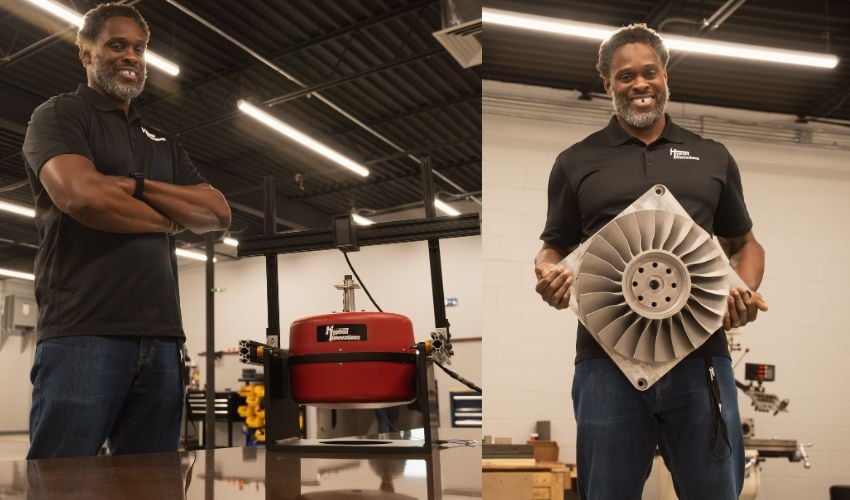
Additive manufacturing promises lighter parts, complex geometries and faster production for aerospace. But in aviation, printing a component is the easy part. Proving it will survive in operation is what determines whether it is ever approved for service. A component can be produced in hours, yet qualifying it can take months of fatigue testing and analysis. At 30,000 feet, reliability is not theoretical and uncertainty is unacceptable. For Dr. Onome Scott-Emuakpor, founder of Hyphen Innovations and former researcher at the Air Force Research Laboratory’s Turbine Engine Structural Integrity Lab, closing that gap between speed and confidence has become central to bringing additive manufacturing into critical flight hardware.
Dr. Scott-Emuakpor will present this topic at RAPID + TCT 2026 in Boston this April, where his presentation, A Post-Process Treatment for Improving Fatigue Performance of Additive Manufactured Parts, focuses on accelerating qualification for aerospace components. Ahead of the event, we spoke with him about how industry attitudes toward additive manufacturing have evolved, why fatigue remains the central barrier to adoption and what engineers should understand before attempting flight-critical applications.
3DN: Could you briefly introduce yourself and explain how your background in aerospace engineering led you to focus on additive manufacturing and eventually found Hyphen Innovations?
 My work began at the Air Force Research Laboratory in the Turbine Engine Structural Integrity Lab, where our goal was to ensure critical engine components lasted longer and performed reliably. In aerospace, innovation follows a chain: new designs require new materials, which require new manufacturing. Traditional methods eventually reached their limits, which led me to additive manufacturing about 15 years ago. Metal AM made previously impossible geometries manufacturable, and the research and IP developed during that time ultimately became the foundation for Hyphen Innovations.
3DN: You’ve attended RAPID + TCT in previous years. From your perspective, how has the industry conversation around additive manufacturing in aerospace changed over time?
The biggest change is the disappearance of absolutes. A decade ago, people would say additive would never be used for certain aerospace applications. Today that has shifted to cautious optimism based on data. After years of investigation, the industry now understands AM materials behave differently than traditional ones, but they can still meet flight-critical requirements.
3DN: Was there a particular presentation, discussion or encounter at a past RAPID + TCT that influenced how you approach research or technology development today?
It’s difficult to point to a single presentation. What has influenced me most are the moments where someone tries something no one has attempted before and makes it work. Over the years at RAPID + TCT, I’ve had many “I wouldn’t have thought of that” moments, or times when an idea I considered trivial turned out to be significant. That kind of exposure to unconventional thinking shapes how I approach research and development.
3DN: There are many conferences covering aerospace and manufacturing. What makes RAPID + TCT especially valuable for engineers working on qualification-critical applications?
RAPID + TCT provides a top-down perspective. You can hear a CEO outline a business problem and the strategy behind it, then walk onto the expo floor and see the machine and finished part addressing that same challenge. For engineers working on qualification-critical applications, it allows you to connect the vision, the technical solution and the shop-floor reality in one place.
3DN: A major barrier to adoption in aerospace remains confidence in part reliability. From your experience, where does fatigue performance still limit wider use of additive manufacturing?
Fatigue is the most critical material property in aerospace. The majority of metal components eventually fail or require maintenance because of it. There’s no roadside assistance at 30,000 feet, so we need fast and reliable ways to predict fatigue behavior. Without that, additive manufacturing cannot scale into wider adoption.
3DN: Your presentation is titled “A Post-Process Treatment for Improving Fatigue Performance of Additive Manufactured Parts.” Without revealing everything, what problem are you trying to solve and why is post-processing such a critical piece of the puzzle?
The “rapid” disappears when qualification takes months and optimization takes years. We’re challenging the assumption that performance must be solved at the printing stage. Instead, a targeted post-process treatment can significantly extend fatigue life and reduce the need for lengthy iteration cycles.
3DN: Improving fatigue performance is often thought to require changing the printing process itself. What misconception about material performance in AM does your work challenge?
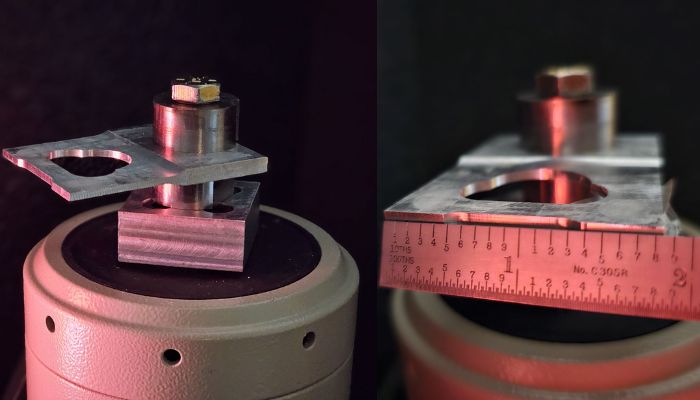
Many assume fatigue must be solved by changing the material. We approach it through physics. Much of aerospace fatigue is driven by vibration. Using our i-DAMP software, we can design parts with up to 96% vibration suppression. Lower vibration means lower stress, bringing the part below the fatigue limit and reducing the need for extensive optimization.
3DN: Who should attend your talk this year, and what practical insight do you hope they walk away with after your session?
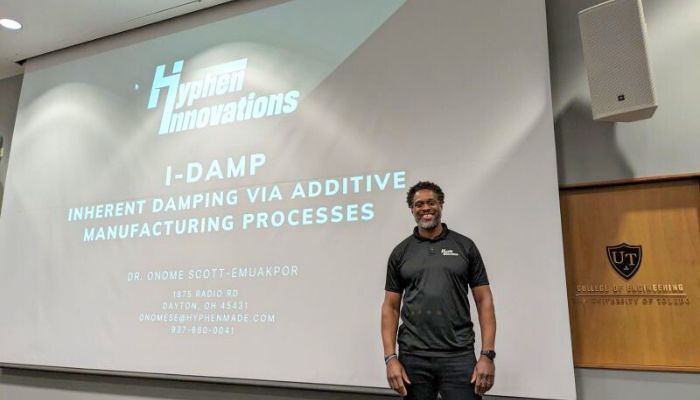
Aerospace and turbomachinery manufacturers should attend. The key takeaway is that reliable fatigue performance can be achieved cost-effectively, and qualification can be completed 70 to 300 times faster than traditional testing. That shortens the path from innovation to deployment.
Register for RAPID + TCT 2026 as 3Dnatives’ guest. Click HERE to claim your free Expo Pass, save 20% on Conference Passes and discover the latest additive manufacturing technologies, exhibitors and conference sessions across the industry. Will you be attending the event this year? Let us know in the comments below or on our LinkedIn and Facebook pages. Plus, sign up for our free weekly Newsletter to get the latest 3D printing news straight to your inbox. You can also find all our videos on our YouTube channel.
*All Photo Credits: Hyphen Innovations