


Inside Craitor: The Company Behind FieldFab, a 3D Printer for Extreme Environments
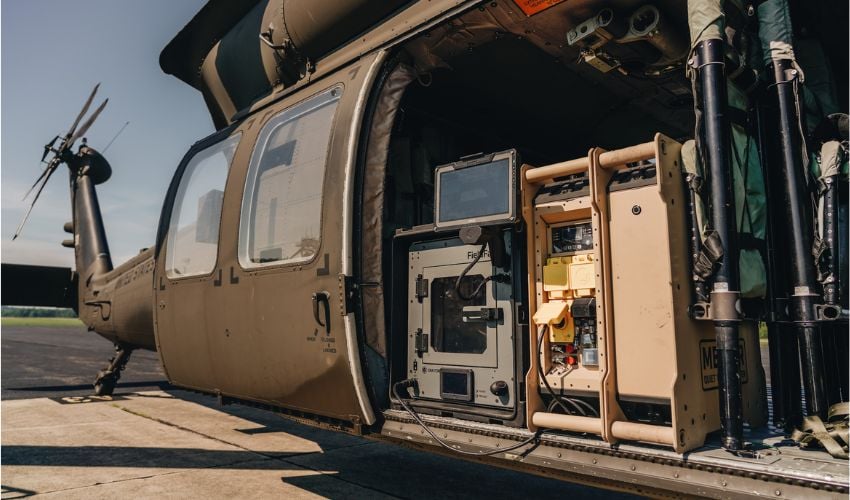
Last October, U.S. troops demonstrated just how far additive manufacturing has come by successfully 3D printing drone parts inside a UH-60 Black Hawk helicopter mid-flight. As the aircraft carried out tactical maneuvers, the printer continued to operate, producing functional components despite turbulence, shifting temperatures, and constant vibration. At the center of the experiment was FieldFab, a system developed by Craitor and built to withstand extreme temperatures, altitude, operational movements, and even rain or condensation. The test offered a compelling glimpse into the growing portability and reliability of 3D printing in demanding environments. To learn more about Craitor and the machine behind the mission, we spoke with Eric Shnell, co-founder and CEO.
3DN: Could you introduce yourself and explain your connection to 3D printing?
My name is Eric Shnell, and I am the co-founder and CEO of Craitor. I began this journey of 3D printing in the early 2010s as a hobbyist, building and modifying my own printers within the maker community.

Eric Shnell
While earning my undergraduate degree in Mechanical Engineering at UC San Diego, I trained and supervised students in the campus maker studios, which led to deeper work in deploying additive manufacturing reliably and at scale. That experience ultimately resulted in collaboration with the U.S. Marine Corps, where I supported advanced manufacturing efforts as a strategic technical advisor.
Those experiences directly led to the founding of Craitor, with a focus on making additive manufacturing practical and dependable in real-world operational environments.
3DN: What is the mission of Craitor, and how did it come about?
Craitor emerged from my work with the U.S. Marine Corps, where I saw both the transformative potential of 3D printing and the practical limitations that prevented it from delivering real operational impact. While the technology was promising, existing systems were not designed to manufacture critical parts reliably in demanding environments.
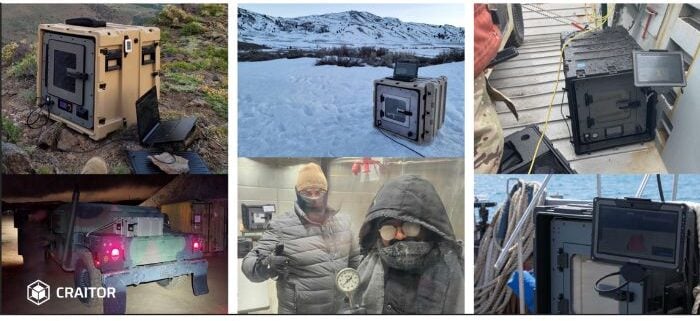
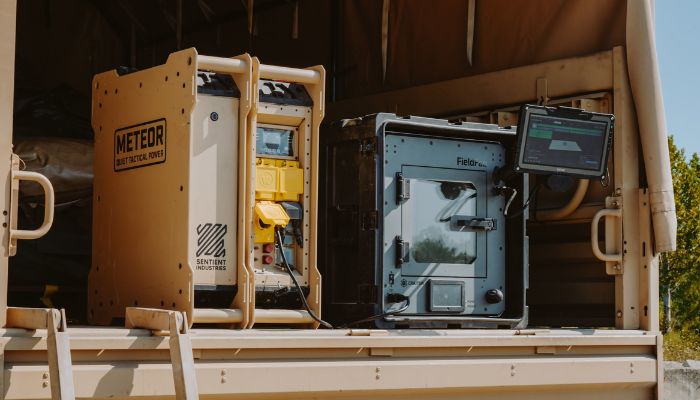
FieldFab is capable of printing in challenging environments.
Craitor was founded to close that gap. Our vision is manufacturing capabilities that can produce mission-critical components in the most extreme and resource-constrained environments, where traditional supply chains are unreliable or unavailable– to enable a true digital supply chain. Our mission is to manufacture anywhere.
3DN: What qualities make FieldFab well-equipped for fabrication in difficult or demanding environments?
FieldFab is designed and certified for operation in extreme environments. The system meets MIL-STD-810H requirements and can reliably print in temperatures ranging from -40°F to 120°F, across all humidity conditions. It is also qualified for tactical transportation by air, land, and sea.
Beyond environmental survivability, FieldFab is highly automated. This reduces operator training from the industry norm of several days to approximately 15 minutes, enabling the system to function more like a parts vending machine than a traditional 3D printer. The result is a platform that is easy to use, consistent, and reliable.
This reliability allows us to work directly with OEM partners to enable a digital supply chain, where certified parts can be produced on demand at the point of need.
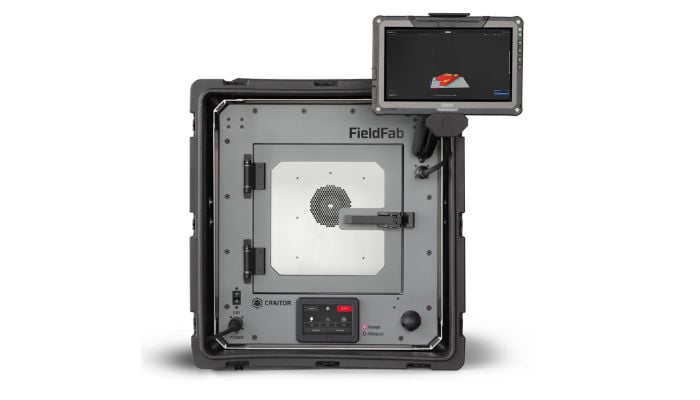
3DN: FieldFab is compatible with all polymer-based filaments. What kind of applications do your users employ it for?
FieldFab is used to produce functional parts across a wide range of mission-critical applications, including vehicle systems and transportation, communications infrastructure, medical equipment, robotics, and power generation and distribution.
These deployments typically occur in environments where supply chain delays can have serious—or even life-threatening—consequences. FieldFab reduces the complexity and cost of supplying certain parts by producing them locally, while also serving as an emergency repair capability when unexpected failures occur.
In that sense, FieldFab functions both as a primary point of supply and as a reliable fallback when traditional logistics fail.
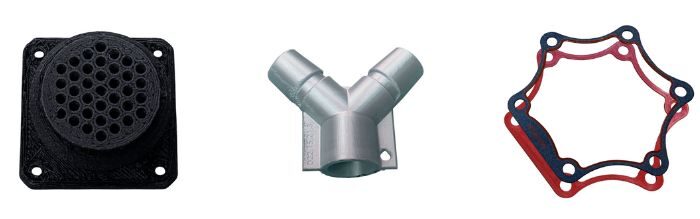
FieldFab can print direct metal replacements, biocompatible parts, flexible parts, and standard parts.
3DN: Could you share any exciting missions that FieldFab has been a part of? Any that stick out to you?
FieldFab has been deployed in dozens of field exercises, both CONUS and OCONUS, with the U.S. Department of Defense, allied nations, and commercial partners.
One deployment that stands out involved integrating FieldFab into a UH-60 Black Hawk helicopter alongside Sentient Industries’ METEOR power system. During the exercise, we successfully printed UAV components from our friends over at 2nd Order Effects while the aircraft was flying combat maneuvers. The ability to manufacture parts in-flight demonstrated the robustness of the system under vibration, motion, and power variability—and I was fortunate enough to be on board for that test.
3DN: Beyond FieldFab, do you have any plans to create more products or expand the company?
Absolutely. We are building a broader ecosystem of manufacturing capabilities and digital architecture designed to enable true digital supply chains—from the factory floor all the way to the tailgate of a JLTV operating in a jungle environment.
In 2026, we plan to formally announce multiple tiers within this ecosystem. Together, they form a nexus of hardware, software, and certified digital data that connects design authority, manufacturing, and the end user into a single, coordinated system.
3DN: Since founding Craitor in 2019, what kind of challenges have you had, and how have you faced them?
Building a defense hardware company before defense startups were in vogue came with real challenges. We carried the company through a global pandemic, bootstrapped our growth, and for a significant portion of that time I was also a full-time college student.
What made those challenges manageable was never doing it alone. I faced them alongside my team, mentors, and partners. Craitor has been built with warfighters, for warfighters, and that clarity of mission has allowed us to succeed where others have struggled. The team understands what is at stake, why the mission matters, and remains fully committed to seeing the mission through.
3DN: Any last words for our readers?
Go out and build!
What do you think of Craitor? Let us know in a comment below or on our LinkedIn or Facebook pages! You can read the full press release here to learn more about the announcement. Plus, don’t forget to sign up for our free weekly Newsletter to get the latest 3D printing news straight to your inbox. You can also find all our videos on our YouTube channel. For more 3D printing news in the aerospace and defense sectors, check out our dedicated page HERE.

While PvP mode doesn’t offer character upgrades, it provides a competitive platform to earn points and climb the global Ragdoll Hit leaderboards.