Combining Ceramics and Metals in a Single Resin 3D Printing Process
Last week, the city of Hanover, Germany, hosted the annual Hannover Messe, an event dedicated to the manufacturing industry and digital transformation. From robotics to artificial intelligence, the focus is on automation, technology, and digitalization. And among the exhibitors and visitors, there are several additive manufacturing players.
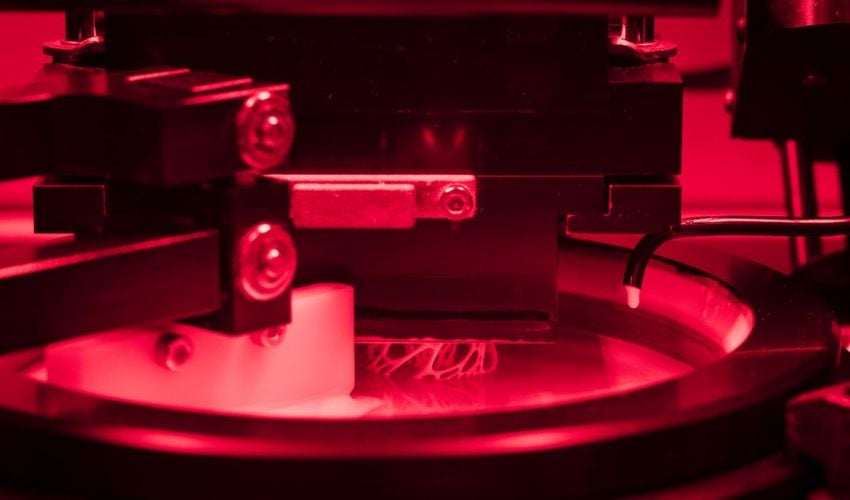
One initiative showcased at the event caught our attention: a project led by researchers at the Karlsruhe Institute of Technology (KIT). Called CeraMMAM (short for Ceramic Multi-Material Additive Manufacturing), it uses a universal binder system for resin-based technology to print multiple materials in a single build tank. The goal? To be able to combine ceramics with metals, or even different types of ceramics. This would allow for the precise combination of mechanical, electrical, or thermal properties.
The researchers’ approach is based on photopolymerization. A photosensitive resin is exposed to light of a specific wavelength, causing it to harden. The difference is that this resin contains ceramic or metal particles, as well as a binder that holds the different materials together. Debinding and sintering steps will then be necessary to obtain the final parts.
According to the team, this universal binder is a mixture of liquid polymers, functional additives, and a photoinitiator. We don’t know any more than that—but that is precisely what makes the CeraMMAM process so innovative. This material preparation work is therefore essential. We simply know that the researchers have a Lithoz 3D printer. Chantal-Liv Lehmann of KIT continues:
“Using our universal binder system, we can produce multi-material components with novel and partially contradictory material properties. That makes completely new and previously impossible designs and functionalities possible. For example, we can produce components such as ceramic gears with flexible interiors and especially hard surfaces.”
Materials and Applications of the CeraMMAM Process
To date, the team has successfully tested a ceramic-ceramic composite based on aluminum oxide and zirconium oxide, as well as mixtures of alumina-reinforced zirconia (ATZ) and zirconia-reinforced alumina.
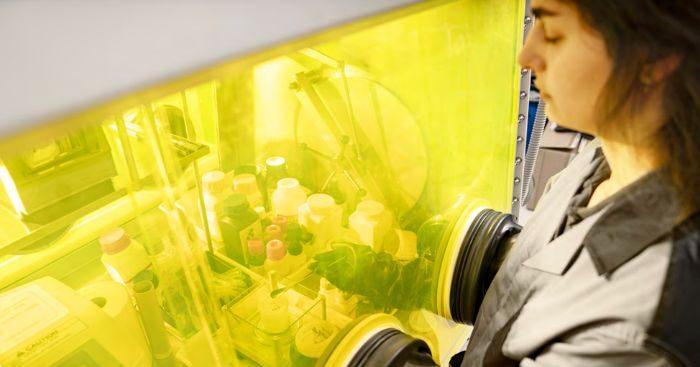
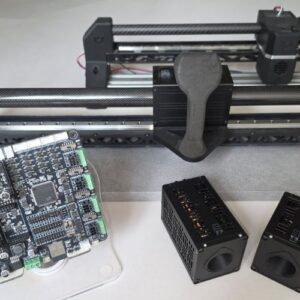
Proper preparation of the material is essential (photo credit: Amadeus Bramsiepe)
The team explains that this process could be particularly useful in the aerospace, medical, and mechanical engineering sectors. For example, it could be used to manufacture custom-made bone and dental implants, or wear- and heat-resistant components with precisely controlled sintering zones and porosity. Want to learn more? Click HERE.
What do you think of this project? Let us know in a comment below or on our LinkedIn or Facebook pages! Plus, don’t forget to sign up for our free weekly Newsletter to get the latest 3D printing news straight to your inbox. You can also find all our videos on our YouTube channel.
*Cover Photo: Breig, KIT