


Was the Artemis II Toilet 3D-Printed in Titanium? What We Really Know
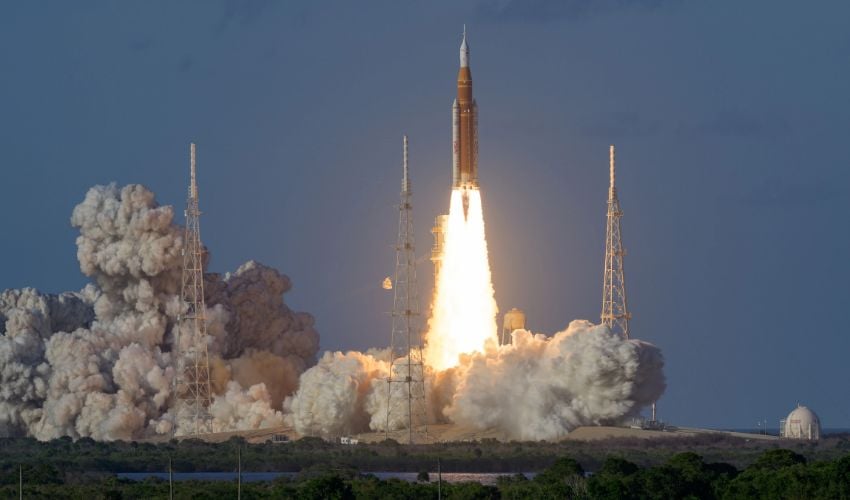
The Artemis II mission launched on April 1, carrying four astronauts on the first crewed flight around the Moon in more than half a century. On board was the Universal Waste Management System (UWMS), the first functional toilet to travel on a lunar mission. Since then, it has often been described as a “3D-printed titanium” toilet. But how accurate is that claim?
The UWMS is not a new system. Collins Aerospace began developing it in 2015 under a $30 million NASA contract, and an initial version was delivered to the International Space Station in 2020 for testing. The version flown aboard the Orion capsule on Artemis II is a more compact adaptation of that original design, optimized for deep space missions.
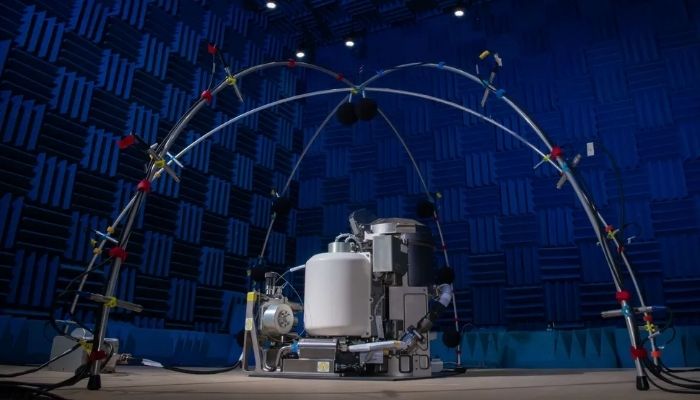
The toilet system installed on the ISS (Photo Credits: NASA).
Where 3D Printing Comes In
In September 2020, just days before the UWMS was sent to the ISS, NASA stated on its official Tumblr that the system included “a 3D-printed titanium cover for its dual fan separator.” This component, known as the Dual Fan Separator (DFS), is the mechanical core of the UWMS. It generates the airflow that, in microgravity, moves waste toward the collection containers. What NASA identified as 3D-printed was the cover of this component, not the entire toilet.
Around the same time, astronaut Andrew Morgan provided additional context during a virtual conference with the National Science Foundation. He noted that the system “also demonstrates a lot of new technologies, including 3D-printed titanium parts.”
Why Use 3D Printing for These Parts?
Although the fine manufacturing details are not available, the design logic can be inferred. The DFS housing has a complex geometry: two separate volutes for each impeller, airflow channels with different pressure requirements, and a housing for the centrifugal separator with its gear reducer. Manufacturing this geometry in titanium as a single piece is exactly the kind of problem where additive manufacturing adds value.
Titanium was chosen for its resistance to corrosion from the acidic pre-treatment of urine, and 3D printing makes it possible to consolidate what would otherwise be multiple assembled components, reducing weight and eliminating potential failure points.
The UWMS experienced several failures during Artemis II. The DFS electronic controller stopped working about an hour after launch. Days later, urine froze in the external vent line, and mission control had to rotate the capsule to thaw the pipe using sunlight. There is no indication, at this stage, that the 3D-printed parts contributed to these failures.
For Artemis III, where two astronauts will spend weeks on the lunar surface, the UWMS will need to operate without these issues. Collins Aerospace and NASA will need to assess the fatigue, corrosion, and structural integrity of each component after launch vibrations and thermal exposure in deep space.
If that data includes the performance of the 3D-printed parts, it will provide direct insight into additive manufacturing with titanium beyond low Earth orbit. We will be watching closely.
What do you think of the toilet on the Artemis II mission? Let us know in a comment below or on our LinkedIn or Facebook pages! Plus, don’t forget to sign up for our free weekly Newsletter to get the latest 3D printing news straight to your inbox. You can also find all our videos on our YouTube channel.
*Cover Photo Credit: NASA/Bill Ingalls