

AnthroTek Mimics Human Tissue Behavior Using 3D Printing
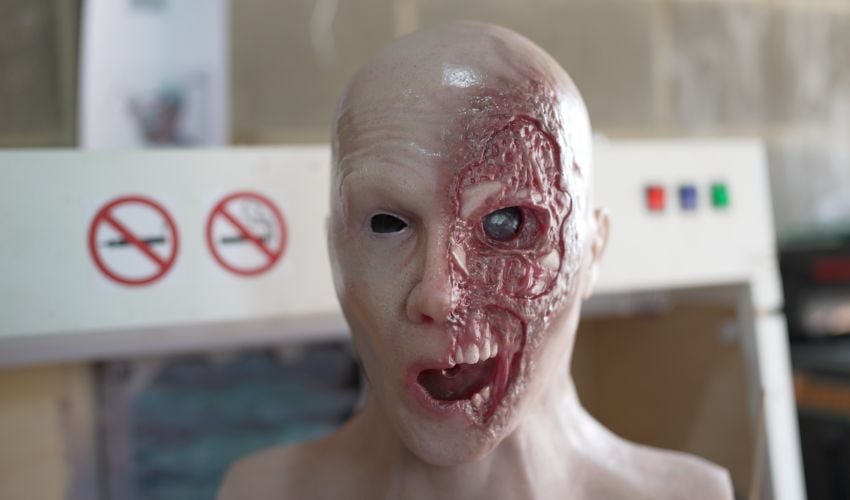
It’s almost unrealistic to think that additive manufacturing can achieve this level of detail, don’t you think? And yet, you’re not dreaming: technology makes it possible to recreate body parts, skin models, and organs that are extremely faithful to reality. This is certainly what AnthroTek is striving to achieve: thanks to its expertise in materials science, it creates parts for medical simulation, soft robotics, and the film industry. From anatomical models and masks for film production to organs that reproduce blood flow, it offers a range of 3D-printed applications. It uses both resin 3D printing and fused deposition modeling and explores a variety of materials, such as silicone, to achieve this level of realism. We met with Dr. Raoul Peltier, one of the two co-founders, to learn more about the company and its projects!
3DN : Can you introduce yourself and tell us how you discovered 3D printing?
My name is Raoul Peltier. I’ve been a scientist for most of my life. I have a PhD in material sciences and spent seven years in academia before moving into a biotechnology company developing novel DNA-printing technology. Alongside my scientific career, I’ve always had a creative streak: clay sculpting and making monster masks in my garage.
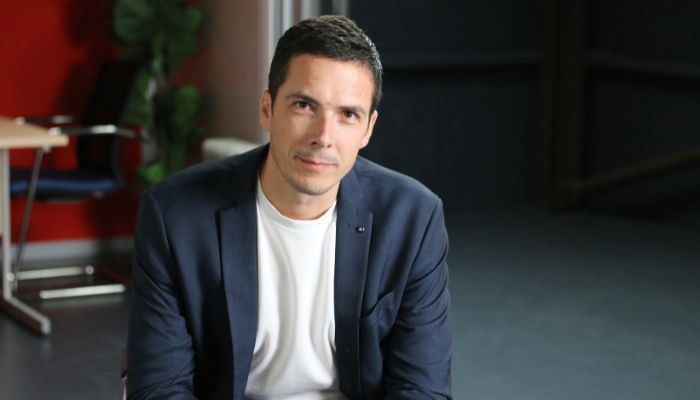
Raoul Peltier (Photo credits: AnthroTek)
In an attempt to optimise my creative hobby, I started looking into 3D modelling and 3D printing. I learned Blender and bought my first 3D printer, an Anycubic Mono X, in late 2020. It completely revolutionised my mask-making workflow and opened a realm of creative possibilities I hadn’t anticipated. At the time, not many mask-makers used 3D printing as part of their process, and I remember thinking I could use this technological edge to build something meaningful.
I registered as a sole trader and created The Face Forge, a brand focused on high-end masks using 3D technology. Interest picked up quickly, and I started working with musical artists, wrestlers, and small film productions to create bespoke designs. This culminated in 2023 when I was offered the chance to make masks for Danny Boyle’s production 28 Years Later.
3DN : How did Anthrotek start? Why was the company created?
In 2023, I decided to take a leap of faith and pause my scientific career to focus full-time on The Face Forge. Around that time, I met my future co-founder, Nazmus Tareque, while punting on the River Cam in Cambridge (a very Cambridge-like way to meet!). Nazmus comes from a business and law background and immediately saw potential in my strange mixture of material science and art.
He invited me for lunch and said, “Look, this has great potential. I know people in medical simulation, robotics, even people tinkering with humanoids.” One conversation led to another, and Anthrotek was born.
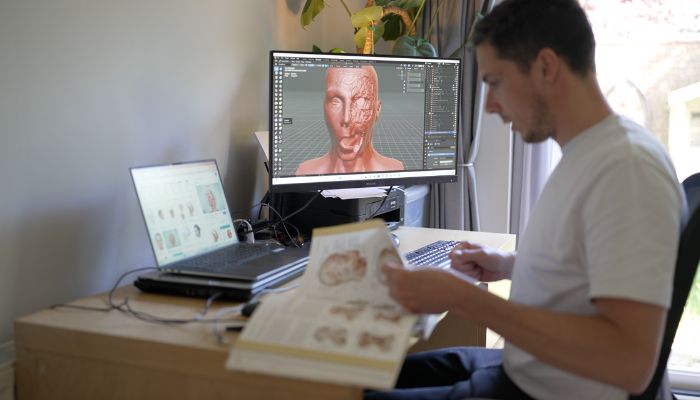
Photo Credits: AnthroTek
Anthrotek (from Greek anthropos = human + technology) was established in 2024. The company focuses on using advanced material science to solve complex problems in medical simulation, soft robotics, and the cinema industry. We specialise in soft materials like silicone, rubber and polymers, materials capable of mimicking human tissue with high accuracy.
3DN : What 3D printing solutions are you using? Any other technology worth mentioning?
3D printing is at the centre of our production process. We 3D print complex moulds for artificial organ casting, create custom mechanical components or bone simulations, and in some cases directly 3D print silicone organs via our partner, Lynxter. Day to day, we rely on large-format resin 3D printing solutions. Our LC Magna (Photocentric) runs 24/7 printing large moulds, while our suite of smaller Anycubic resin printers handle more technical parts. We have a large BIG-120Z (Modix) for our largest parts. We also play a lot with novel 3D printable materials such as soft filaments (FlexPLA) or soft resin, as well as soluble filaments (PVA) and other advanced resins for our most complicated parts.
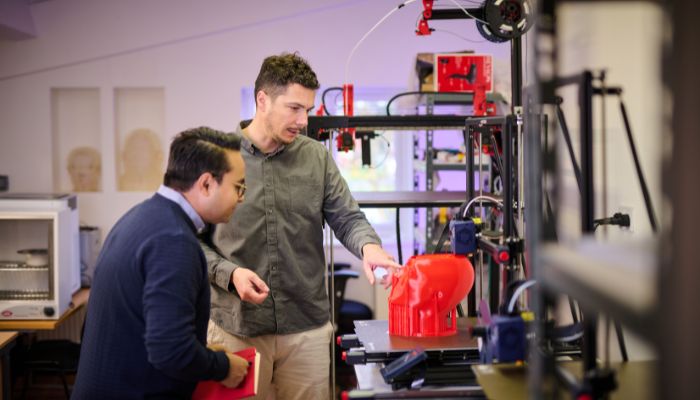
AnthroTek uses many 3D printing solutions (Photo Credits: AnthroTek/Julian Claxton)
3DN : What are the biggest challenges when it comes to 3D print surgical models?
Direct 3D printing of silicone organs is extremely challenging due to the softness of the materials, the thinness of the walls, and the overall complexity of the shapes. In this regard, our collaboration with Lynxter, and having access to their powerful modular platform for soft materials, has been invaluable. Each organ is different and requires its own tailored process. Whether it’s direct 3D printing, casting from multi-part printed moulds, using soluble or flexible supports and fillers, or creating custom internal structures, creating manufacturing and out-of-the-box thinking has been essential to our success.
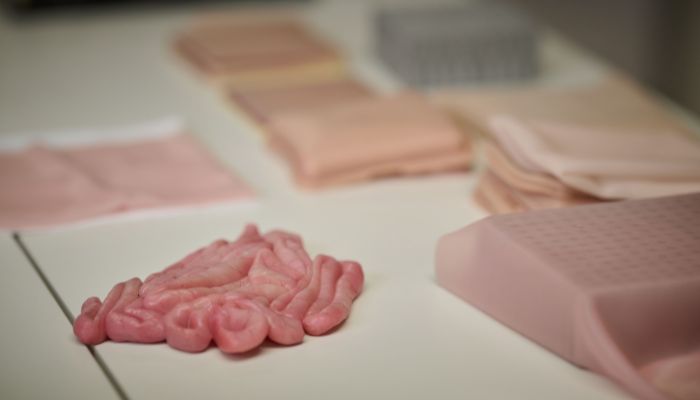
Photo Credits: AnthroTek/Julian Claxton
3DN : We see more and more 3D printed surgical models and solutions to help surgeons: what makes Anthrotek different than the rest of the solutions out there?
Definitely our material-science core. It allows us to develop novel materials and integrate them directly into our prototyping pipeline, opening the door to functionalities that weren’t previously available in simulation models. One example. We have developed one of the most mechanically accurate skin models on the market, built from three layers that mimic the epidermis, dermis and hypodermis. We can tune the thickness and hardness of each layer to replicate different skin phenotypes (age, body part, ethnicity, etc.). We can create fluidically accurate organs that replicate blood flow and realistic blood pressure by controlling accurately the thickness and hardness of blood vessels and microfluidic channels. We also have R&D pipelines exploring smart sensor embedded artificial skin for robotics, and antibacterial silicone-based coatings for medical applications.
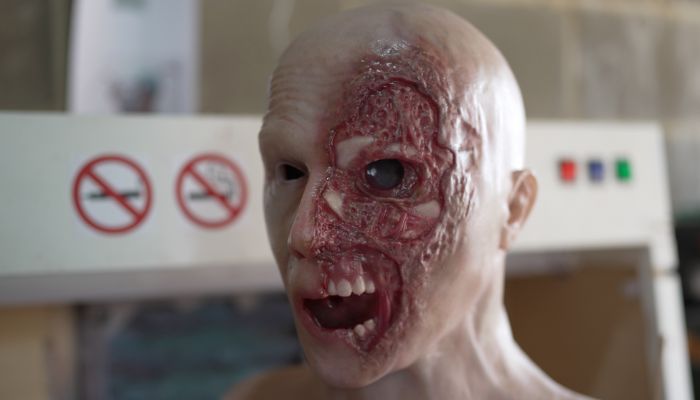
The company’s expertise in materials science enables it to carry out ultra-realistic projects. (Photo Credits: AnthroTek)
3DN : Any last words for our readers?
Keep exploring your hobbies, you never know where they might lead. Sharing my work online was incredibly useful at the start for gaining visibility, gathering feedback, understanding demand, and building the network needed to turn my passion from a garage hobby into a small venture and eventually into a company with six employees. Also, stay curious and keep an eye on new technologies that can help you work more efficiently. It makes all the difference. If you want to visit AnthroTek’s website, click HERE.
What do you think of AnthroTek? Let us know in a comment below or on our LinkedIn and Facebook pages. Plus, sign up for our free weekly Newsletter to get the latest 3D printing news straight to your inbox. You can also find all our videos on our YouTube channel.
*Cover Photo: AnthroTek
The advancements in simulating skin morphology and artificial blood pressure are truly professional and forward-thinking. This article has broadened my perspective on the intersection of fluid mechanics and modern medicine. Thank you for your dedication in sharing this valuable information so that everyone can learn!