How AI and 3D Printing Fast-Tracked the NNSA’s Aires Tide Prototype
The National Nuclear Security Administration (NNSA) has successfully demonstrated the first tangible output of the federal Genesis Mission with the creation of Aires Tide: an AI-designed, 3D-printed flight test vehicle. Initiated back in November 2025 via a presidential Executive Order, the Department of Energy’s Genesis Mission connects national laboratory AI-enabled supercomputers. Leveraging this platform, a team across NNSA’s National Laboratories (Los Alamos, Lawrence Livermore, and Sandia), alongside NNSA’s Kansas City National Security Campus, designed, built, and tested the prototype vehicle in just five months. Normally, this process takes about two years.
What Is Aires Tide?
Aires Tide is an 11-foot-tall vehicle built for fast-tracked, scientific flight tests. Launched into the atmosphere, the vehicle measures the intense heat and vibrations a nuclear weapon would experience on its path to a target. The critical data gathered from these tests is relevant to the nation’s stockpile and will be used to optimize future systems developed under the same design and manufacturing model.
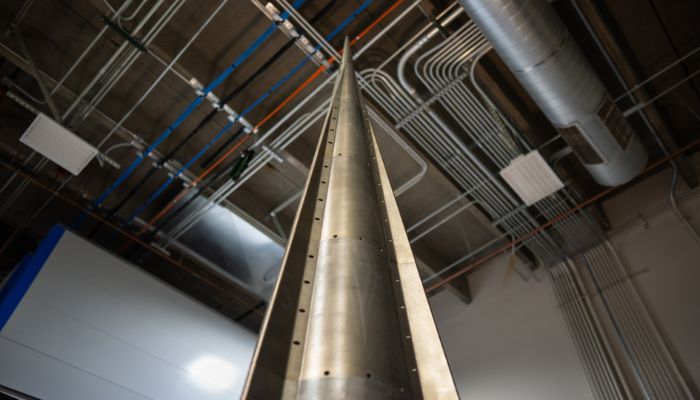
The final Aires Tide prototype was printed in Inconel (Photo Credit: NNSA)
The Role of Supercomputing and AI in Aerospace Design
To achieve the rapid timeline between October 2025 and March 2026, researchers utilized two of NNSA’s flagship AI-enabled supercomputers: Venado and El Capitan. AI tools were used to design the vehicle’s internal shape and structure, including. They optimized the vehicle’s ability to handle extreme heat and stress, and determined the precise location of internal components, such as sensors and power buses.
The project reflects a broader NNSA effort to use supercomputing platforms and cutting-edge additive manufacturing technologies to shorten development cycles and improve efficiency, strengthening the enterprise’s ability to respond to emerging national security challenges.
Additive Manufacturing: 3D Printing the Aires Tide Fuselage
Once the AI optimized the design, researchers turned to laser powder bed fusion to fabricate multiple prototype vehicles. The final version is an 11-foot-tall cone-shaped structure made of Inconel, which is a a high-performance alloy composed of nickel, chromium, and iron. The Inconel version was printed using a LPBF process at Kansas City’s New Mexico Operations, a part of Sandia’s Center for Advanced Manufacturing and Innovation (which opened in February). Earlier versions included an initial carbon fiber composite prototype printed in January, alongside smaller-scale versions printed, assembled, and tested at Sandia.
The fuselage was printed on a Velo Sapphire XC 3D printer as seven nested pieces. By printing these pieces simultaneously instead of one at a time, the team significantly reduced production time and costs, completing the entire structure in less than six days.
“With Aires Tide, we’re producing these vehicles in weeks, at 15 times lower costs than traditional methods,” said Deborah Frincke, deputy laboratories director of integrated security missions. “This agility is crucial as we respond to evolving threats in our national security landscape.”
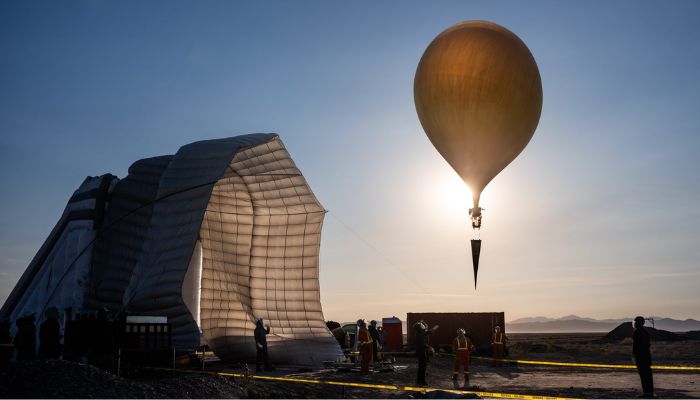
Researchers at Sandia National Laboratories launched a balloon carrying a scaled down version of Aires Tide. Once ascended, the balloon dropped the payload so researchers could collect flight data at high speeds. (Photo by Craig Fritz)
Testing, Validation, and Public Debut
The accelerated five-month development cycle was backed by rigorous physical testing. In May, Nuclear Security Enterprise scientists conducted two successful flight tests of Aires Tide, dropping the vehicle from 32,000 feet at the U.S. Army’s Dugway Proving Ground in Utah. The final 11-foot-tall prototype was displayed in the nation’s capital, stationed alongside other American innovations at the Great American State Fair as part of the Freedom 250 celebration.
Aires Tide represents a shift toward a future where designers and engineers can create new weapons systems with far less time and expense than traditional methods allow. “Aires Tide is a remarkable early demonstration of how NNSA is putting the Genesis Mission into action,” said NNSA Administrator Brandon Williams. “By combining AI, high-performance computing, and additive manufacturing, we are pioneering a faster, more efficient model to design and produce capabilities for national security while keeping human judgment firmly at the center.” Learn more about the project here.
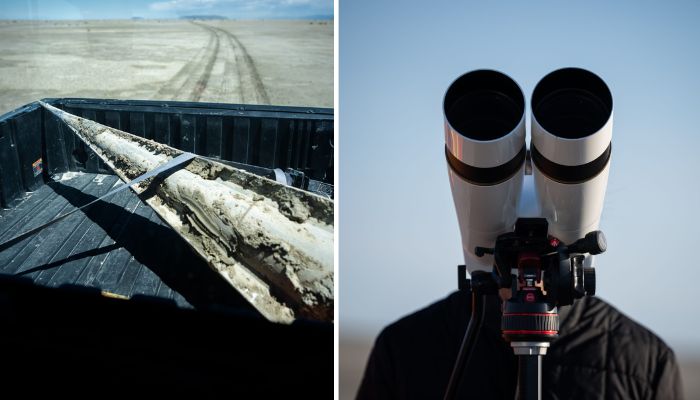
Aires Tide after the drop test (left), and National Nuclear Security Administration Genesis Mission lead Charles Ball observes the drop test through binoculars (right). (Photo Credit: Craig Fritz)
What do you think of Aires Tide? Let us know in a comment below or on our LinkedIn and Facebook pages! Don’t forget to sign up for our free weekly Newsletter here, the latest 3D printing news straight to your inbox! You can also find all our videos on our YouTube channel.
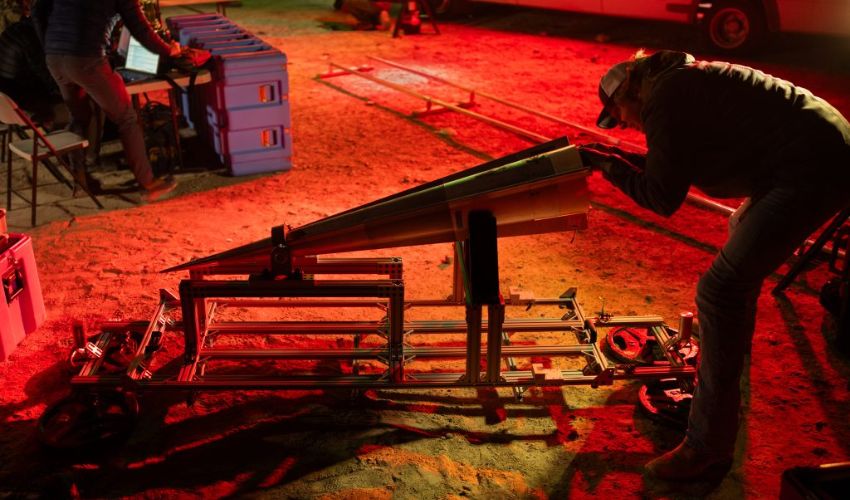
*Cover Photo: A 1:2 scale of Aires Tide flight vehicle being prepared for balloon release from a balloon at the Dugway Proving Ground, Utah. Photo Credits: Craig Fritz