

Advancing into SLS Manufacturing: Raise3D’s Strategy to Build a Complete Polymer AM Ecosystem
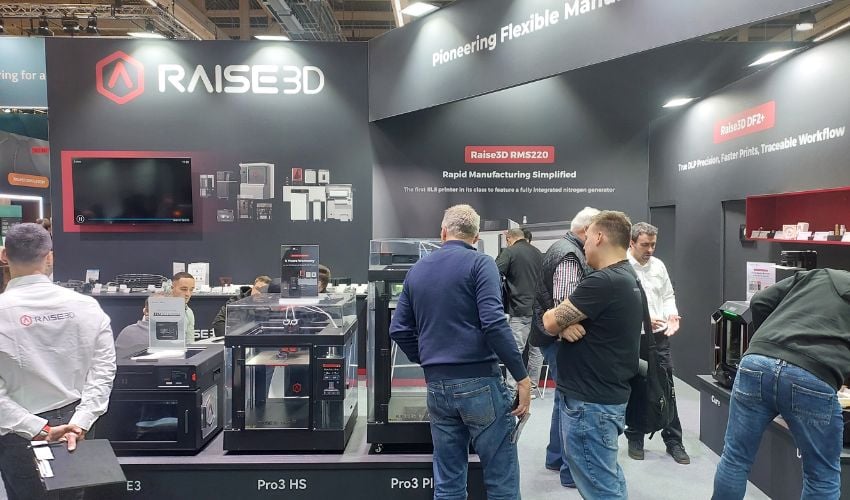
Over the past decade, Raise3D has established itself as a key player in professional polymer 3D printing. Initially known for its FDM systems, the company has progressively expanded its portfolio to address a wider range of industrial needs, entering the resin market in 2023 and launching its first SLS solution in 2025.
As Raise3D celebrates its 10th anniversary, we spoke with CEO and co-founder Edward Feng about the company’s origins, its strategy to build a complete additive manufacturing ecosystem, and its vision for the future of production.

Edward Feng
3DN: Can you introduce yourself and tell us more about how Raise3D started?
My name is Edward Feng, CEO and co-founder of Raise3D. I founded the company together with Derek, our CTO, and Avalon, our Chief Scientist.
Before launching Raise3D, we ran a company focused on augmented and virtual reality. Around 2013, we were looking to start a new venture in a field with strong growth potential. At the time, 3D printing was gaining significant attention and was widely seen as the future of manufacturing.
We began by analyzing the market and asked ourselves how we could differentiate from existing players. Based on the expertise we had developed in software, we decided to focus initially on slicing software and created ideaMaker. That was the starting point of the Raise3D journey.
However, developing a slicer alone proved challenging, as it required strong partnerships with hardware manufacturers. We therefore decided to develop our own machines and build a complete ecosystem.
From the beginning, our ambition was global. At that time, most of the market activity was concentrated in the United States and Europe, and there were relatively few international Chinese brands. We launched Raise3D through a Kickstarter campaign and established offices in the United States. That was ten years ago.
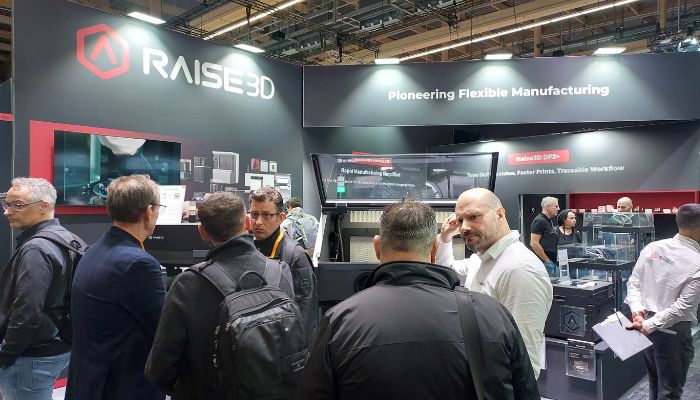
3DN: Raise3D recently celebrated its 10th anniversary. What would you say explains your success, and how have you adapted to market evolution?
Success can be defined in many ways, but one of our key strengths has been our ability to listen to customers from day one. Our objective has always been to deliver the right solutions for real industrial needs. We collected feedback from multiple channels and continuously integrated user insights into our product development.
Another important factor is our positioning. We see 3D printing as part of the broader manufacturing industry, which has led us to focus on the requirements of production environments. Reliability and accuracy are essential. Our systems must operate continuously while delivering consistent, high-quality results.
Cost efficiency has also been a critical element, as companies need a clear economic justification to adopt additive manufacturing.
Finally, our global organization plays a major role. With strong R&D capabilities and operational teams in Europe, the United States, and Asia, we are able to stay close to our customers and support them locally.
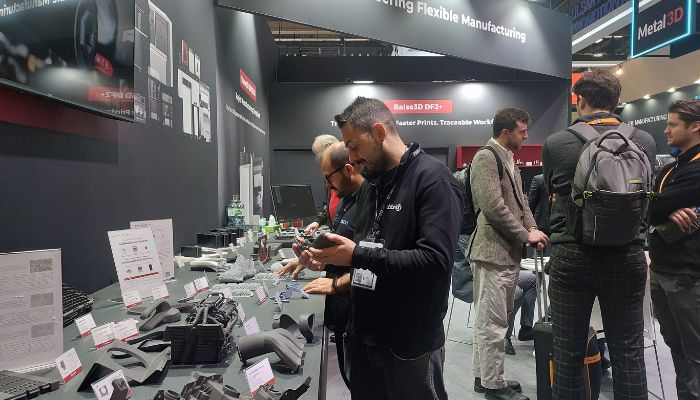
3DN: In 2023, Raise3D entered the resin market. Why was this an important step, and how do your solutions stand out?
For several years, many of our customers had been asking for resin solutions, particularly for applications requiring high resolution and fine detail. This demand naturally led us to expand our portfolio.
Our objective was to deliver the same level of quality and reliability that users expect from our FDM systems. When analyzing the market, we observed that many solutions rely on LCD technology. While cost-effective, LCD systems may not provide the level of consistency and precision required for professional use.
This is why we chose to develop true DLP technology, which offers better accuracy and stability over time. Our goal was to create a robust, industrial-grade solution aligned with Raise3D’s overall quality standards.
3DN: You also entered the SLS market in 2025. What motivated this move?
The logic was similar. First, we carefully considered customer needs. More and more users are looking to produce functional, end-use parts, and SLS is an excellent alternative to traditional manufacturing methods such as injection molding.
This technology also complements our portfolio. With FDM, resin, and now powder-based solutions, our ambition is to become a comprehensive provider for polymer additive manufacturing.
At the same time, our market analysis showed that the total cost of ownership for SLS systems remains high. We focused on reducing both equipment and material costs to make the technology more accessible.
Ease of use was another key priority. Many users still find SLS workflows complex, particularly when managing materials. In contrast, FDM systems offer intuitive interfaces and simplified operation. Our goal was to bring that same level of usability to SLS and make the process more approachable for a broader range of users.
We will start to deliver our RMS220 printers starting this March.
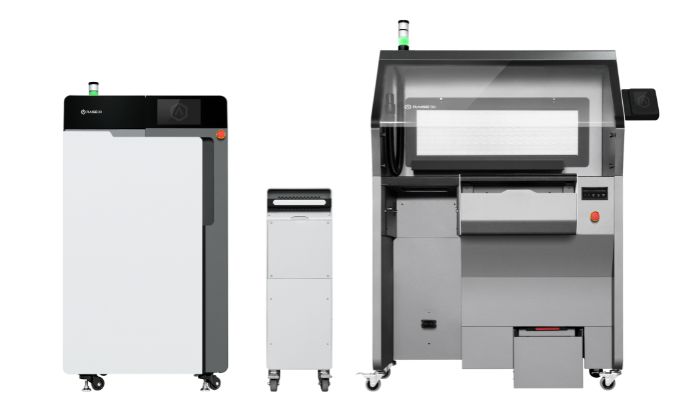
The SLS solutions from Raise3D
3DN: Where do you see Raise3D in 10 years?
When we founded Raise3D, we believed that 3D printing would play a major role in the future of manufacturing. We still strongly believe this today.
Our ambition is to go beyond individual machines and provide a complete manufacturing solution. While expanding our portfolio with resin and SLS is an important step, our long-term vision is to build a global ecosystem.
We want to establish a worldwide network that helps customers identify the most appropriate manufacturing approach for their needs, whether it’s additive manufacturing, traditional methods, or a hybrid combination.
In ten years, our goal is to become a trusted entry point for companies looking to bring their manufacturing projects to life.
3DN: How do you see the additive manufacturing market evolving in the coming years?
Over the past decade, the industry has focused on improving hardware performance, expanding material options, and enabling new applications.
Looking ahead, I believe artificial intelligence will play a major role in the next phase of development. Its impact will go far beyond design automation or model generation. AI has the potential to enable true hybrid manufacturing by leveraging production data and optimizing processes across technologies.
Ultimately, it could help bridge the gap between traditional manufacturing and additive manufacturing, making production more efficient and flexible. This is a very exciting evolution, and we look forward to being part of it. If you want to know more about our solutions, click HERE.
What do you think of Raise3D’s evolution and impact on the 3D printing market? Let us know in the comments below or on our LinkedIn and Facebook pages. Plus, sign up for our free weekly Newsletter to get the latest 3D printing news straight to your inbox. You can also find all our videos on our YouTube channel.
*All Photo Credits: Raise3D