



#3DStartup: Kupros’ Cu29: A Conductive Copper Filament for FDM Electronics an Expert Said Would “Never Be 3D Printed”
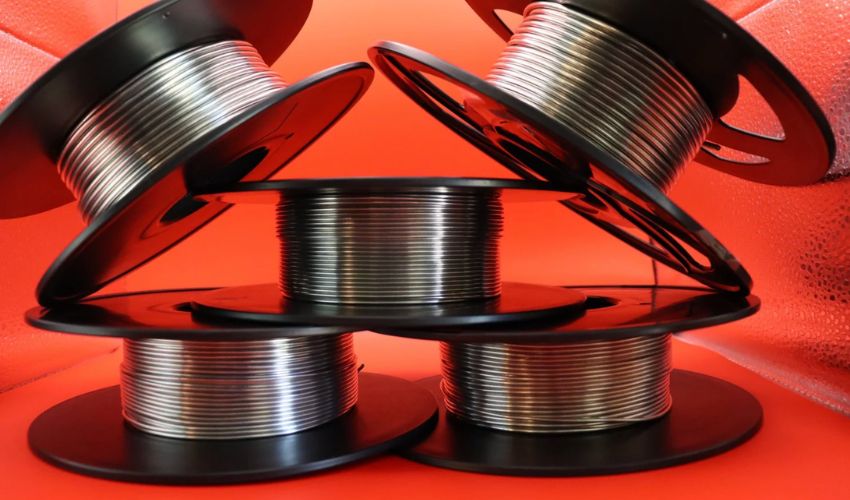
When Ian Ramsdell, founder of Kupros, started asking electronics specialists about 3D printing copper, he faced plenty of skepticism. One expert, in Ramsdell’s recollection, insisted it could not be done and never would be: “Copper can’t be 3D printed, it’ll never be 3D printed.” What that expert did not know was that Ramsdell was already working from a confirmed laboratory experiment, one the US military had run and validated years earlier.
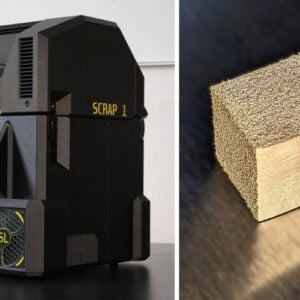
That distance between “impossible” and “already proven in a lab” is the founding story of Kupros and its flagship product, Cu29: a fully metallic, conductive filament engineered to print on standard fused deposition modeling (FDM) machines. Cu29 is not solid copper, but an all-metal, conductive filament that uses copper as part of the formulation. Because the conductor is extruded alongside structural plastic in the same build, Cu29 is aimed at integrated sensors, embedded signal routing, and conformal antennas and conductive paths that follow a part’s geometry rather than sitting on a flat board.
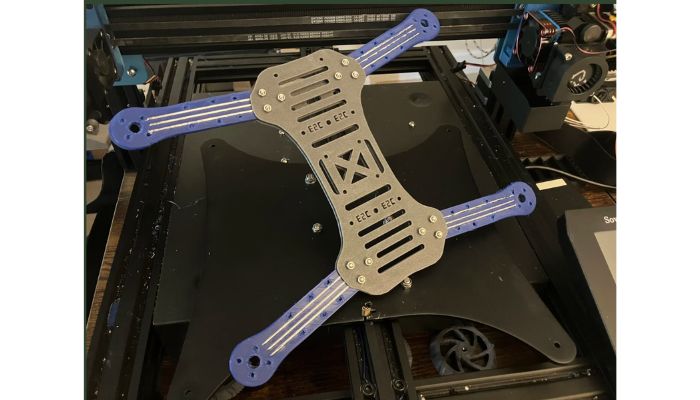
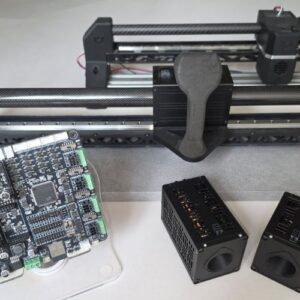
Cu29 can be used to develop embedded electronics.
In aerospace and defense, where Kupros sees its strongest early demand, the pitch is concrete: fewer wiring harnesses, connectors and interconnects, structural-health sensing built into load-bearing parts, and faster iteration as electrical and mechanical design evolve together. “Just because somebody has been told that something is impossible, doesn’t mean it can’t be done,” Ramsdell said.
NASA, Northrop and Boeing Pre-Ordered Cu29 Before It Existed
Remarkably, the market committed before the material was finished. Accepted as an Army xTech finalist at the 2022 DMC conference in Tampa, Ramsdell left with prepaid orders from NASA, Northrop and Boeing. More pre-sales followed, from KBR, US Army DEVCOM and several universities. Buyers put money down while the material science was still in development. “They were willing to prepay me for first access to the material as soon as it came off production,” he says. It is an unusual level of confidence for a pre-revenue materials startup.
The Navy-Lab Origin
The underlying technology came from U.S. Navy scientist and engineer Harrison Holmes, who was working on additive electronics systems from Optomec, Nano Dimension and nScript at the time. Those seven-figure machines relied on silver inkjet chemistry with several limitations: “As a result of the porosity in the traces, they’re sometimes restricted to only low voltage and low amperage usage,” Ramsdell explained. Holmes’ proposal for a better route was named top paper of 2017 under the Office of Naval Research Design Innovation Award, then sat unused until Ramsdell licensed it in 2021 through a US Department of Defense startup studio.
That route is why he pursued a material others had dismissed: rather than gamble on unproven science, he took on technology a national lab had already de-risked. “One very, very large electronics manufacturer told us that they were trying to manufacture material similar to this since the 1990s and they’ve been unsuccessful.”
Why Copper Is Hard to 3D Print
The difficulty is intrinsic to the metal. “Copper is highly reflective and it transfers heat in a very efficient manner and then it oxidizes at the slightest temperature change,” Ramsdell says, a combination that has frustrated copper printing across process families for decades. Solving it, he argues, opened a door well beyond conductive traces. The team can now dope the material for properties such as radiation shielding and anti-tamper structures, “so people can’t x-ray components to reverse engineer.”
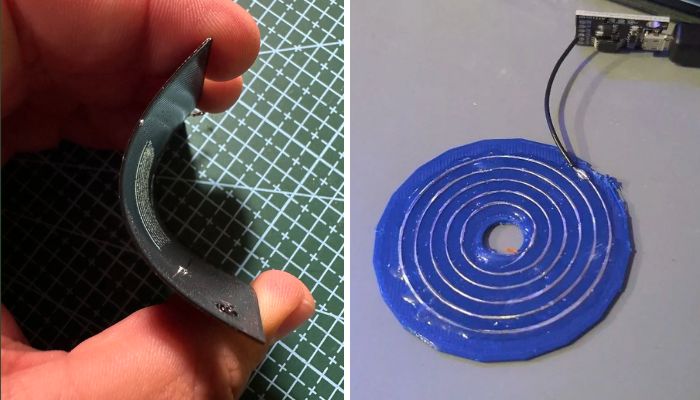
Conductive filament printing allows users to build embedded signal routing, integrated sensors, conformal conductive paths, embedded antennas, and more.
Built for Hardware You Already Own
The commercial case rests on access. Additive electronics has historically meant six- and seven-figure machines. Cu29 is built for equipment already on the bench. Ramsdell has run it on sub-$300 desktop printers and on a Bambu Lab A1 Mini with its automated material system, and is qualifying the Prusa XL as a recommended platform. It needs no printer modifications beyond a steel hotend, and Kupros claims that a printed conductor is functional straight off the bed, with no sintering, plating, curing or chemical cleanup, a pointed contrast with silver inkjet’s maintenance overhead, although silver inks are more conductive thank Cu29.
Notably, Cu29 is not meant to build bulk metal parts the way PLA builds plastic ones. Ramsdell says the team has printed only “five or six layer heights” in the Z axis, mainly to test self-adhesion, and is “not trying to build in the third dimension currently.” Rather, the focus is on embedded electronics. The filament functions as a conductor laid into and onto polymer structures, which is why the workflow is multi-material: structural plastic and Cu29 printed together, often on a dual-extruder or IDEX machine, so the electrical path is embedded as the part is built. “Instead of putting traditional components directly on the PCB, you’re gonna actually put them directly at that point of need.”
The Performance Claims
Kupros’ performance figures, which Ramsdell is careful to label preliminary, are the headline. In early high-voltage testing the company pushed 12,500 volts through the material without destroying it, then kept raising the current. “We kept blowing up power supplies and couldn’t get enough current to actually do destructive testing,” he said. A supercapacitor bank later drove what he estimates at well over 600 amps through a short sample, still without failure. Against other FDM/FFF conductive filaments, which are typically polymer-based, Ramsdell claims Cu29 is 48,000% more conductive. Those numbers are company-stated and await independent verification, but the positioning is clear: a single material for both high- and low-power applications, which the incumbent chemistry cannot serve. Kupros also took the TCT Materials Award at RAPID this year.
A Space-Grade Variant in Development, and Cu29 V2 Release
Currently, Kupros is developing Cu29 Space, a variant of the base material which will target tin whiskering. Tin whiskering happens when tin conductors grow tiny metallic filaments that can bridge adjacent traces, shorting a circuit. This is risky especially for spacecraft, where hardware cannot be serviced and a single short can end a mission. According to Kupros, the Space variant is formulated to eliminate whiskering while printing traces from 0.2mm to 1.2mm on typical FDM hardware. The filament could be used for power-grade conductors, non-planar and modular electronics, and embedded sensors and antennas.
In addition to Cu29 space, Kupros announced on August 2nd that they would be releasing Cu29 Version 2, which has a formulation that incorporates lessons from that first year of printing, testing, manufacturing, and customer feedback. Internal testing of the material has demonstrated significant improvements in areas including printability, extrusion behavior, process consistency, and overall ease of use across FDM/FFF platforms.
What Cu29 Means for Additive Electronics
The name reaches back to the metal’s oldest history. “Kupros is Greek for copper,” Ramsdell notes, and “the Greeks were the very first human civilization to enter the copper age.” The framing is deliberate for a founder repeatedly told his core idea was impossible.
For an AM sector still waiting on the promise of functional, multi-material parts straight off the print bed, a conductive metal filament that runs on commodity hardware, with a space-grade line already in the pipeline, is a genuine step, provided the performance figures hold up. If you want to learn more about Kupros, visit its website HERE.
What do you think of Cu29? Let us know in a comment below or on our LinkedIn or Facebook pages! Plus, don’t forget to sign up for our free weekly Newsletter to get the latest 3D printing news straight to your inbox. You can also find all our videos on our YouTube channel.
*All Photo Credits: Kupros. Article Updated August 10, 2026.








Really interesting to hear about Kupros’ Cu29 for FDM electronics, never thought of that before!
It’s incredible how innovation pushes past perceived “impossibilities.” Speaking of things that feel impossible until you figure them out, I’ve been spending some time with Geometry Dash lately. It’s a surprisingly satisfying puzzle game, especially when you manage to clear lines and keep the board from filling up. There’s a real zen to it once you get into the rhythm. It’s cool to see how Ramsdell’s team tackled a similar problem in a completely different field. Do you think the success of Cu29 will lead to more researchers challenging long-held assumptions in materials science?
The idea of using Cu29 to print conductive paths directly into 3D-printed parts is really interesting. I’ve been hooked on this little browser game called Drive Mad lately – it’s all about navigating tricky terrain, and you quickly learn how important weight distribution and speed are.It could open up some practical possibilities for embedded electronics and sensors.
It’s interesting to see copper filament being developed for FDM printing, especially for creating conductive elements directly within a printed part. The potential applications in sensors and embedded electronics seem quite promising. I’ve been hooked on this little browser game called Eggy Car lately – it’s all about balancing a fragile egg on your car while driving over bumpy hills, and you quickly learn how important throttle control and weight distribution are.