


Rome in Terracotta: A City Model Made Possible by 3D Printing
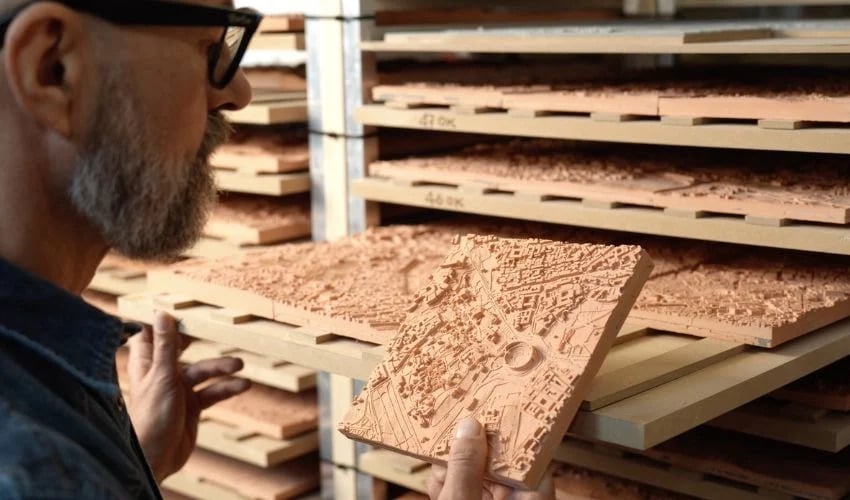
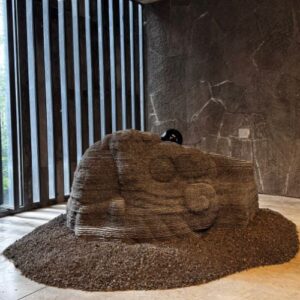
At MAXXI, Italy’s national museum dedicated to contemporary art and architecture, a striking model of Rome is currently on display through April 26. Spanning 48 square meters and made up of 953 terracotta tiles, the piece reproduces the entire municipal area. Thanks to 3D printing, it was completed in record time while achieving an exceptionally high level of detail.
The project was led by architect Marco Galofaro, who received the commission in March 2025 with a very tight deadline. From the outset, he knew the model had to be made of terracotta. While ancient Rome is often associated with travertine and marble, it is brick that has truly endured over the centuries. With this material, Galofaro sought to “reveal the essence of Rome.”
This is where the first challenge emerged. Modeling nearly a thousand precise pieces by hand in just a few months was simply not feasible.
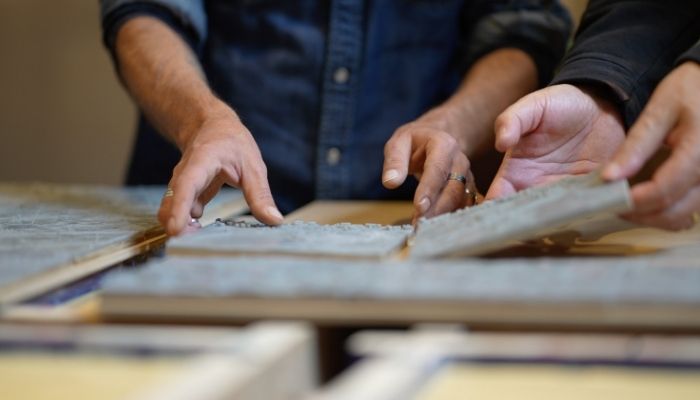
The terracotta model captures more than 2,000 years of layered history in the Italian capital.
Recreating Rome Through 3D Scanning and Printing
Working with the Italian company 3DiTALY, the team scanned Rome’s topography, converted it into a digital model, and divided it into 17 × 17 cm squares, the exact size required for printing on Formlabs SLA printers. Each tile took just 15 minutes to produce, and all 953 pieces were completed in only 26 days. In total, 1,000 liters of resin were used, with just two print failures, both caused by human error during parameter setup.
However, these 3D-printed parts are not what visitors ultimately see. They served as production molds. From each one, a silicone rubber mold was created, into which liquid terracotta was poured and left to harden. The final object on display is therefore made entirely of ceramic.
Still, the role of 3D printing cannot be overlooked. It made the project feasible within such a short timeframe, something that would have taken significantly longer using traditional methods.
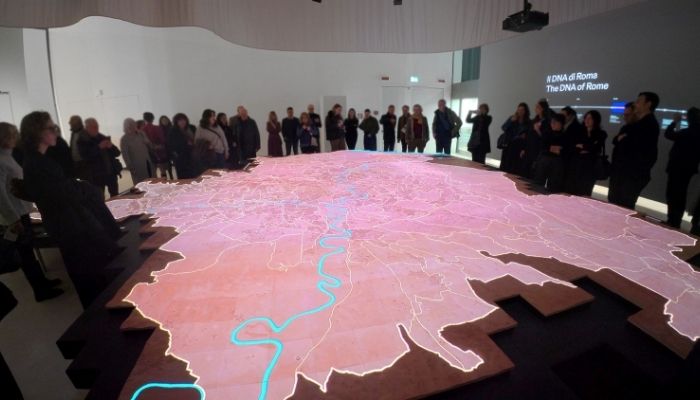
Projected maps and animated infographics overlay the finished model, illustrating how the city has grown since antiquity.
What do you think about using 3D printing to bring historical cities back to life? Let us know in a comment below or on our LinkedIn or Facebook pages! Plus, don’t forget to sign up for our free weekly Newsletter to get the latest 3D printing news straight to your inbox. You can also find all our videos on our YouTube channel.
*All Photo Credits : 3DiTALY