






A 3D-Printed Hydrogel Implant Could Treat High Blood Pressure Without Medication
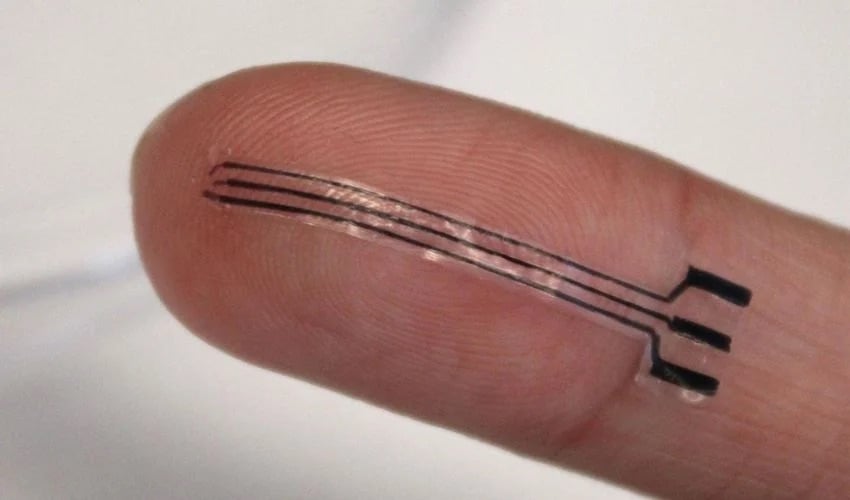
High blood pressure is one of the leading causes of cardiovascular disease worldwide. For many patients, standard drug treatments are not sufficient. Researchers at Penn State University may have found a potential solution in a small bioelectric implant made using 3D printing.
The device, called CaroFlex, is manufactured using 3D printing with hydrogel, a soft, flexible material similar to gelatin. This choice is not incidental. Unlike traditional bioelectrodes made from rigid metals and plastics, CaroFlex mechanically adapts to living tissue and adheres to it without the need for sutures, thanks to a built-in, non-toxic adhesive layer. Eliminating sutures addresses one of the key limitations of conventional implants: the gradual damage to arterial tissue caused by the natural expansion and contraction of blood vessels.
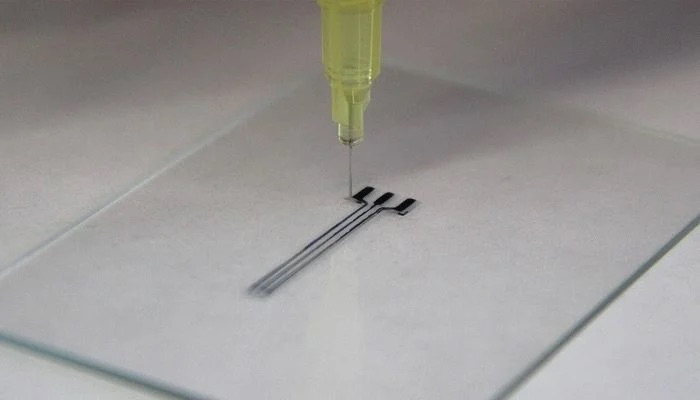
According to Tao Zhou, assistant professor of Materials Science and Engineering at Penn State and the study’s lead author, the implant acts on the baroreceptor reflex—a natural mechanism in the body that regulates blood pressure through specialized nerve endings located in the carotid sinus. The device is implanted in this area and emits low-frequency electrical signals that stimulate these receptors, thereby modulating the autonomic nervous system’s response without the use of medication.
Tests conducted in animal models yielded promising results. Of the five electrical frequencies evaluated, four reduced blood pressure by more than 15% on average. In addition, analysis of the surrounding tissue two weeks after implantation revealed no damage or immune response, confirming the material’s biocompatibility.
The team is now working to refine the device and scale up production before moving on to human clinical trials. If the results are confirmed in humans, CaroFlex could become a viable option for patients with drug-resistant hypertension. Zhou himself highlights the potential of this approach for the industry: “This manufacturing method allows us to design, produce, and adapt bioelectronics for potential clinical trials and commercial distribution much more efficiently than traditional manufacturing methods.”
What do you think of this 3D-printed implant for treating high blood pressure? Let us know in a comment below or on our LinkedIn or Facebook pages! Plus, don’t forget to sign up for our free weekly Newsletter to get the latest 3D printing news straight to your inbox. You can also find all our videos on our YouTube channel.
*All Photo Credits : Marzia Momin






Sounds amazing! Great work!
Please get this on the market as soon as possible. I need it and want it.
Great news
Sounds awesome very interested when its available
What a wonderful invention ! Being MTHFR TT my system doesn’t like medication so the 3D sounds great to me,
Will take pressure off from my kidneys
I hope is affordable
This would be a very welcome initiative. As a hypertensive patient, it would eliminate the need for daily medication. I also hope that the cost would not be prohibitive!
I would definitely use this. i have hypertension Im 59 1/2 have had 7 -8 years now not good at taking my blood pressure medications and i feel with few tines changing to different one by Doctors i do not feel comfortable with.
Sounds very promising, love to try this out. Especially if it doesn’t seem to cause any side effects, I’m sure you will get a lot of volunteer participants in human trials.
I don’t like the idea of take medicine , sound great to me .
I would love it.. very high blood pressure. Just hope it’s affordable. Would love to know how it works
I would do the clinical trail…
This would be so helpful in the medical system. Hopefully it will not be too expensive so the people who need it can afford it with insurance.
I would try your human clinical trials! I have an ascending Aortic Aneurysm and cannot control bp especially bottom number! Please contact me for trials.
Looks like a very promising big advance in controlling hypertension
That’s a major leap in managing drug resistance hypertension.Hopefully, it will be affordable, widely available, and able to control the hypertension over a prolonged period of time..
Is this available in the US as of May 2026 I am very interested in this, are there any restrictions for this procedure, please reply to me, it would be much apprecieated
I would love to look into volunteering for the human trials.
This is great news! I suffer from high blood pressure, but I keep it under control fairly well. This is a good alternative, however you hear about all of these wonderful medical trials and treatments that are not available to people. Unfortunately I fear that by the time they are approved by the FDA, and the bureaucracy in this country it will be too late to be of benefit for many people.
I would use it. I take medicine for hypertension
Sounds very interesting and would be an amazing breakthrough for high blood pressure.
I would be on board for clinical trial
As the lead researcher and first author of this work, I believe this was an oversight, as all of the photographs used in the article were exclusively taken by me (Marzia Momin). Proper attribution is very important in academic and professional settings, and I would sincerely appreciate it if the photo credits could be corrected to accurately reflect the original creator of the images. Since the photographs were solely produced by me, I would be very grateful if this could be updated at your earliest convenience.
We have since updated the photo credits, thank you for letting us know.