



26 Chicks Hatched out of 3D Printed Eggs: Moving Toward Dodo and Moa De-Extinction
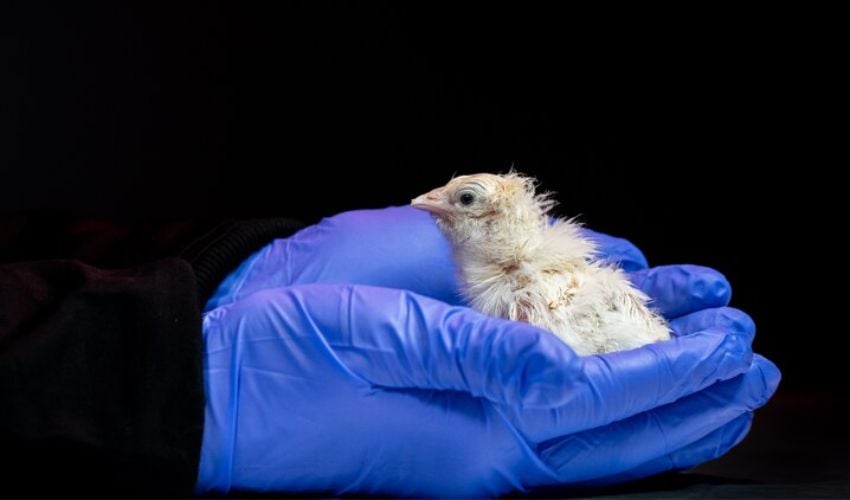
Can 3D printing bring extinct birds back from the dead? Colossal Biosciences is betting on it. Last week, the Dallas-based biotech firm announced it had successfully hatched 26 healthy chickens using highly complex artificial eggs: a critical proof-of-concept for their ultimate goal of resurrecting the Mauritius dodo and New Zealand’s South Island giant moa.
Engineering a synthetic egg is a notoriously difficult task, as the structure must allow oxygen to permeate it, with a barrier tough enough to seal out germs and retain moisture. Over email, Colossal Chief Biology Officer Andrew Pask shared that in some configurations, 3D prints of the rigid outer shell were done with the FormLabs Form 4 using BioMed black resin. These structures were primarily prototypes. Following prototype validation, iterations were made in titanium. The finished product features a dual-component design: a semi-permeable silicone membrane housed within a rigid hexagonal support cup.

The artificial egg has a rigid shell and a silicone membrane.
The membrane is engineered to replicate the gas-exchange function of a natural eggshell. According Pask, the membrane enables gas exchange at a rate comparable to a biological shell. There’s also a clear window at the top of the egg, which lets scientists observe embryo development directly. Plus, the design can be scaled up (or down) in size: it could be used to create eggs appropriate for hummingbirds, or the soccer-ball-sized eggs of the giant moa, which once stood nearly 12 feet tall.
Scientists have hatched chicks outside of their original eggs before, but most of these shell-free hatching systems require large volumes of supplemental concentrated oxygen during later development stages, which risks damaging DNA in the developing embryo. Researchers have tried using plastic cups, saran wrap, and other artificial containers, but success rates have been low, according to Mike McGrew, an embryologist at the Roslin Institute and a scientific advisor on avian stem cells to Colossal. By allowing for the passive diffusion of oxygen via the silicone membrane, rather than active supplementation, the Colossal egg fixes the oxygen problem.
How Does the 3D Printed Egg Work?
To hatch these 26 chickens, the Colossal team examined fertilized eggs laid by real hens within one to two days of laying. From there, they gently opened the shell and selected the eggs that they thought would be most likely to hatch. Then, they transferred the contents of the shell into the artificial egg structure. They didn’t conduct any genetic modification to these chickens. Rather, they were just transferred to the artificial egg.
When it comes to de-extinction applications, the artificial egg is meant to be a later-stage incubation vessel. To produce a bird resembling the dodo or giant moa, Colossal’s scientists would need to introduce species-specific genetic edits way earlier in the cellular stage. Once a fertilized egg has been laid, the embryo already contains around 50,000 cells, and that’s too many to bioengineer with current techniques, according to Hans Cheng, a molecular geneticist at Michigan State University and formerly of the USDA’s Agricultural Research Service.
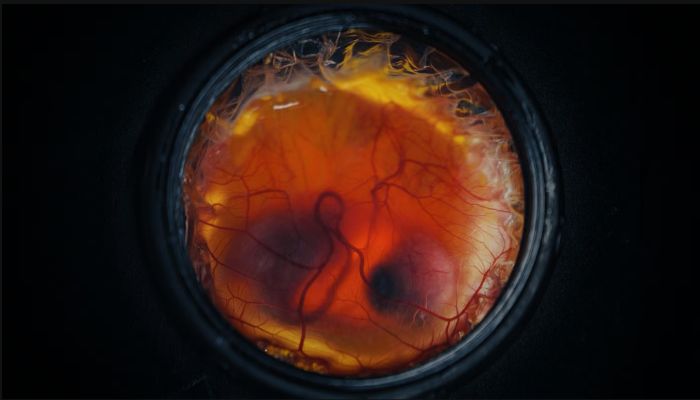
The open top of the artificial egg allows researchers to see into the embryo without disrupting the environment.
Colossal shared that their team will use primordial germ cells (stem cell precursors to sperm and egg cells) to address this challenge. Last fall, the company successfully cultured primordial germ cells from a common pigeon, which is genetically similar to the Nicobar pigeon. They believe this Nicobar pigeon may be a suitable surrogate for the dodo project. The team hasn’t selected a surrogate for the giant moa yet, but they’re considering the emu and tinamou. Given the massive size of the moa, however, they would eventually outgrow any surrogate egg, making the artificial egg system vital.
Applications Beyond De-Extinction
Colossal Biosciences made headlines in 2024 when three dire wolf pups were born from a gray wolf surrogate mother, thanks to Colossal’s genetic engineering with ancient, preserved DNA. Currently, the company’s de-extinction portfolio also includes the woolly mammoth and thylacine, alongside the dodo and South Island giant moa. The ambitious projects have gained plenty of funding and attention: since its founding in 2021 by CEO Ben Lamm and Harvard geneticist George Church, the company has raised over $600 million and carries a valuation exceeding $10 billion.
Colossal has a long way to go before they achieve de-extinction of the dodo and moa. So, how else can the artificial egg technology be used? For one, the egg structure’s clear observation window could be valuable for developmental biology research. Vincent Lynch, an evolutionary biologist at the University at Buffalo, noted that the ability to observe early organ and blood vessel formation directly could benefit evolutionary biologists studying complex embryonic processes.
If you want to learn more about the project, visit Colossal’s website here, and watch the video above. So far, Colossal has not released a peer-reviewed paper or publicly available dataset accompanying the artificial egg results.
What do you think of Colossal’s use of 3D printing to create an artificial egg? Let us know in a comment below or on our LinkedIn or Facebook pages! Plus, don’t forget to sign up for our free weekly Newsletter to get the latest 3D printing news straight to your inbox. You can also find all our videos on our YouTube channel.
*All Photo Credits: Colossal Biosciences