


Built for the Battlefield: 3D-Printed Drones Move to the Front Lines
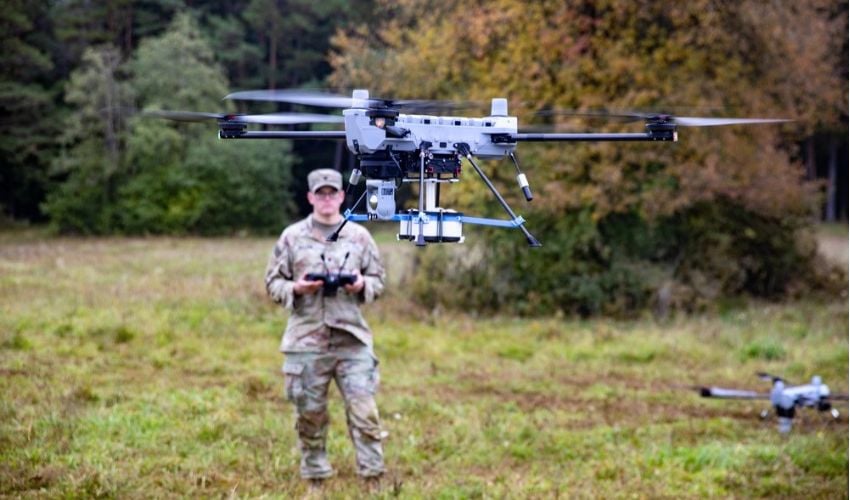
From reconnaissance to strike missions, 3D-printed drones are moving from the factory floor to the front lines. Across the U.S. Army, Marine Corps, and allied forces, additive manufacturing is enabling soldiers to build, repair, and adapt UAVs exactly where and when they are needed. Here are some of the most compelling examples.
The HANX Drone: First 3D-Printed Drone with US NDAA Certification
Developed by a team within the U.S. Marine Corps, HANX is the first fully 3D-printed drone to comply with National Defense Authorization Act (NDAA) requirements. Designed with security in mind, all components are free from restricted or potentially compromised technologies, a key condition for deployment within U.S. military systems. Built as a modular platform, HANX can be 3D printed, modified, and repaired directly by Marines, allowing it to be quickly adapted for different missions, including reconnaissance, training, logistics, and low-cost strike operations. Developed in just 90 days through multiple iterations, the drone received interim flight authorization from Naval Air Systems Command (NAVAIR), marking a key milestone for additive manufacturing within the Marine Corps.
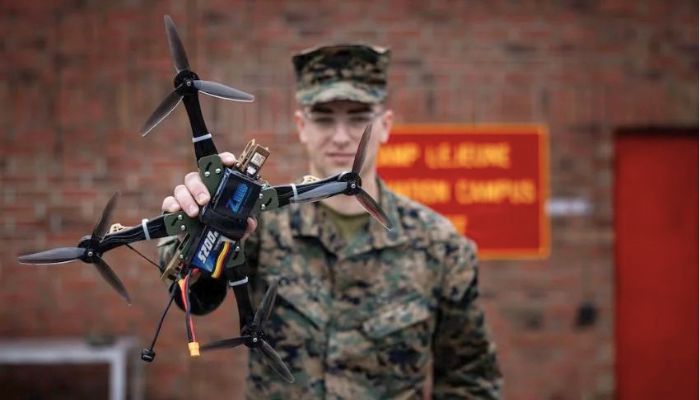
Photo Credits: MARINE CORPS
3D-Printed Ammunition Drop Device
Widowmaker is a 3D-printed device designed for dropping munitions from drones. While the exact process remains unspecified, it was produced using commercial 3D printers, likely desktop FFF systems. This device was mounted on a PDW C-100 drone platform and tested by U.S. soldiers. This allows them to launch M67 fragmentation grenades, training ammunition, and smoke grenades—all with greater precision and speed than before. What’s interesting is that Widowmaker was designed entirely in-house by soldiers: they used CAD software and 3D printers, without any prior specialized experience. The technology enabled them to produce several prototypes for testing in just a few months.
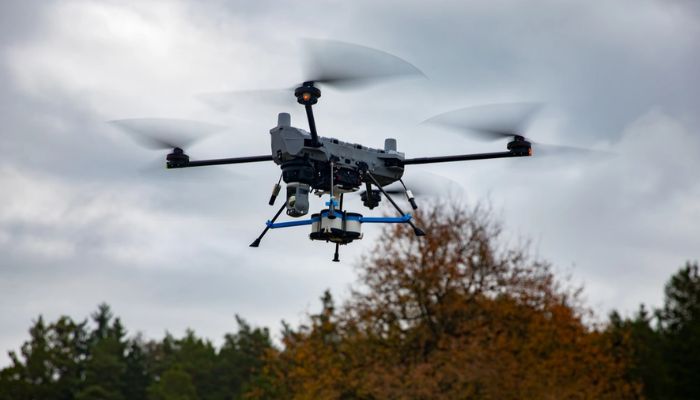
Photo Credits: U.S. Army photo by Spc. Adrian Greenwood
The Lethal Capstone Drone from the U.S. Army’s 25th Infantry Division
In 2025, Lightning Labs (part of the U.S. Army’s 25th Infantry Division) successfully 3D printed the “Capstone” drone, a first person view aircraft equipped with a camera for pilot-perspective navigation. To enable lethal capabilities, the division’s Explosive Ordnance Disposal (EOD) team developed a custom detonation system specifically for the platform. The 25th Infantry is based in Hawaii, which makes the on-demand nature of additive manufacturing particularly vital. Here, AM offers a solution to the logistical challenges posed by the vast geographical distances.
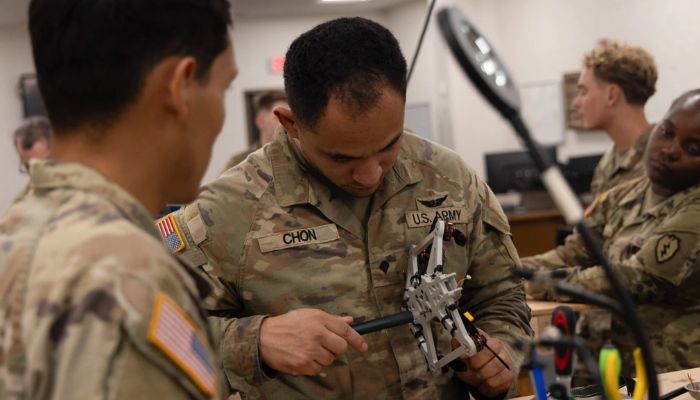
Photo: U.S. Army photo by Spc. Wyatt Moore, 28th Public Affairs Detachment
Rapidly Deployed Drones for the British Army
The British Army recently used FFF 3D printers, specifically solutions from Bambu Lab, to produce drone hulls directly in the field. Soldiers from the 3rd Battalion “The Rifles” set up desktop machines under a camouflaged awning, powered by a small generator, and began printing on-site. A total of five attack drones were manufactured and launched near Nanyuki, Kenya, with each hull taking around 3.5 hours to print. These were first-person view (FPV) drones designed for simulated strike missions. This marks a first for the British Army, which is now exploring broader adoption of deployable 3D printing for field-based drone production.
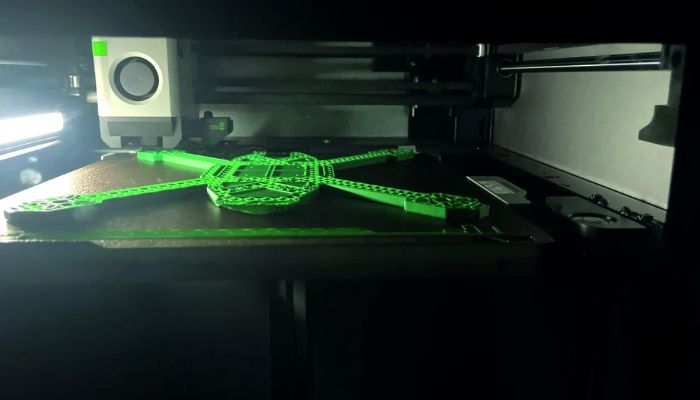
Photo credits: British Army
SPARTA: The Soldier-Built Drone
Developed by the U.S. Army Research Laboratory (ARL) under the Combat Capabilities Development Command (DEVCOM), SPARTA (Soldier Portable Autonomous Reconnaissance Transitioning Aircraft) is a low-cost, modular 3D-printed drone built from the ground up with input from frontline troops. Weighing around two pounds and costing just over $1,000 to produce, it offers a range of over 30 km and a flight time of up to 60 minutes. Its airframe can be printed overnight and assembled without specialized tools. SPARTA was field-tested during the Danger Gauntlet exercise at Fort Riley alongside BISON, a mobile 3D printing makerspace that enables on-site drone manufacturing and repair. ARL is now working with industry partners to transition the platform toward scalable production.
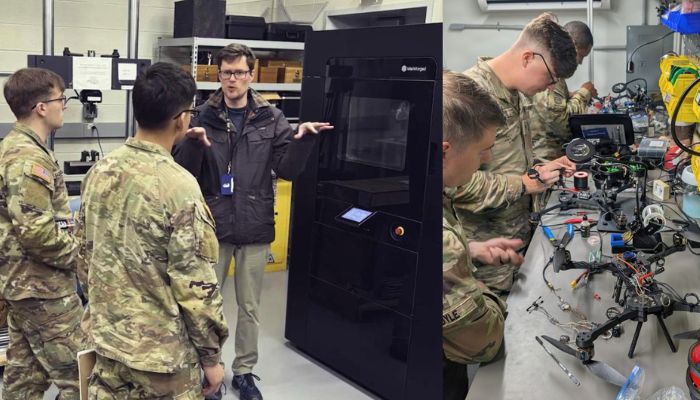
Photo Credit: U.S. Army DEVCOM Army Research Laboratory
The Squall Drone by Firestorm
Developed through a partnership between Firestorm Labs and Croatian company Orqa, Squall is a 3D-printed drone designed for battlefield deployment. It can reach speeds of up to 130 km/h, offers a range of approximately 32 km, a flight endurance of up to 42 minutes, and carries a payload of 2.5 kg. All components comply with NDAA regulations, a key requirement for the Pentagon and its allies. What sets Squall apart is not just the drone itself, but how it is produced. Firestorm Labs manufactures drones using its “xCell” platforms, mobile container-based factories that enable the production of aircraft, components, and spare parts directly where they are needed, without relying on traditional supply chains. The drone has already been tested in conflict zones, including Ukraine, where it is used in high-risk missions.
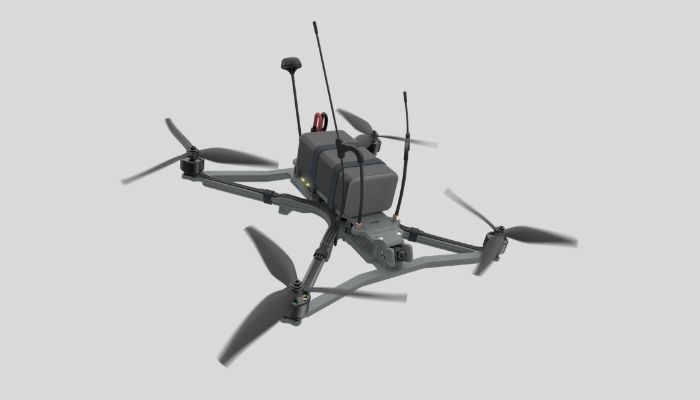
Photo credits: Firestorm
The METIS Interceptor Drone
Developed by the German startup TYTAN Technologies, METIS is an interceptor drone with a fully 3D-printed body. Guided by artificial intelligence and computer vision, it can detect, track, and neutralize enemy drones through high-speed kinetic impact. Weighing 6 kg, it reaches speeds of up to 350 km/h, operates at a range of over 25 km, and can carry a payload of up to 1 kg. Its modular design enables launches from container systems, including those mounted on armored vehicles, while a single operator can control multiple interceptors simultaneously. METIS has been tested in real-world conditions with the Ukrainian Armed Forces via the Brave1 platform and has secured contracts for the delivery of thousands of units to both Ukraine and the German Bundeswehr.
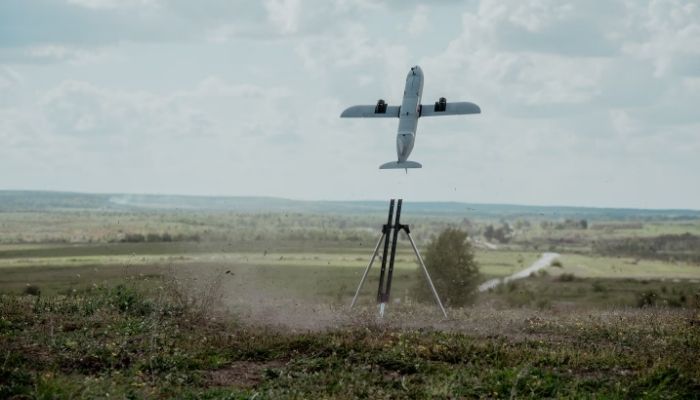
Photo credits: TYTAN Technologies
Replacement Drones from the U.S. Army’s 173rd Airborne Brigade
Following the retirement of the RQ-7B Shadow drone in March 2024, the “Hawkeye Platoon” developed its own fleet of First Person View (FPV) drones from scratch using basic 3D printers and electronics. These drones, which cost between $400 and $500 and take only a few hours to build, are produced on-demand for missions including close-range scouting, simulated attack runs, and explosive-delivery testing. Staff Sgt. Andy Ortiz, a drone pilot and trainer, noted that with proper training and practice, even soldiers with no prior experience can learn to both build and pilot these systems.
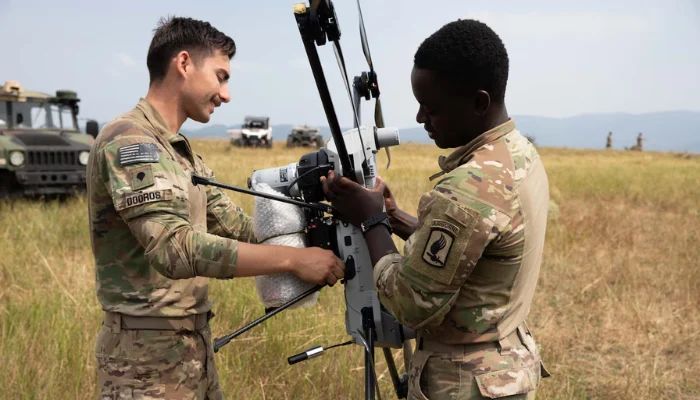
Photo: United States Department of Defense & Defense Health Agency (DHA.gov)
Firestorm Lab’s Tempest 50
Firestorm Labs is a California-based startup that created the Tempest 50: a drone that’s designed to carry up to 10 pounds (4.5 kilograms) of cargo including standard payloads and explosives. Weighing in at 55 pounds (25 kilograms), with an airframe length of 6 feet (1.8 meters), and a wingspan of 7 feet (2.1 meters), the Tempest 50 can deploy for up to 36 hours. The UAS is fabricated with Firestorm Lab’s proprietary 3D printer system called xCell, which can be installed directly near a war zone. Specifically, xCell uses HP Multi-Jet Fusion technology with globally available feedstock. According to Firestorm, the modular and open-architecture drone costs about one-fifth of the production value of similar fixed-wing systems. Plus, they claim it takes about one-tenth the time to build, relative to comparable UAS.
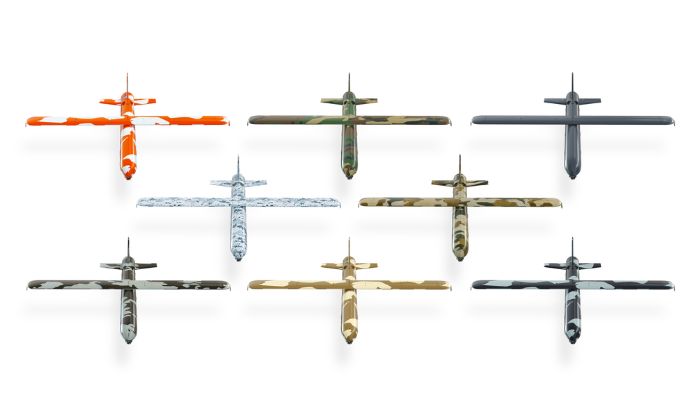
Photo credit: Firestorm Labs
What do you think about drones being made in the field? Let us know in a comment below or on our LinkedIn or Facebook pages! Plus, don’t forget to sign up for our free weekly Newsletter to get the latest 3D printing news straight to your inbox. You can also find all our videos on our YouTube channel.
*Cover Photo Credit : U.S. Army photo by Spc. Adrian Greenwood